
Kompot
Bird cherries boiled with sugar and served as the sweetened liquid.

CC BY-SA 4.0 · Cropped, white-balanced, graded and re-encoded to WebP by eXir.
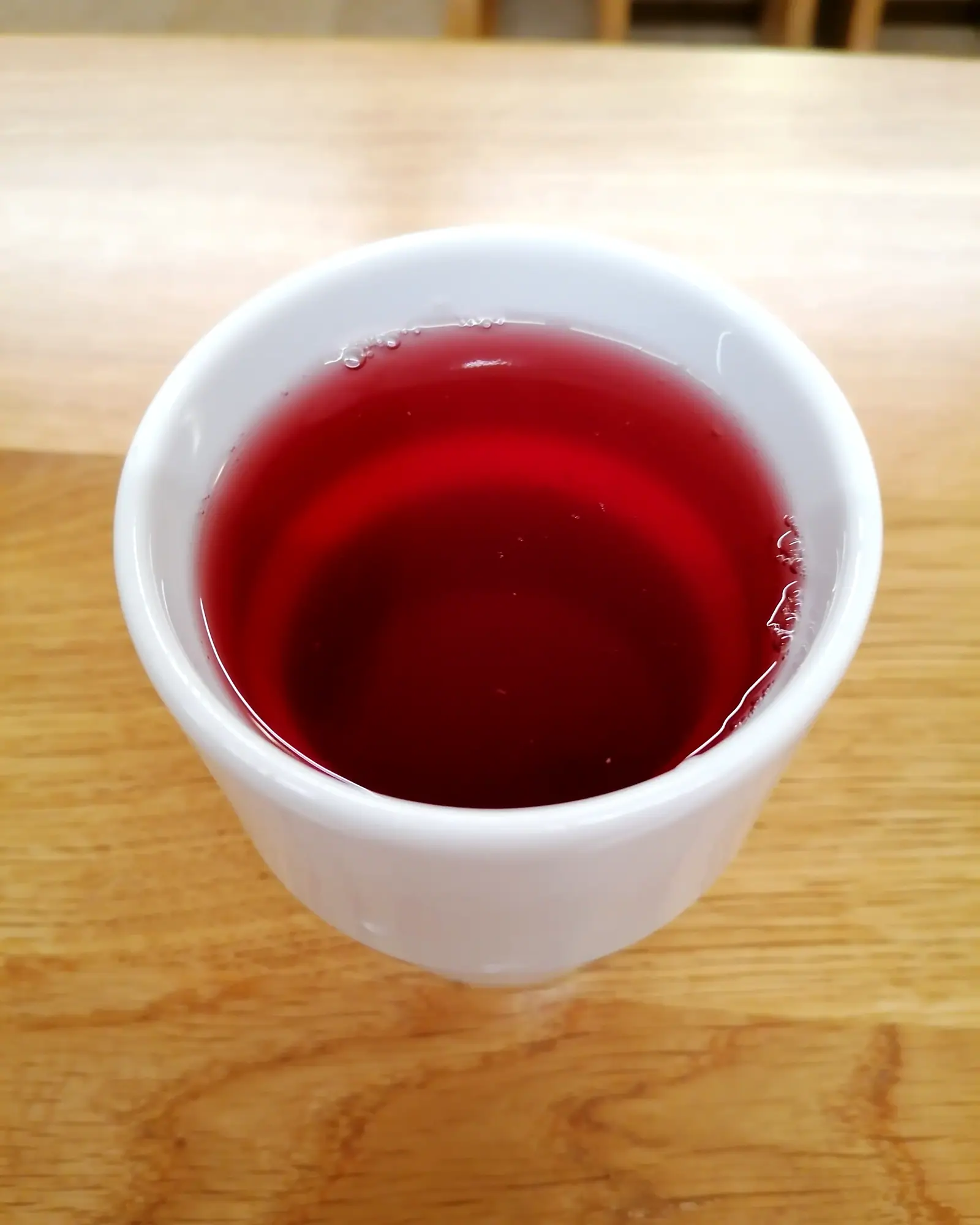
Deep red kompot filling a small white cup
Serving
Drink spec, per drink
Every figure above is per drink and does not move with the count, which is what makes the two service modes comparable. Sugar per litre, strength and standard drinks stay in the units their own authorities publish, because they are figures for comparing rather than for pouring.
Diet and allergen labels are computed from the ingredients listed on this page and nothing else. They cannot account for cross-contamination or for the particular product you buy, and they are not medical or safety guidance.
Ingredients
 60 g bird cherries
 280 ml water
 25 g granulated sugar
- 60 g bird cherries
- 280 ml water
- 25 g granulated sugar
Glass
Vessel
296 ml of liquid, served without ice, inside the 350 ml the glass holds. The build fails if a recipe ever exceeds its stated vessel.
A batch needs a vessel that closes and fits a fridge shelf.
Method
3 steps · 2h 16mCombine the 60 g bird cherries, 280 ml water and 25 g granulated sugar in a pot and boil at 100 °C for 15m.
The fruit is simmered whole rather than crushed, so the liquid takes its colour and tartness gradually over the full boil instead of all at once, and the pits stay intact rather than adding a bitter almond note from inside them.
Strain out the fruit, or leave it in the pot to serve alongside the liquid.
Chill for 2h before serving cold.
Keeping and make-ahead
Made a pot at a time in practice, but authored here as one boil to order.
About
Fruit boiled with sugar and drunk as the liquid, a Russian and Eastern European habit that began as a way to keep a harvest through winter.
Kompot is documented from as early as the fifteenth century 1, and it began as a preservation method rather than a drink made for its own sake. In Russia's agrarian communities, fruit that would otherwise spoil before winter was boiled down with sugar and kept in sealed clay jars or wooden barrels, the sugar concentration acting as the preservative that let a family taste summer fruit months after the harvest had ended 2. The liquid that resulted from that process, not the fruit itself, became the drink, which is why kompot is defined by what is left in the pot after the fruit has given up its flavour rather than by the fruit being eaten as food.
The technique spread beyond Russia into Poland, Armenia and the Balkans, adapting to whatever fruit was regionally abundant rather than fixing on one recipe 1. Cherries, berries, apples, plums, apricots and rhubarb are all named as traditional choices, and the recipe is consistently described as flexible rather than standardised around any single fruit 1; a bird cherry kompot, sharper and more astringent than one made with sweet cherries or berries, sits within that same open tradition rather than outside it.
Kompot's serving context reflects its origin as a preserved, made-ahead food rather than something mixed to order: it is brought out at family gatherings and festivals in large communal bowls, served warm in winter and chilled in summer, and its presence at the table is treated as a gesture of hospitality in its own right 2. That is also why it sits alongside kvass as one of the drinks most associated with everyday Russian domestic life rather than with any single occasion.
- 1Kompot — Traditional Eastern European Recipe196flavors.com
- 2History of Traditional Russian Drink Kompot and Cultural Significancehowtorussia.com