
Cappuccino
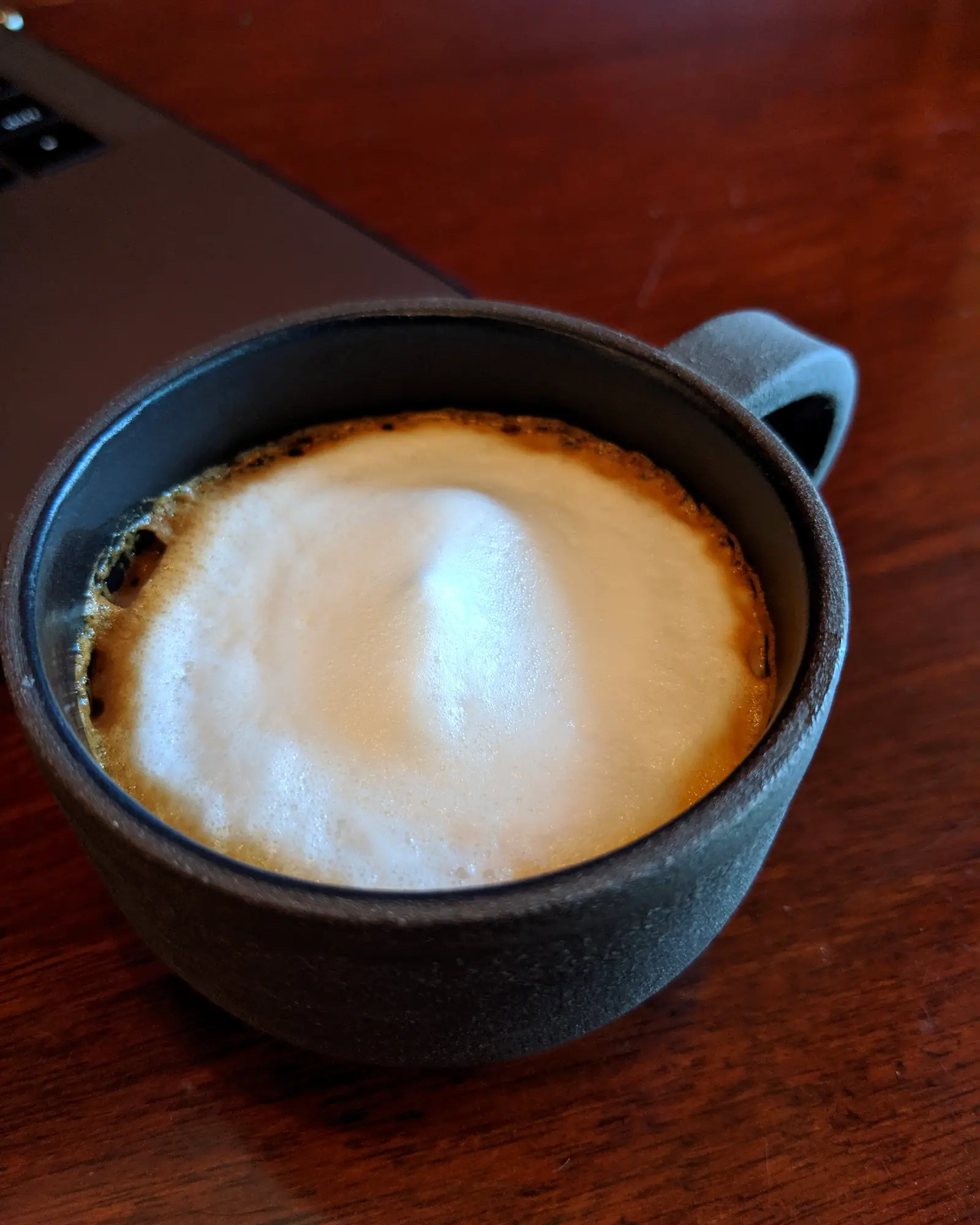
Espresso, steamed milk and a deep collar of foam in equal thirds.

CC BY 4.0 · Cropped, white-balanced, graded and re-encoded to WebP by eXir.
A cappuccino with thick pale foam, in a dark ceramic cup
Serving
Drink spec, per drink
Every figure above is per drink and does not move with the count, which is what makes the two service modes comparable. Sugar per litre, strength and standard drinks stay in the units their own authorities publish, because they are figures for comparing rather than for pouring.
Diet and allergen labels are computed from the ingredients listed on this page and nothing else. They cannot account for cross-contamination or for the particular product you buy, and they are not medical or safety guidance.
Extraction
No extraction yield is shown. It needs a measured dissolved-solids figure from the finished cup, nothing on a bag of coffee supplies one, and estimating it from the method would be inventing the single number the calculation exists to establish.
Ingredients
 18 g coffee
 120 ml whole milk
 50 ml water
- 18 g coffee
- 120 ml whole milk
- 50 ml water
Glass
Vessel
156 ml of liquid, served without ice, inside the 180 ml the glass holds. The build fails if a recipe ever exceeds its stated vessel.
A batch needs a vessel that closes and fits a fridge shelf.
Method
4 steps · 1m 50sGrind the 18 g coffee fine for the espresso machine.
Steam the 120 ml whole milk to a thick, stiff foam over 50s, well beyond the light microfoam a latte needs.
The steam wand is held near the surface for longer than a latte's milk needs, which works far more air into the pitcher and is what gives a cappuccino its thick, stiff foam rather than the latte's thin cap.
Pump the 50 ml water through the grounds at 93 °C for 28s while the milk steams.
Pour the steamed milk into the cup over the shot, holding back the foam with a spoon until last so it sits as a full collar rather than sinking in.
Keeping and make-ahead
Steamed and pulled to order. Foam this thick collapses within a minute or two of standing, so it cannot be made ahead and held.
About
Espresso and steamed milk built to a colour the drink is named for, after a Capuchin friar's habit rather than after any coffee itself.
The word predates the drink by centuries. The Capuchin order of Franciscan friars, formed in 1529, wore a plain, hooded robe in a light reddish-brown 1, and the Italian name for that hood, cappuccio, gave the order its own name, Cappuccini 2. Neither source connects the friars to coffee directly; the link runs through the colour of the robe, applied later to a drink that happened to come out roughly the same shade.
That application first shows up not in Italy but in eighteenth-century Vienna, where coffee topped with whipped cream was served under the German name kapuziner, again for its colour 1. The drink familiar today is a twentieth-century Italian reworking of that idea: once espresso machines were common, whipped cream was replaced with steamed, foamed milk, but the Italian form of the old name, cappuccino, was kept 1. What survived from Vienna to Italy was the colour comparison and the name it produced, not the recipe.
The modern proportions (roughly equal parts espresso, steamed milk and foam) are an Italian espresso-bar convention rather than anything the friars or the Viennese kapuziner determined, and the deep, stiff foam a cappuccino is served under is what most reliably tells it apart from a caffè latte's thinner cap over a taller glass of milk.
- 1Friars, Monkeys and Coffee? The Interesting Etymology of Cappuccinosaltalang.com
- 2Cappuccino was inspired by 16th-century Catholic friarsaleteia.org