
Caffe Latte
A shot of espresso lengthened with steamed milk and a thin cap of foam.
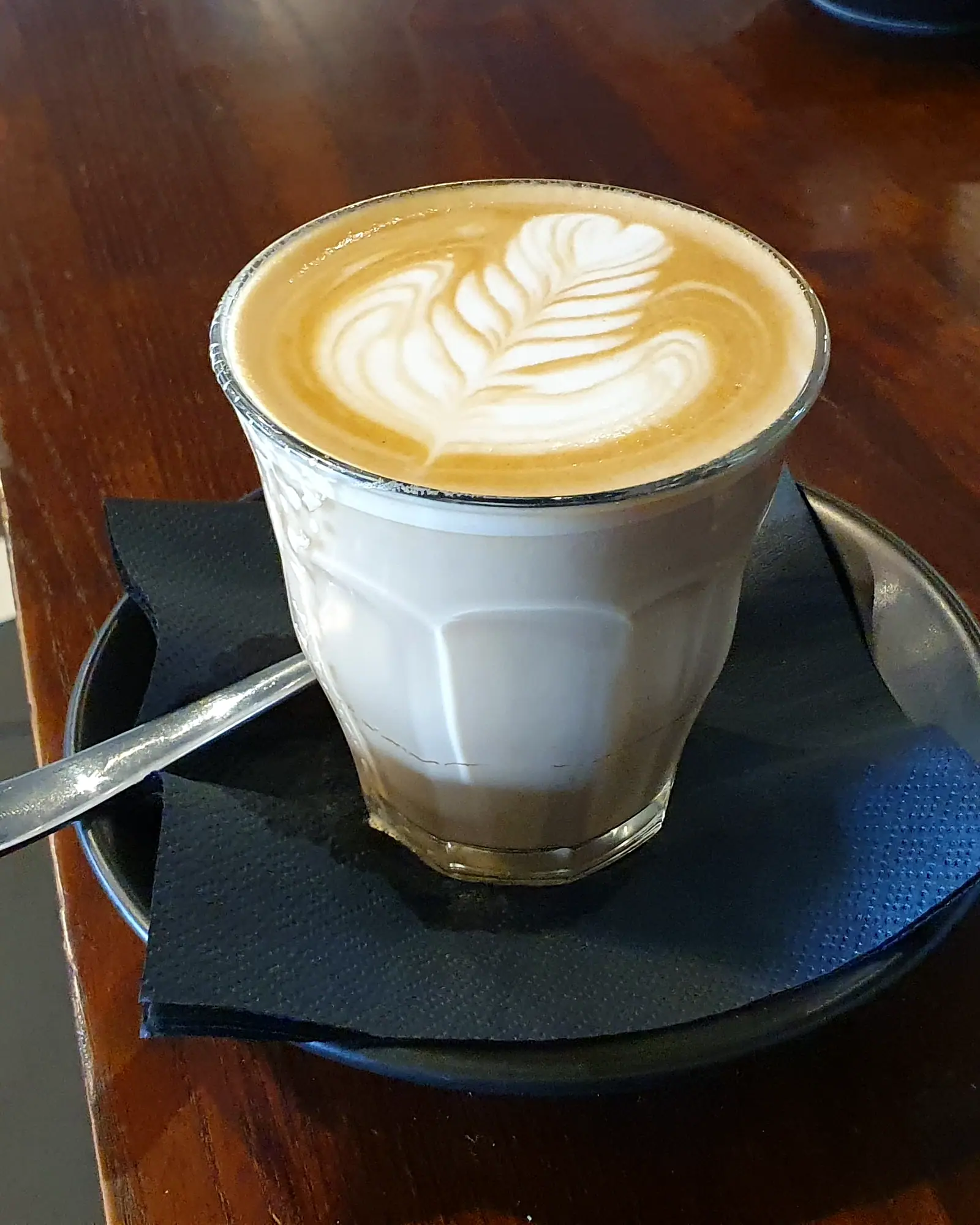

CC0 · Cropped, white-balanced, graded and re-encoded to WebP by eXir.
A caffè latte in a glass cup with a leaf pattern in the milk foam
Serving
Drink spec, per drink
Every figure above is per drink and does not move with the count, which is what makes the two service modes comparable. Sugar per litre, strength and standard drinks stay in the units their own authorities publish, because they are figures for comparing rather than for pouring.
Diet and allergen labels are computed from the ingredients listed on this page and nothing else. They cannot account for cross-contamination or for the particular product you buy, and they are not medical or safety guidance.
Extraction
No extraction yield is shown. It needs a measured dissolved-solids figure from the finished cup, nothing on a bag of coffee supplies one, and estimating it from the method would be inventing the single number the calculation exists to establish.
Ingredients
 18 g coffee
 180 ml whole milk
 50 ml water
- 18 g coffee
- 180 ml whole milk
- 50 ml water
Glass
Vessel
216 ml of liquid, served without ice, inside the 300 ml the glass holds. The build fails if a recipe ever exceeds its stated vessel.
A batch needs a vessel that closes and fits a fridge shelf.
Method
4 steps · 1m 40sGrind the 18 g coffee fine for the espresso machine.
Steam the 180 ml whole milk to a light, silky microfoam, without letting it scald.
Pump the 50 ml water through the grounds at 93 °C for 28s while the milk steams.
Pour the steamed milk into the glass over the shot, finishing with a thin cap of foam on top.
The milk is poured from low over the shot and then raised as the glass fills, which is what pulls a thin cap of foam to the surface rather than folding it through the whole glass the way a cappuccino's thicker foam is.
Keeping and make-ahead
Steamed and pulled to order. Milk cannot be steamed ahead and held without the foam collapsing before the shot is even pulled.
About
Espresso lengthened with steamed milk, whose Italian name is centuries old but whose familiar form is most often traced to a single Berkeley café.
The phrase "caffè latte" is old enough to predate the espresso machine entirely. The American writer William Dean Howells recorded being served one during a steamship crossing from Trieste to Venice in 1867, but the drink he described was closer to a café au lait than to what the name means today, since nothing in it could have been espresso-based milk foam decades before the machinery existed 1. That makes it a case where the name is real and old and the drink it now refers to is neither.
The modern espresso-based latte is usually credited to Lino Meiorin, an Italian-trained barista who co-owned Caffe Mediterraneum in Berkeley, California. By his own account, recorded later in Kenneth Davids's coffee writing, he built the drink in 1959 after customers kept finding his cappuccinos too small and too strong and asking for more milk; he answered by pouring the same shot into a larger cup with proportionally more steamed milk and naming it after the Italian word for milk 2. Caffe Mediterraneum still stakes its identity on the claim.
Both sources treat this as the popularising account rather than a settled first: it is unlikely Meiorin was the only barista anywhere lengthening espresso with milk, and the honest position is that he standardised and named a drink already implicit in the ingredients on hand rather than inventing a technique from nothing 1. What is not in dispute is that the drink spread from American espresso bars outward, not from Italy, however Italian its name reads.
- 1The Mysterious History Of The Classic Lattethedailymeal.com
- 2Remembering Latte Birthplace and Quintessential Counterculture Destination Caffe Meddailycoffeenews.com