
Bubble Tea
Sweetened black tea and milk shaken cold over chewy tapioca pearls.
Black tea shaken with raspberry syrup, dairy-free, over the same chewy pearls.

CC0 · Cropped, white-balanced, graded and re-encoded to WebP by eXir.
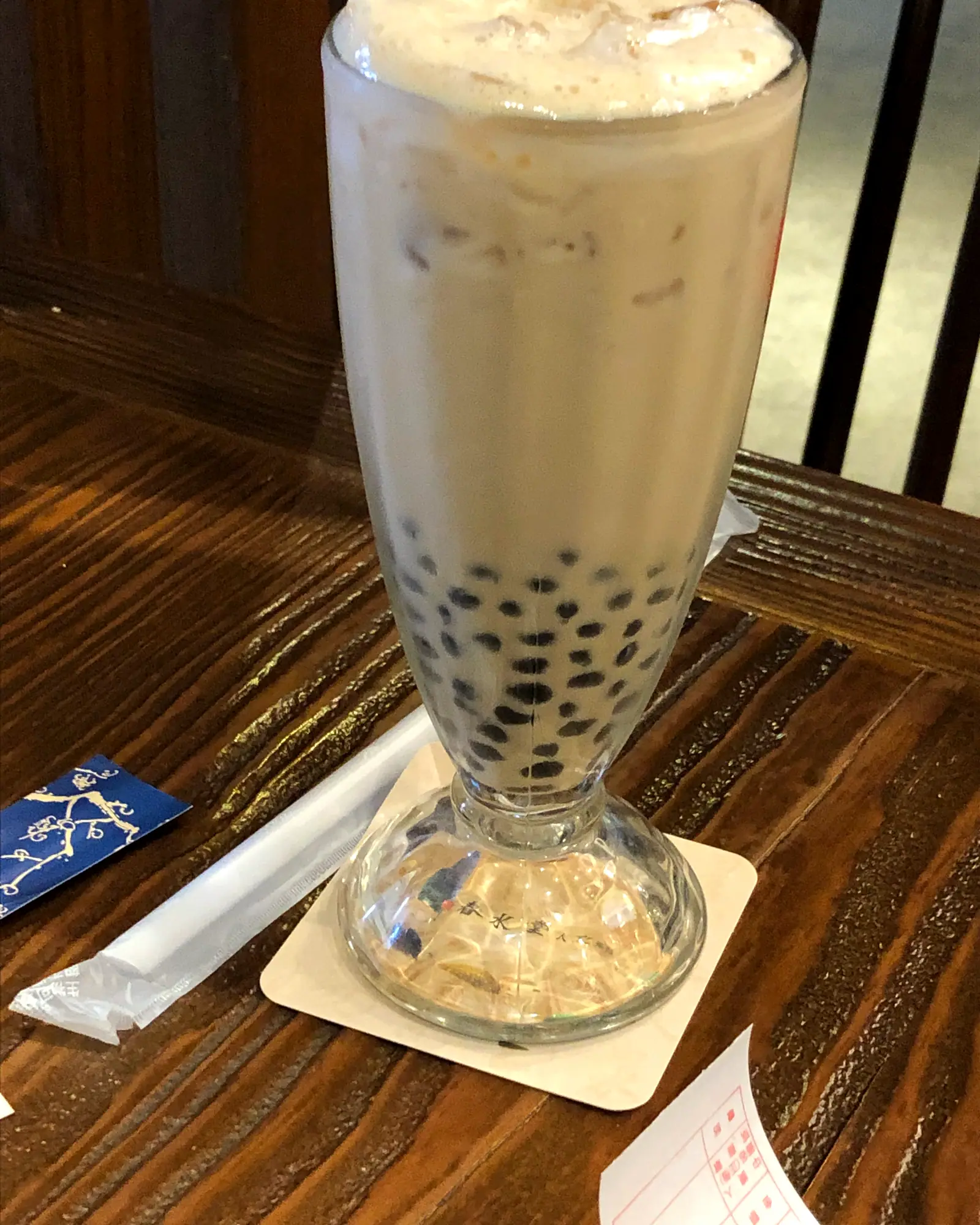
Milky bubble tea in a tall glass, black tapioca pearls settled at the bottom
Serving
Drink spec, per drink
Every figure above is per drink and does not move with the count, which is what makes the two service modes comparable. Sugar per litre, strength and standard drinks stay in the units their own authorities publish, because they are figures for comparing rather than for pouring. Dilution is modelled rather than measured, as a fraction of the poured volume before any ice; dotted figures descend from that estimate.
Diet and allergen labels are computed from the ingredients listed on this page and nothing else. They cannot account for cross-contamination or for the particular product you buy, and they are not medical or safety guidance.
Extraction
No extraction yield is shown. It needs a measured dissolved-solids figure from the finished cup, nothing on a bag of coffee supplies one, and estimating it from the method would be inventing the single number the calculation exists to establish.
Ingredients
 5 g black tea
 130 ml water
 70 ml tapioca pearls
 12 ml simple syrup
 35 ml whole milk
- 5 g black tea
- 130 ml water
- 70 ml tapioca pearls
- 12 ml simple syrup
- 35 ml whole milk
- ~59 ml water
Glass
Vessel
235 ml of liquid plus 230 ml of cubed ice occupies about 465 ml, inside the 500 ml the glass holds. The build fails if a recipe ever exceeds its stated vessel.
A batch needs a vessel that closes and fits a fridge shelf.
Drink spec, per drink
Every figure above is per drink and does not move with the count, which is what makes the two service modes comparable. Sugar per litre, strength and standard drinks stay in the units their own authorities publish, because they are figures for comparing rather than for pouring. Dilution is modelled rather than measured, as a fraction of the poured volume before any ice; dotted figures descend from that estimate.
Diet and allergen labels are computed from the ingredients listed on this page and nothing else. They cannot account for cross-contamination or for the particular product you buy, and they are not medical or safety guidance.
Extraction
No extraction yield is shown. It needs a measured dissolved-solids figure from the finished cup, nothing on a bag of coffee supplies one, and estimating it from the method would be inventing the single number the calculation exists to establish.
Ingredients
- 5 g black tea
- 150 ml water
- 80 ml tapioca pearls
 22 ml raspberry syrup
- 5 g black tea
- 150 ml water
- 80 ml tapioca pearls
- 22 ml raspberry syrup
- ~59 ml water
Glass
Vessel
237 ml of liquid plus 230 ml of cubed ice occupies about 467 ml, inside the 500 ml the glass holds. The build fails if a recipe ever exceeds its stated vessel.
A batch needs a vessel that closes and fits a fridge shelf.
Method
4 steps · 5mSteep the 5 g black tea in the 130 ml water at 100 °C for 5m, then strain and let cool.
Spoon the 70 ml tapioca pearls into the serving jar and fill with ice.
Shake the cooled tea, 12 ml simple syrup and 35 ml whole milk together with ice for 12s.
The tea, syrup and milk are shaken together over ice rather than just stirred, because a short hard shake chills the tea fast without watering it down the way pouring it warm over a full glass of ice would.
Pour over the pearls and ice, and serve with a wide straw.
Common pitfallPearls added straight from the fridge seize up and turn firm rather than chewy; they are meant to be used the same day they are cooked, close to body temperature, not chilled and reheated.
Keeping and make-ahead
Batched ahead, this keeps sealed and cold. The water line the engine adds is the dilution figure from the spec panel, not a rule of thumb.
Method
4 steps · 5mSteep the 5 g black tea in the 150 ml water at 100 °C for 5m, then strain and let cool.
Spoon the 80 ml tapioca pearls into the serving jar and fill with ice.
Shake the cooled tea with the 22 ml raspberry syrup and ice for 12s.
Fruit syrup is shaken with the tea rather than built in over it, because shaking mixes the two evenly through the glass; poured in afterward the syrup sinks and the drink has to be stirred anyway, which knocks the ice around more than the shake does.
Pour over the pearls and ice, and serve with a wide straw.
Common pitfallPearls added straight from the fridge seize up and turn firm rather than chewy; they are meant to be used the same day they are cooked, close to body temperature, not chilled and reheated.
Keeping and make-ahead
Batched ahead, this keeps sealed and cold. The water line the engine adds is the dilution figure from the spec panel, not a rule of thumb.
About
Sweet tea shaken cold over chewy tapioca pearls, invented in 1980s Taiwan by one of two rival tea houses that still dispute which of them did it.
Two Taiwanese tea houses claim the drink, and neither claim has ever been settled. Hanlin Tea Room in Tainan says its founder, Tu Tsung-ho, saw white tapioca balls for sale at a local market in 1986 and brought them home to add to milk tea 1. Chun Shui Tang in Taichung says one of its staff, a twenty-year-old employee named Lin Hsiu-hui, mixed tapioca balls, her own favourite childhood snack, into iced milk tea the following year, in 1987 2. Both versions agree on the shape of the story, a teahouse experimenting with a familiar dessert dropped into a familiar drink; they disagree only on which teahouse and which year got there first.
The dispute outlasted the drink's own rise to ubiquity. The two chains sued each other over the claim, and the case dragged on for years before a court ruled in 2019 that because bubble tea was never patented, who actually invented it was legally irrelevant 2. By the mid-1990s the drink was already standard on tea house menus across Taiwan regardless of which shop reached it first 1.
The pearls themselves are a separate craft from the tea. They are rolled from tapioca starch, drawn from the cassava root, and are traditionally darkened and sweetened with brown sugar rather than left plain 2; this page uses a clear demerara syrup instead, a close but not identical substitute. Early versions of the drink used black tea and lactose-free creamer rather than fresh milk, and the fruit-forward version served alongside it here is a later variation on the same base: the tea and the pearls stay constant, and what changes is only what sweetens and colours the glass around them.
- 1Who invented bubble tea?taipeitimes.com
- 2Origins and cultural impact of boba tea, Taiwan's iconic drinknationalgeographic.com