
Blood and Sand
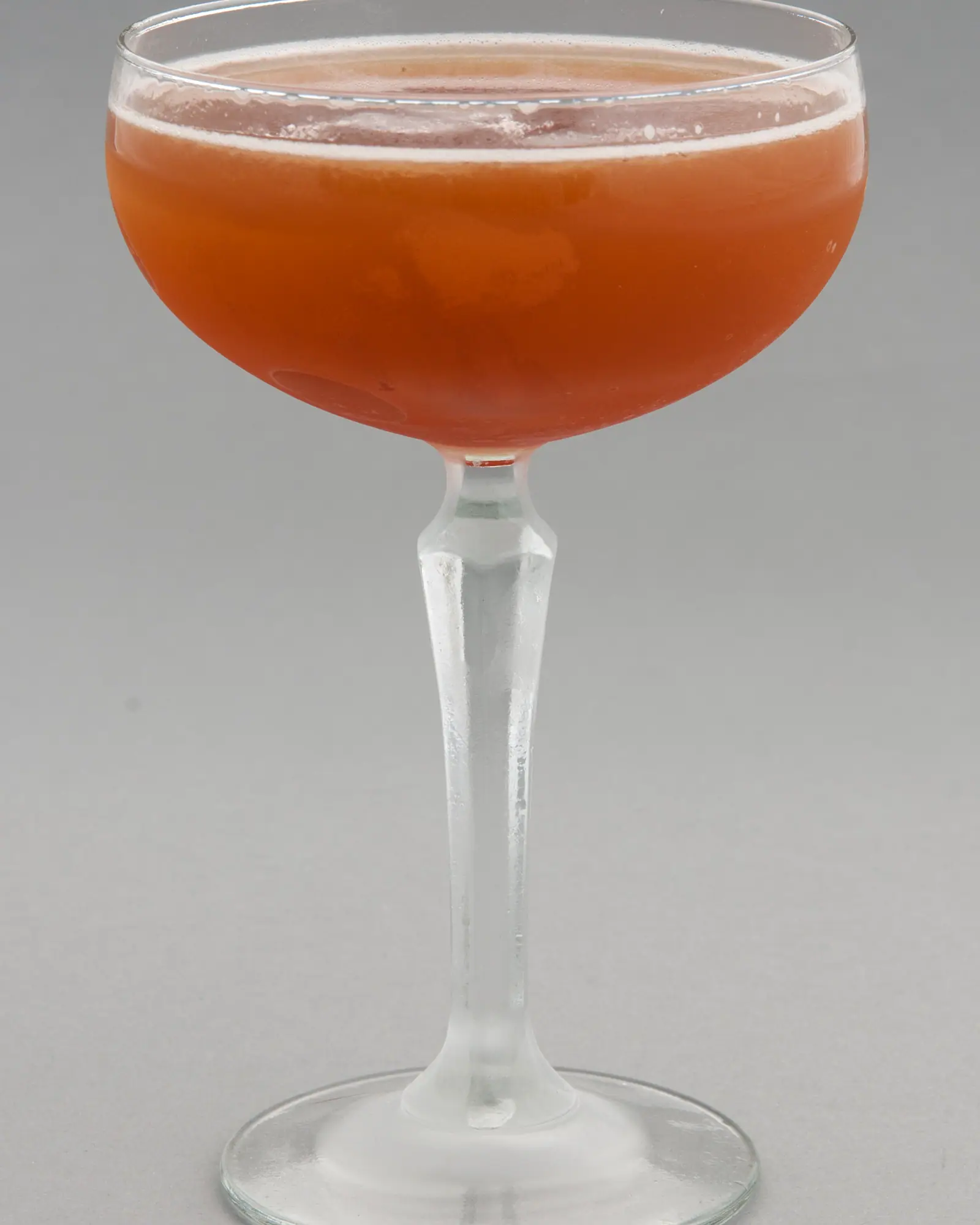
Scotch, cherry liqueur, sweet vermouth and orange juice in equal parts, shaken and strained up.

CC BY-SA 3.0 · Cropped, white-balanced, graded and re-encoded to WebP by eXir.
A Blood and Sand, reddish-orange, in a coupe glass against a plain grey background
Serving
Drink spec, per drink
Every figure above is per drink and does not move with the count, which is what makes the two service modes comparable. Sugar per litre, strength and standard drinks stay in the units their own authorities publish, because they are figures for comparing rather than for pouring. Dilution is modelled rather than measured, as a fraction of the poured volume before any ice; dotted figures descend from that estimate.
No published account of the production checked (crushed Danish Stevns cherries and stones macerated in neutral spirit, with herbs, spices and oak maturation) names an animal-derived ingredient, and the product carries kosher certification. No producer statement confirming vegan status was opened directly, so this is the honest floor of what was checked rather than a producer confirmation.
Vermouth is wine-based, and wine may be clarified with isinglass, made from fish, or with gelatine. Neither is a declarable allergen and neither has to appear on a label, so whether a particular bottle is vegan is a question about that producer rather than about vermouth.
Diet and allergen labels are computed from the ingredients listed on this page and nothing else. They cannot account for cross-contamination or for the particular product you buy, and they are not medical or safety guidance.
Ingredients
 23 ml blended ScotchA peated Scotch survives the orange juice's volume where a light blended one is more easily buried, trading the original's balance for a smokier, more assertive drink.flavour: significant change · strength: no change · sweetness: no change
 23 ml cherry liqueurProprietary
 23 ml sweet vermouth
 23 ml fresh orange juice
- 23 ml blended Scotch
- 23 ml cherry liqueurProprietary
- 23 ml sweet vermouth
- 23 ml fresh orange juice
- ~45 ml water
Glass
Vessel
135 ml of liquid, served without ice, inside the 180 ml the glass holds. The build fails if a recipe ever exceeds its stated vessel.
A batch needs a vessel that closes and fits a fridge shelf.
Method
3 steps · 47sCombine the 23 ml blended Scotch, the 23 ml cherry liqueur, the 23 ml sweet vermouth and the 23 ml fresh orange juice in a shaker and fill it with cubed ice.
Four lines at exactly the same measure is what defines this drink; moving any single one of the 23 ml blended Scotch, the 23 ml cherry liqueur, the 23 ml sweet vermouth or the 23 ml fresh orange juice away from the others is a different drink rather than a variation on this one.
Shake hard for 12s, until the shaker is cold to the hand.
Double-strain into a chilled coupe, leaving the orange juice's pulp and any ice chips behind.
Common pitfallOrange juice is the largest single flavour in the glass despite being one of four equal parts, because it is the only line with no concentration of its own; a drink that reads as sweetened orange juice has not gone wrong, that is the shape a Blood and Sand is built in.
Keeping and make-ahead
Batched ahead, this keeps sealed and cold. The water line the engine adds is the dilution figure from the spec panel, not a rule of thumb.
About
An equal-parts Scotch, cherry liqueur, sweet vermouth and orange juice shake named for a 1922 bullfighting film, first printed in London in 1930.
The recipe's first known appearance in print is Harry Craddock's 1930 The Savoy Cocktail Book 1, and it is generally described as a London creation of that period rather than an import 2. Its name and the equal-parts formula are tied to Blood and Sand, a 1922 silent film starring Rudolph Valentino as a bullfighter, itself adapted from a 1908 Spanish novel 2. No source names the drink's actual inventor; the connection to the film is treated as settled, the person who made it is not.
The two title ingredients are read as the film's own imagery: the cherry liqueur (Cherry Heering in the original formula) standing for the blood of the bullring, and the orange juice for its sand 1. Some retellings specify blood orange for the juice on the strength of that same metaphor, but the earliest published recipe calls for orange juice without qualification, and no source traces the blood-orange detail back to Craddock's own text.
The drink survives in the modern cocktail canon on the strength of its history rather than universal enthusiasm for how it tastes: contemporary bartenders quoted discussing it single out its balance as fragile, with the orange juice's volume easily overwhelming the other three equal parts and leaving a drink that reads as little more than spiked juice unless each line is measured exactly 1.
- 1WTF Is Wrong With the Blood and Sand Scotch Cocktail Recipe?punchdrink.com
- 2Blood and Sand (cocktail)en.wikipedia.org