
Ayran
Yoghurt whisked with cold water and salt into a thin, savoury drink.

CC0 · Cropped, white-balanced, graded and re-encoded to WebP by eXir.
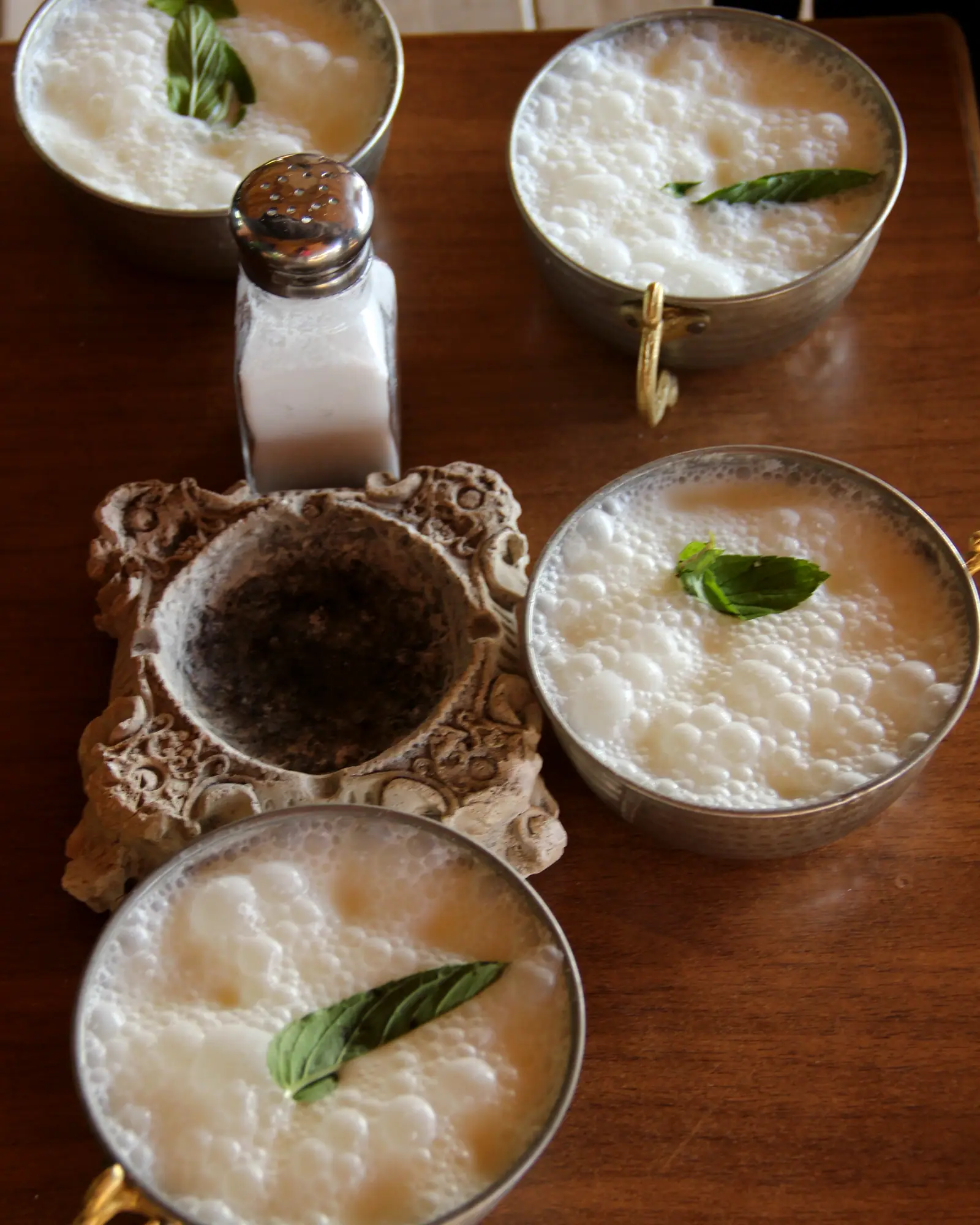
Foamy white ayran in metal cups garnished with fresh mint leaves, seen from above
Serving
Drink spec, per drink
Every figure above is per drink and does not move with the count, which is what makes the two service modes comparable. Sugar per litre, strength and standard drinks stay in the units their own authorities publish, because they are figures for comparing rather than for pouring.
Diet and allergen labels are computed from the ingredients listed on this page and nothing else. They cannot account for cross-contamination or for the particular product you buy, and they are not medical or safety guidance.
Ingredients
 100 g plain yoghurt
 100 ml water
 1.5 g salt
- 100 g plain yoghurt
- 100 ml water
- 1.5 g salt
Glass
Vessel
198 ml of liquid, served without ice, inside the 300 ml the glass holds. The build fails if a recipe ever exceeds its stated vessel.
A batch needs a vessel that closes and fits a fridge shelf.
Method
2 steps · 45sWhisk the 100 g plain yoghurt, 100 ml water and 1.5 g salt together for 30s, until smooth and lightly foamed.
The yoghurt is whisked hard enough to raise a thin foam on top rather than simply stirred smooth, which is what keeps the water from separating back out into a watery layer under a thicker one once it is poured.
Pour into a chilled glass straight from the fridge.
Common pitfallYoghurt whisked with warm water thins unevenly and separates within minutes of standing; starting with cold yoghurt and cold water keeps the proteins from loosening too far before they are fully worked through.
Keeping and make-ahead
Batched ahead, this keeps sealed and cold. The water line the engine adds is the dilution figure from the spec panel, not a rule of thumb.
About
Yoghurt thinned with water and salt, carried out of Central Asia by Turkic nomads and documented in writing by the eleventh century.
The drink is old enough that its earliest written trace only confirms it was already familiar. Mahmud al-Kashgari's Dīwān ul-Lughat al-Turk, a Turkic dictionary compiled around 1000 CE, defines ayran simply as "a drink made out of milk," with no explanation of how to make it, which is evidence that the word needed none for its intended reader 1. The name itself is thought to trace to an Old Turkic root meaning "to separate," a plausible description of curdled milk worked apart from its whey rather than a claim about the drink's own invention 1.
Its origin is explained more by necessity than by taste. Nomadic Turkic herders in Central Asia needed to keep milk usable for longer than it would otherwise last, and fermenting it into yoghurt slowed spoilage but left a product too thick and sour to drink in any real quantity; diluting that yoghurt with water and salting it produced something that kept, replaced the minerals sweated out in a hot, dry climate, and could be drunk by the cupful 2. The Ottoman Empire's expansion carried the same drink, under regional names, across a belt of territory running from the Balkans through Anatolia and the Levant into Central Asia, and it remains a fixture in most of those places today 2.
No single modern country can claim to have originated it, whatever the strength of its association with Turkey now 2. What has stayed constant since the nomadic version is the proportion of idea rather than of ingredient: yoghurt, water and salt, whisked rather than blended, and drunk plain rather than dressed with fruit, sugar or spice.
- 1Ayranen.wikipedia.org
- 2Ayran: Traditional Yogurt Drinkjidlonacestach.cz