
Aviation
Gin, lemon, maraschino and a measure of crème de violette for the colour the name refers to.
CC BY 2.0 · Cropped, white-balanced, graded and re-encoded to WebP by eXir.
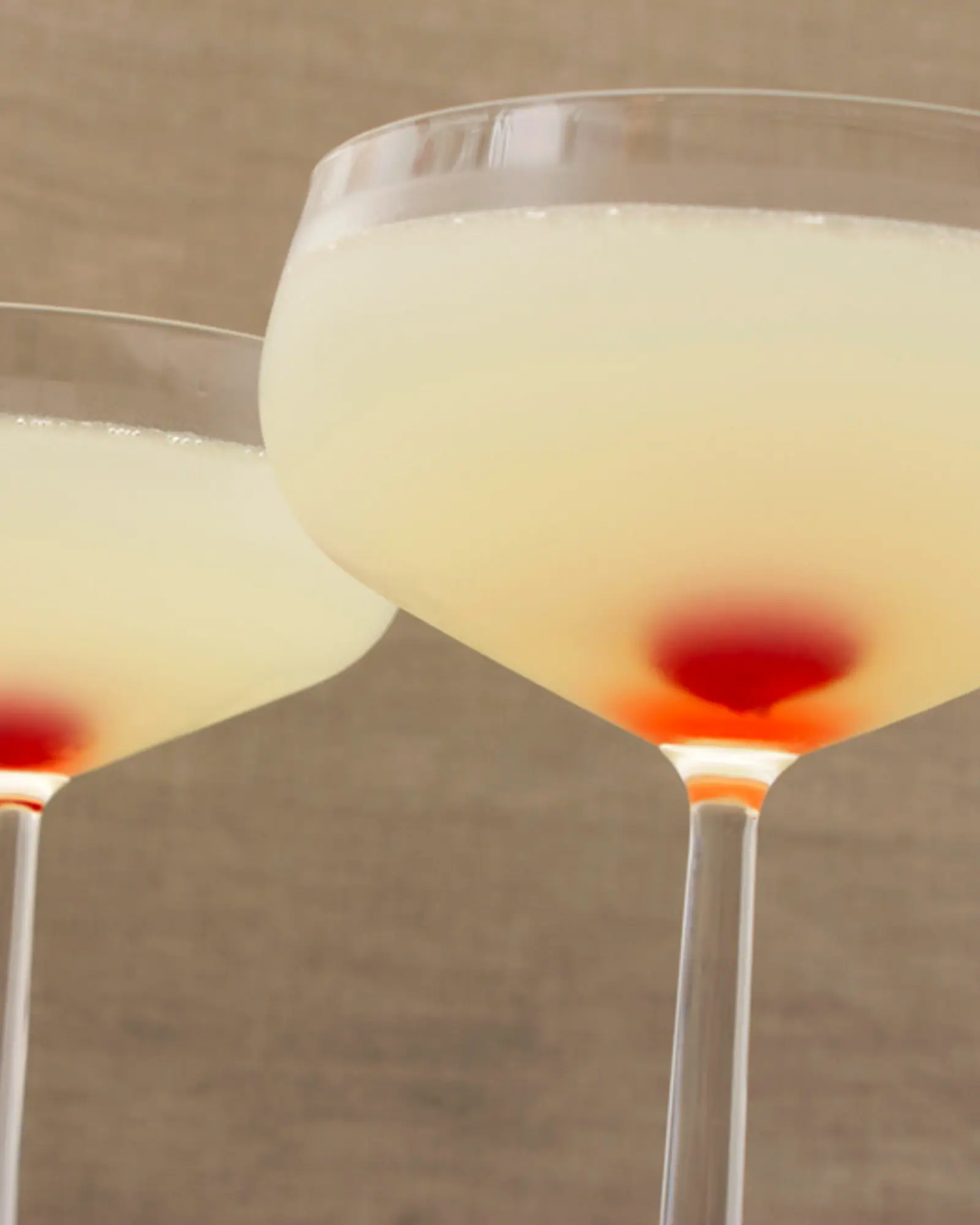
Two pale straw-coloured Aviations in coupe glasses, each with a maraschino cherry resting at the base
Serving
Drink spec, per drink
Every figure above is per drink and does not move with the count, which is what makes the two service modes comparable. Sugar per litre, strength and standard drinks stay in the units their own authorities publish, because they are figures for comparing rather than for pouring. Dilution is modelled rather than measured, as a fraction of the poured volume before any ice; dotted figures descend from that estimate.
The recipe is cherry distillate, sugar, alcohol and water; the leading producer states its products contain no animal-derived ingredients.
Giffard, the reference producer, states its Crème de Violette is vegan, lactose-free and made from natural violet flavouring with no animal-derived ingredient.
Diet and allergen labels are computed from the ingredients listed on this page and nothing else. They cannot account for cross-contamination or for the particular product you buy, and they are not medical or safety guidance.
Ingredients


Glass
Vessel
158 ml of liquid, served without ice, inside the 180 ml the glass holds. The build fails if a recipe ever exceeds its stated vessel.
A batch needs a vessel that closes and fits a fridge shelf.
Method
4 steps · 1m 52sSqueeze the 23 ml fresh lemon juice and strain out the pips and pulp.
Combine the 60 ml London dry gin, the 23 ml fresh lemon juice, the 15 ml maraschino liqueur and the 7.5 ml crème de violette in a shaker and fill it with cubed ice.
The violette is measured in with everything else rather than floated afterward. Its colour is the point, but it is a flavouring dose, not a layer meant to be seen sitting apart.
Shake hard for 12s. Short and violent; the aim is to chill and aerate, not to melt the ice.
Double strain into a chilled coupe. Held to the light, the drink should read as a pale, smoke-tinted blue-grey, the shade the name was coined for, rather than a true purple.
Common pitfallToo heavy a hand with the violette turns the drink into a glass of perfume; the gin and lemon are still meant to carry it. A bottle poured freehand rather than measured is the usual way this goes wrong.
Keeping and make-ahead
Batched ahead, this keeps sealed and cold. The water line the engine adds is the dilution figure from the spec panel, not a rule of thumb.
About
A gin sour named for the pale colour a small measure of violet liqueur gives it, and one whose exact recipe has been argued over for most of a century.
The first published recipe appears in Recipes for Mixed Drinks, a 1916 guide by Hugo Ensslin, then head bartender at the Hotel Wallick in New York 1. Ensslin's version calls for gin, lemon juice, maraschino liqueur and crème de violette, in a build close to the one used today 1.
The recipe's later history is a dispute about a single ingredient. Harry Craddock's Savoy Cocktail Book, published in 1930 and far more widely read than Ensslin's own guide, prints the Aviation without the violette: gin, lemon and maraschino only 1. Craddock's version is usually explained as a practical substitution rather than a stylistic one: crème de violette had become difficult to find by the time he was writing, and a bartender working from his book had no easy way to follow the earlier recipe even if they wanted to 1. The two versions coexisted in print for decades, and both are still made under the same name; a gin sour with a citrus-and-maraschino balance either sits on its own or carries a faint violet top note, depending on which book a bartender learned it from.
Crème Yvette, a spiced violet liqueur, is sometimes used in place of crème de violette where the latter is unavailable, which has added a second point of variation on top of the first 1.
- 1Aviation (cocktail)en.wikipedia.org