
Americano
Campari and sweet vermouth in equal measure, topped with soda.
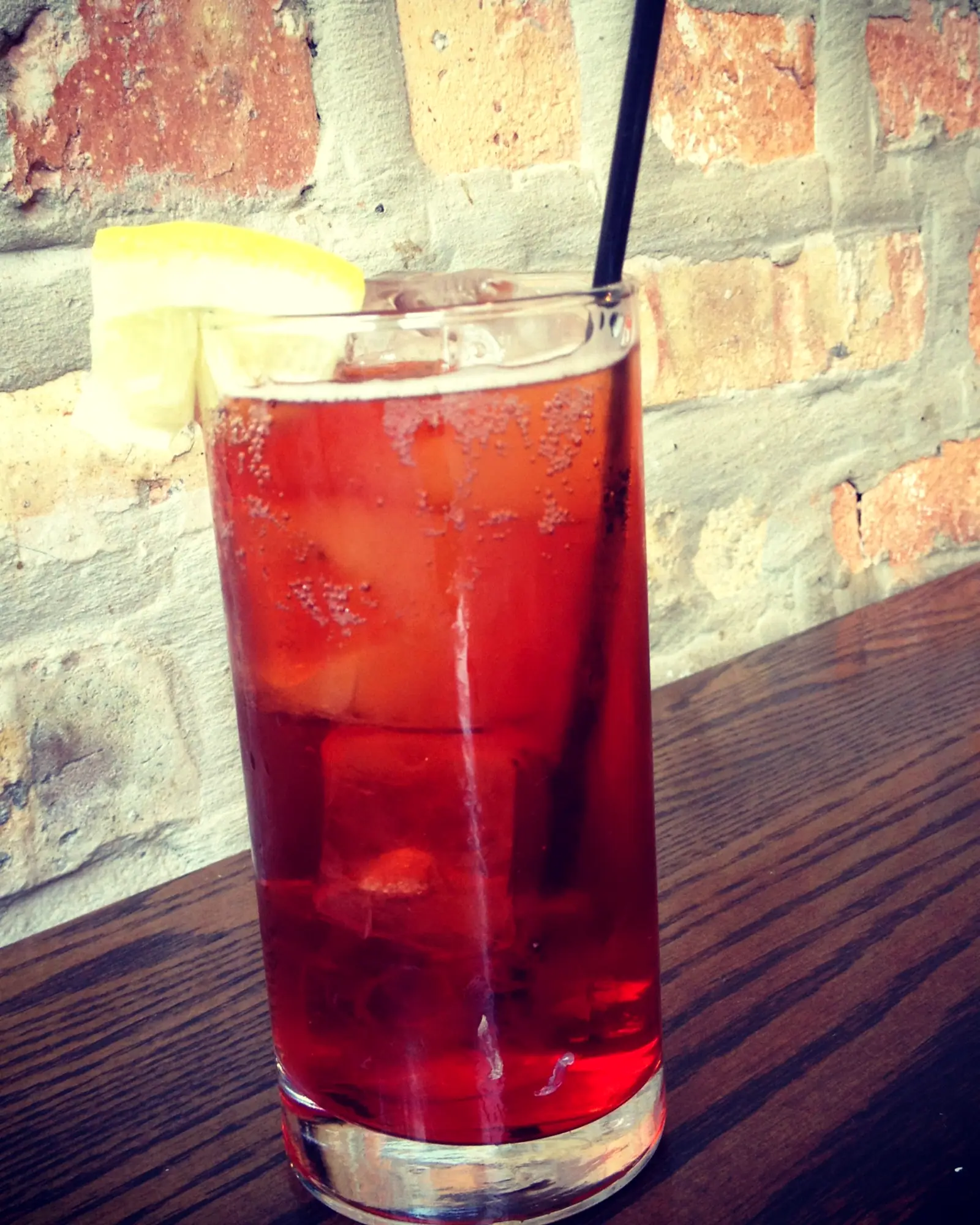

CC BY 2.0 · Cropped, white-balanced, graded and re-encoded to WebP by eXir.
A red Americano cocktail in a tall glass over ice, garnished with a lemon wedge, on a dark wood bar
Serving
Drink spec, per drink
Every figure above is per drink and does not move with the count, which is what makes the two service modes comparable. Sugar per litre, strength and standard drinks stay in the units their own authorities publish, because they are figures for comparing rather than for pouring. Dilution is modelled rather than measured, as a fraction of the poured volume before any ice; dotted figures descend from that estimate.
The red was carmine, a colourant made from insects, until the producer moved to synthetic colourants in the mid-2000s. The European label cached here lists E122, E102 and E133 and no carmine, and the United States bottling uses Red 40; reporting on the change describes it as not having reached every market at once, so which colourant is in a given bottle depends on where it was made.
Vermouth is wine-based, and wine may be clarified with isinglass, made from fish, or with gelatine. Neither is a declarable allergen and neither has to appear on a label, so whether a particular bottle is vegan is a question about that producer rather than about vermouth.
Diet and allergen labels are computed from the ingredients listed on this page and nothing else. They cannot account for cross-contamination or for the particular product you buy, and they are not medical or safety guidance.
Ingredients
 45 ml CampariProprietary
 45 ml sweet vermouth
 40 ml soda water
 1 orange (140 g)
- 45 ml CampariProprietary
- 45 ml sweet vermouth
- 40 ml soda water
- 1 orange (140 g)
- ~33 ml water
Glass
Vessel
130 ml of liquid plus 130 ml of cubed ice occupies about 260 ml, inside the 300 ml the glass holds. The build fails if a recipe ever exceeds its stated vessel.
A batch needs a vessel that closes and fits a fridge shelf.
Method
4 steps · 1m 20sFill a rocks glass with ice.
Pour the 45 ml Campari and the 45 ml sweet vermouth over the ice.
Two bitter aperitifs stand in for the spirit here, in equal measure rather than the family's usual one part. The Americano is the drink this family departs from rather than the one it typifies.
Top with the 40 ml soda water and lift once with a bar spoon rather than stirring: the carbonation is doing work the stir would only knock out.
Drop in a half-wheel of orange.
Common pitfallStirred hard, the soda goes flat before it reaches the glass. One gentle lift with a bar spoon is enough to marry the two aperitifs; the bubbles do the rest of the work on their own.
Keeping and make-ahead
Batched ahead, this keeps sealed and cold. The water line the engine adds is the dilution figure from the spec panel, not a rule of thumb.
About
Campari and sweet vermouth over ice at Gaspare Campari's own Milan bar, topped with soda and renamed for the American tourists who kept ordering it.
Gaspare Campari opened a bar in Milan's Galleria Vittorio Emanuele in 1867 to sell the bitter liqueur he had invented around 1860 1. An early house drink there paired Campari from Milan with sweet vermouth from Turin and was known by the two cities' names, Milano-Torino 2. Soda water was added later, turning a short bitter aperitivo into the longer drink served today.
The name it carries now dates to the 1920s, when American tourists visiting Europe to drink through Prohibition took to it in large numbers and the bar trade started calling it the Americano after its clientele rather than its ingredients 1. It has no connection to the coffee that shares the name, which is a much later Italian-American invention built around espresso rather than Campari.
The drink is a direct ancestor of the Negroni: adding gin to an Americano, the story goes, is how that later drink came about. Both pages carry Campari and sweet vermouth in the same equal measure; the Americano's third part is soda rather than a spirit, which is the whole of the difference between a bitter highball and a stirred, spirit-forward one.
- 1Campari History: From 1828 Bitter to Icondiffordsguide.com
- 2Americano (cocktail)en.wikipedia.org