
Agua de Tamarindo
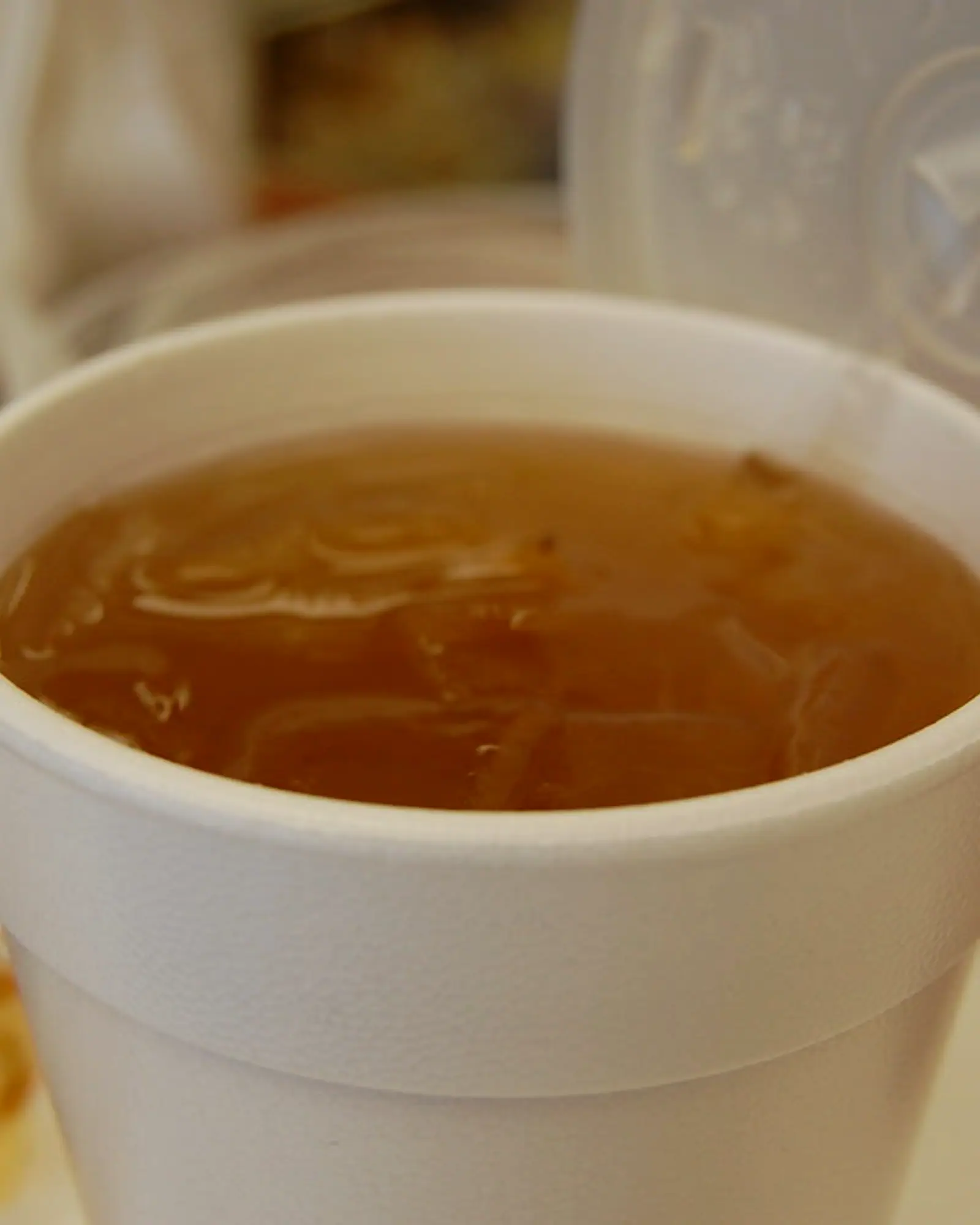
Tamarind pulp soaked, mashed through a sieve and sweetened, over ice.
CC BY-SA 2.0 · Cropped, white-balanced, graded and re-encoded to WebP by eXir.
Agua de tamarindo, a translucent brown tamarind water over ice, filled to the brim of a foam cup
Serving
Drink spec, per drink
Every figure above is per drink and does not move with the count, which is what makes the two service modes comparable. Sugar per litre, strength and standard drinks stay in the units their own authorities publish, because they are figures for comparing rather than for pouring.
Diet and allergen labels are computed from the ingredients listed on this page and nothing else. They cannot account for cross-contamination or for the particular product you buy, and they are not medical or safety guidance.
Extraction
No extraction yield is shown. It needs a measured dissolved-solids figure from the finished cup, nothing on a bag of coffee supplies one, and estimating it from the method would be inventing the single number the calculation exists to establish.
Ingredients
 150 ml water
 20 g tamarind pulp
 15 g granulated sugar
- 150 ml water
- 20 g tamarind pulp
- 15 g granulated sugar
Glass
Vessel
144 ml of liquid plus 230 ml of cubed ice occupies about 374 ml, inside the 400 ml the glass holds. The build fails if a recipe ever exceeds its stated vessel.
A batch needs a vessel that closes and fits a fridge shelf.
Method
4 steps · 16mPour the 150 ml water at 100 °C over the 20 g tamarind pulp and leave to soften for 15m.
Mash and work the softened pulp through a sieve set over a jug for 1m, pressing the flesh through and leaving the fibres and seeds behind.
Tamarind pulp comes as a pressed block still holding its fibres and seeds, so soaking alone does not free the flesh; it has to be worked through a sieve by hand to separate the sour pulp from what the sieve is meant to catch.
Stir the 15 g granulated sugar into the strained liquid until fully dissolved.
Pour over cubed ice in the glass and serve at once.
Common pitfallPushing the pulp through too hastily leaves fibre in the strained liquid, which settles at the bottom of the glass as grit rather than staying suspended the way the pulp itself does.
Keeping and make-ahead
Made a jug at a time in practice, but authored here as one steep to order.
About
Tamarind pulp soaked, sieved and sweetened into one of Mexico's standard aguas frescas, from a fruit that reached the country by two separate routes.
Tamarind is native to Africa, not to Mexico, and its long-known name in Arabic (tamar hind, "date of India") already records one leg of a much longer journey: from Africa the tree had reached and naturalised across India centuries before it reached the Americas at all 1. Spanish traders are said to have first encountered it during the centuries of Muslim rule on the Iberian peninsula, and to have carried it onward once Spanish ships crossed the Pacific; the Manila galleon route, opened in 1565, ran between Acapulco and Manila for two and a half centuries and is one plausible corridor for the fruit's arrival in Mexico alongside direct transport from Spain 1. Wikipedia states more simply that tamarind reached Mexico in the sixteenth century and was adopted there as a flavouring for aguas frescas 2; the two accounts agree on the century and disagree only on which of Mexico's two colonial trade routes carried it.
However it arrived, the fruit is now assumed by many to be native, having been folded so completely into Mexican cooking and drink that its African origin is easy to miss 1. Agua de tamarindo itself belongs to the wider category of aguas frescas (water, sugar and a fruit, seed or flower, sold from large glass dispensers alongside flavours such as horchata and hibiscus 2) and its place in that lineup is a matter of the fruit finding a use rather than a dated invention behind the drink specifically. What distinguishes tamarind's preparation from a jamaica or a horchata is the extra step the fruit forces: the pulp has to be soaked soft and worked through a sieve to separate it from the fibre and seeds it is naturally packed with, before it can be sweetened and served the same way.
- 1Taste of Mexico — Tamarindomexiconewsdaily.com
- 2Tamarindo (drink)en.wikipedia.org