Skip to content
Markey
Theme: System (currently light)
Toyota emblem

Generation

Toyota Prius (XW20)

Toyota Prius (XW20), 2003-2012

Produced
2003–2012
Code
XW20
Designer
Hiroshi Okamoto
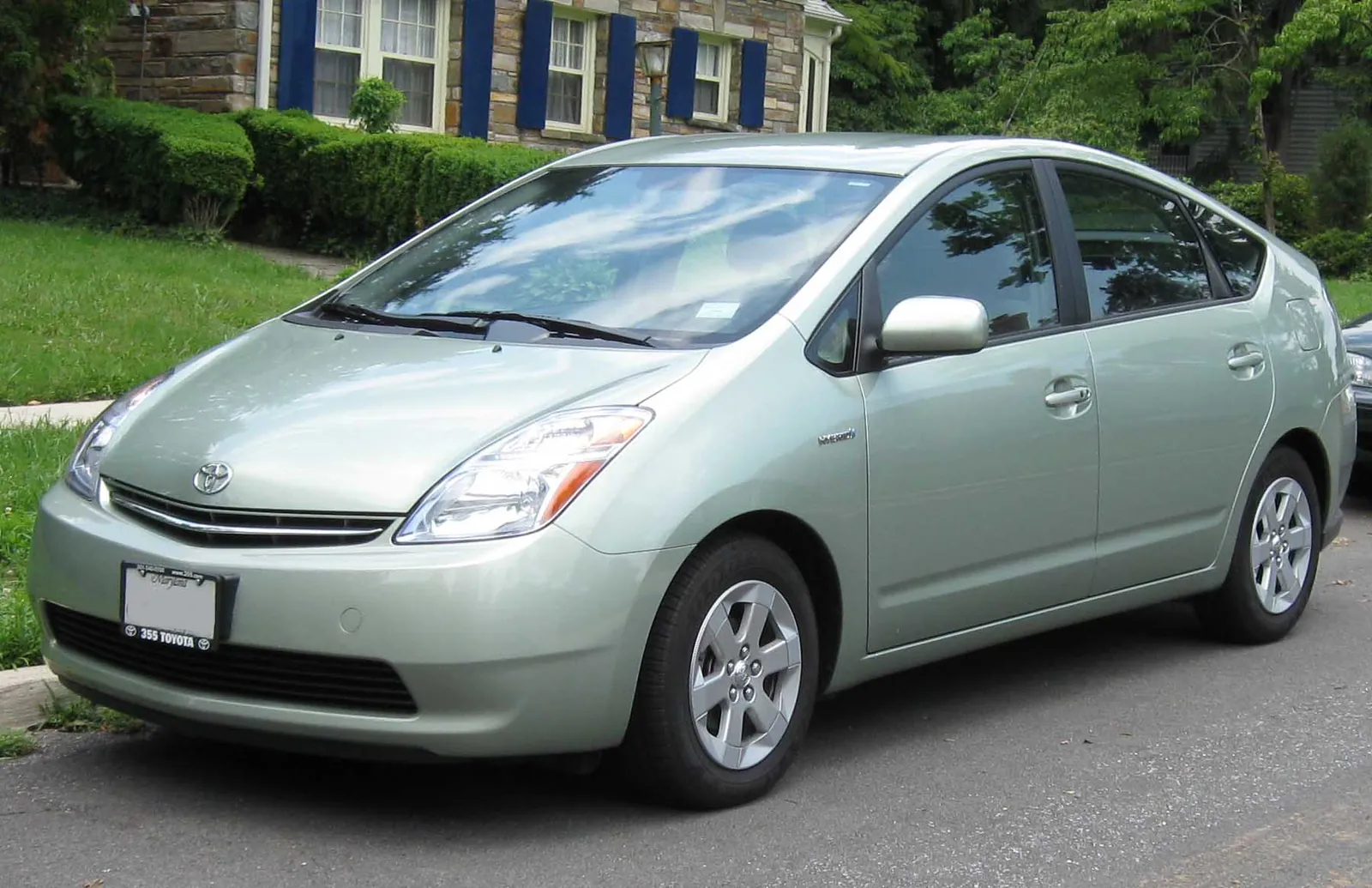
Silver second-generation Toyota Prius photographed from the front three-quarter angle, showing the wedge nose and steeply raked windscreen

Image credit

File
File:2nd Toyota Prius.jpg
Author
IFCAR
Licence
Public domain

Released into the public domain by the photographer.

Body style

Powertrain

Test Drive this car

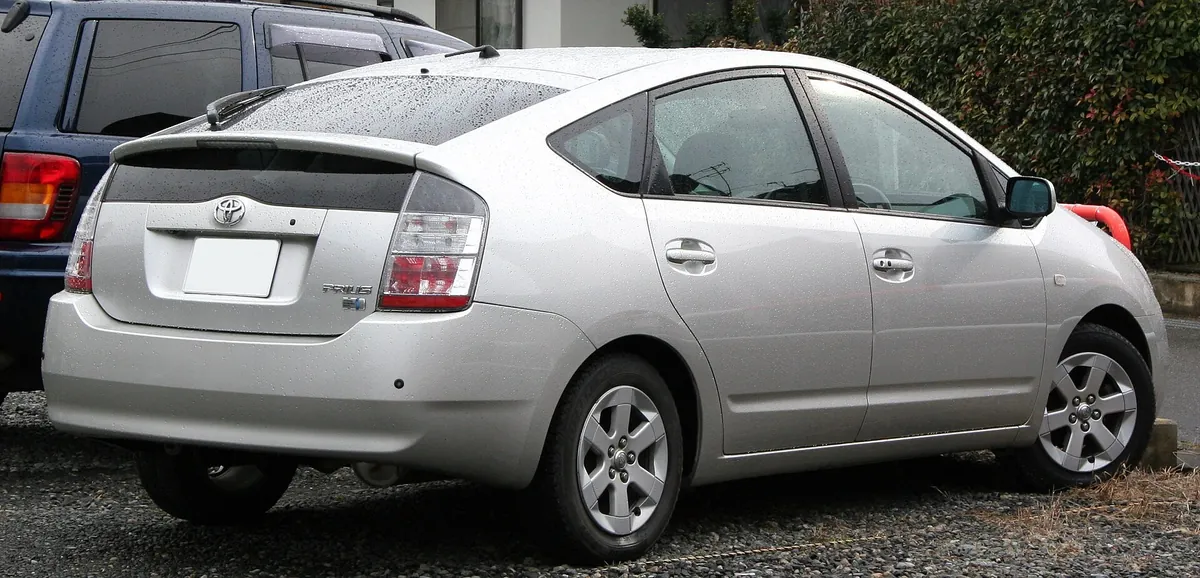
The second-generation car of 2003, and the one that made the Prius a shape people recognised.[1] The Kammback body was drawn around a drag coefficient of 0.26, which in 2003 was remarkable for a car of its price.

The powertrain figures here need reading carefully, and the entry says so on each value. The petrol engine makes 57 kW and the traction motor 50 kW, but the system is rated at 82 kW, because the two peak at different points and do not add up. The same is true of torque: 115 N⋅m from the engine, 400 N⋅m from the motor at zero rpm, and no meaningful way to combine them into one crankshaft number, so only the engine figure is recorded.

Its frontal area is the one derived value in this batch. The aerodynamics list publishes a drag area of 0.580 m² for the 2004 car; dividing by the published 0.26 gives 2.23 m². The site’s usual approximation of 0.85 × width × height gives 2.19 m² for the same car, which is a rare chance to check the approximation against something measured.[2]
Overview

Manufacturer
Toyota
Produced
2003–2012
Model code
XW20
Designer
Hiroshi Okamoto
Segment
C-segment (Europe) / Compact (US)
Positioning
Mainstream
Assembly
  • Toyota, Aichi, Japan (Tsutsumi plant)
  • Kariya, Aichi, Japan (Fujimatsu plant)
  • Changchun, Jilin, China (Sichuan FAW Toyota)

Dimensions

Length
4,450 mm

[1]

Width
1,725 mm

[1]

Height
1,490 mm

[1]

Wheelbase
2,700 mm

[1]

Kerb weight
1,317 kg

[1]

1.5 Hybrid Synergy Drive

Trim · 2003–2012 · 1NZ-FXE

Power
82 kW

Hybrid system net output, published as 110 hp. The petrol engine alone makes 57 kW at 5,000 rpm and the traction motor 50 kW; those do not add up to the system figure, because the two peak at different points.

[1]

Torque
115 N⋅m

Petrol engine torque, at 4,200 rpm. The traction motor makes 400 N-m from zero rpm, but engine and motor torque cannot be summed into one crankshaft figure, so only the engine figure is recorded here.

[1]

Kerb weight
1,317 kg

[1]

0–100 km/h
Not yet available
Top speed
Not yet available
Fuel economy
5.1 L/100 km

EPA combined 46 mpg (US) for the 2004 car, converted at 235.215 L-mi/100km-gal. This is the current EPA estimate: the methodology changed in 2008 and earlier cars were recalculated, so it is not the figure on the 2004 window sticker.

[3]

Electric consumption
Not yet available
Battery capacity
1.3 kWh

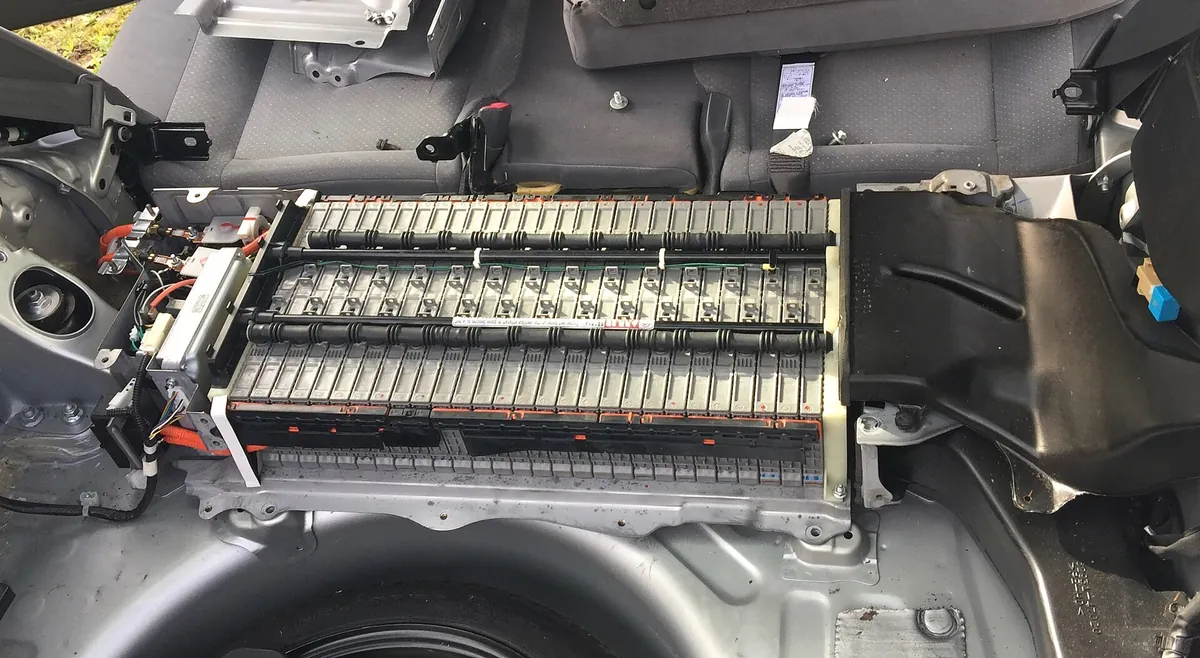
201.6 V nickel-metal-hydride pack of 28 modules, each six 1.2 V 6.5 Ah cells. The control system keeps the state of charge between roughly 40% and 80%, so about 0.4 kWh of that is usable.

[1]

Electric range
Not yet available
CO₂
120 g/km

EPA tailpipe CO2, 193.2 g/mi, converted at 1.609344 km/mi. On the European cycle the same car was rated 104 g/km; the two numbers describe different tests, not a disagreement.

[3]

Drag coefficient
0.26

Given in the article body for the Kammback body; Wikipedia in turn cites Motor Trend.

[1]

Frontal area
2.23 m²Estimated

Derived, not published: the drag-coefficient list gives a drag area (CdA) of 6.24 sq ft = 0.580 m2 for the 2004 Prius, and dividing by the published Cd of 0.26 gives 2.23 m2. The site’s standing 0.85 x width x height approximation gives 2.19 m2 for the same car, so the two agree to within 2%.

Displacement
Not yet available
Boot volume
453 L

EPA hatchback luggage volume, 16 cu ft, converted at 28.3168 L/cu ft. EPA measures a hatchback to the roof, so this is not comparable with a European seats-up boot figure.

[3]

Seats
5
Engine
inline-4, Atkinson cycle · 1NZ-FXE
Drivetrain
Front-wheel drive

Sources & confidence

Every figure above carries a status. Nothing on this page is estimated without saying so, and nothing missing has been filled in with a guess.

Last verified
2026-08-18
Review status
Spot-checked by hand

Photography on this page is credited on each image. Tap theion a photograph for its author, licence and source.

References

Every sourced figure and every cited claim on this page, numbered. Wikipedia articles record the revision they were read at, because the article will have changed by the time you check it.

  1. [1]

    Toyota Prius (XW20). Wikipedia · revision 1367269329 · read 2026-08-18

    WikipediaCC BY-SA 4.0

    The drag coefficient and the battery figures are in the body text rather than the infobox; Wikipedia in turn cites Motor Trend for the 0.26 Cd. That primary source has not been read directly, so it is not cited here as though it had been.

  2. [2]

    List of automobile drag coefficients. Wikipedia · revision 1360737555 · read 2026-08-17

    WikipediaCC BY-SA 4.0

    The aerodynamic source named in several hundred production and concept vehicles, 1921 to 2024.

  3. [3]

    2004 Toyota Prius — EPA fuel economy record (vehicle 19813). US EPA / US Department of Energy · read 2026-08-18

    DatasetPublic domain (US Government work)Cited by the specifications

    Combined 46 mpg (US). EPA revised its fuel-economy methodology in 2008 and recalculated earlier cars, so this is the current estimate for a 2004 car, not the figure printed on the 2004 window sticker.

  4. [4]

    2004 Toyota Prius 4DR Hatch FWD — NHTSA Canadian Vehicle Specifications. US National Highway Traffic Safety Administration · read 2026-08-18

    DatasetPublic domain (US Government work)Cited by the specifications

    Queried by model year 2005; the record is stamped MYR 04. Publishes a 60/40 front/rear weight distribution, and a Canadian-market curb weight of 1,335 kg against the 1,317 kg Wikipedia gives. This is a different market specification, not a contradiction.