
Skip to content
Markey
Theme: System (currently light)
Tesla ‘T’ emblem

Generation

Tesla Model 3 (2017)

Tesla Model 3, 2017-2023 (pre-facelift)

Produced
2017–2023
Designer
Franz von Holzhausen
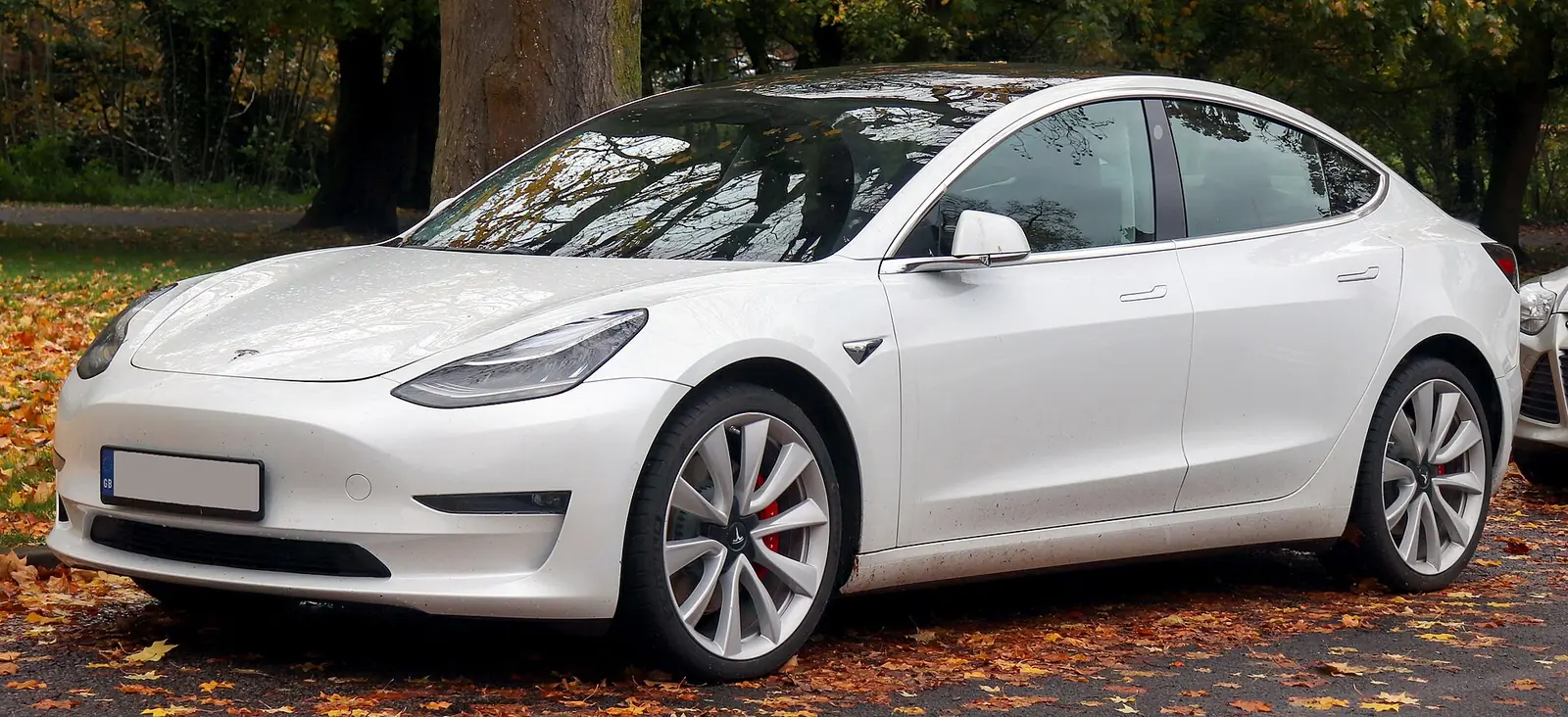
Red Tesla Model 3 Performance photographed from the front three-quarter angle, showing the grille-less nose and flush door handles

Image credit

File
File:2019 Tesla Model 3 Performance AWD Front.jpg
Author (attribution required)
Vauxford
Test Drive this car

The original car, built at Fremont from July 2017 and later at Shanghai too.[1]

Two things about the numbers below are worth knowing before you read them.

Tesla publishes no power figure for any Model 3, so every output here comes from a regulator. For the rear-drive car that is the EPA, which records the motor rating. For the dual-motor car the EPA is no help: it rates the two motors separately, and a front and a rear rating cannot be added into a system output, so the figure comes from Natural Resources Canada, which publishes a single combined output in kilowatts.[2]

And every acceleration claim Tesla makes is a 0–60 mph time, which is not the 0–100 km/h time this site records, so those cells are empty rather than approximated.

Overview

Manufacturer
Tesla
Produced
2017–2023
Designer
Franz von Holzhausen
Segment
D-segment (Europe) / Mid-size (US)
Positioning
Premium
Assembly
  • Fremont, California, United States (Tesla Fremont Factory)
  • Shanghai, China (Gigafactory Shanghai)

Dimensions

Length
4,694 mm

Published as 184.8 in and converted at 25.4 mm/in. The 2023 facelift is longer, at 4,720 mm.

[1]

Width
1,849 mm

Published as 72.8 in, excluding mirrors, and converted at 25.4 mm/in.

[1]

Height
1,443 mm

Published as 56.8 in and converted at 25.4 mm/in.

[1]

Wheelbase
2,875 mm

Published as 113.2 in and converted at 25.4 mm/in.

[1]

Kerb weight
Not yet available

Long Range RWD

Trim · 2017–2019

Power
202 kW

Tesla publishes no power figure for the Model 3. The EPA vehicle record for the 2018 Long Range gives the motor as 202 kW, which is the only public-domain figure for it.

[3]

Torque
Not yet available
Kerb weight
1,726 kg

Published as 3,805 lb and converted at 0.45359237 kg/lb.

[1]

0–100 km/h
Not yet available
Top speed
225 km/h

Published as 140 mph and converted exactly. Tesla quotes 0-60 mph in 5.0 s; that is not a 0-100 km/h time and is deliberately not recorded as one.

[1]

Electric consumption
16.1 kWh/100 km

EPA combined 25.88 kWh/100 mi, converted at 1.609344 km/mi. Measured at the wall, so it includes charging losses.

[3]

Battery capacity
75.0 kWh

Usable capacity of the pre-2021 Long Range pack. Cars built from 2021 used an 82 kWh pack.

[1]

Electric range
499 km

EPA combined range, published as 310 miles and converted at 1.609344 km/mi. A WLTP figure of 580 km is published for the same car; the two cycles are not comparable.

[1]

Drag coefficient
0.23

Listed for the Tesla Model 3, 2017. The list records it as a manufacturer press-kit figure.

[4]

Frontal area
Not yet available
Boot volume
Not yet available
Seats
5
Engine
single motor, interior permanent magnet synchronous reluctance
Drivetrain
Rear-wheel drive

Performance AWD

Trim · 2018–2023

Power
358 kW

Natural Resources Canada rates the 2018–2020 Model 3 Long Range AWD Performance at 358 kW combined: a single regulator-published system output, not the sum of two motor ratings, which is why it can be recorded where the EPA per-motor figures could not be. The same table rates the 2021–2023 Performance at 321 kW, so this trim did not hold one output for its whole run; 358 kW describes the earlier car. The non-Performance Long Range AWD is rated 335 kW.

[2]

Torque
Not yet available
Kerb weight
1,847 kg

Published as 4,072 lb and converted at 0.45359237 kg/lb.

[1]

0–100 km/h
Not yet available
Top speed
249 km/h

Published as 155 mph and converted exactly.

[1]

Electric consumption
Not yet available
Battery capacity
82.0 kWh

Cars built from 2021. Earlier Performance cars used the 75 kWh pack.

[1]

Electric range
Not yet available
Drag coefficient
Not yet available
Frontal area
Not yet available
Boot volume
Not yet available
Seats
5
Engine
dual motor - synchronous reluctance rear, induction front
Drivetrain
All-wheel drive

Sources & confidence

Every figure above carries a status. Nothing on this page is estimated without saying so, and nothing missing has been filled in with a guess.

Last verified
2026-08-18
Review status
Spot-checked by hand

Photography on this page is credited on each image. Tap theion a photograph for its author, licence and source.

References

Every sourced figure and every cited claim on this page, numbered. Wikipedia articles record the revision they were read at, because the article will have changed by the time you check it.

  1. [1]

    Tesla Model 3. Wikipedia · revision 1369968684 · read 2026-08-18

    WikipediaCC BY-SA 4.0

    The Model 3 has no separate per-generation article: one article covers both the 2017 car and the 2023 "Highland" facelift, in two specification tables headed "Currently available" and "Discontinued". Where those tables disagree with the infobox, the tables are the more specific figure and are what is cited here.

  2. [2]

    Fuel consumption ratings — battery-electric vehicles, model years 2012–2026 (Natural Resources Canada). Natural Resources Canada / Government of Canada · read 2026-08-18

    DatasetOpen Government Licence – Canada

    Publishes a single combined motor output in kilowatts for dual-motor cars, which is exactly what EPA does not: EPA rates each motor separately and Tesla publishes nothing. Metric throughout (kW, km, kWh/100 km, g/km), so no conversion is needed. Canadian-market ratings, so the variant naming follows Canadian trim names.

  3. [3]

    2018 Tesla Model 3 Long Range — EPA fuel economy record (vehicle 39836). US EPA / US Department of Energy · read 2026-08-18

    DatasetPublic domain (US Government work)Cited by the specifications

    EPA records the motor as 202 kW. Range 310 miles combined.

  4. [4]

    List of automobile drag coefficients. Wikipedia · revision 1360737555 · read 2026-08-17

    WikipediaCC BY-SA 4.0Cited by the specifications

    The aerodynamic source named in several hundred production and concept vehicles, 1921 to 2024.