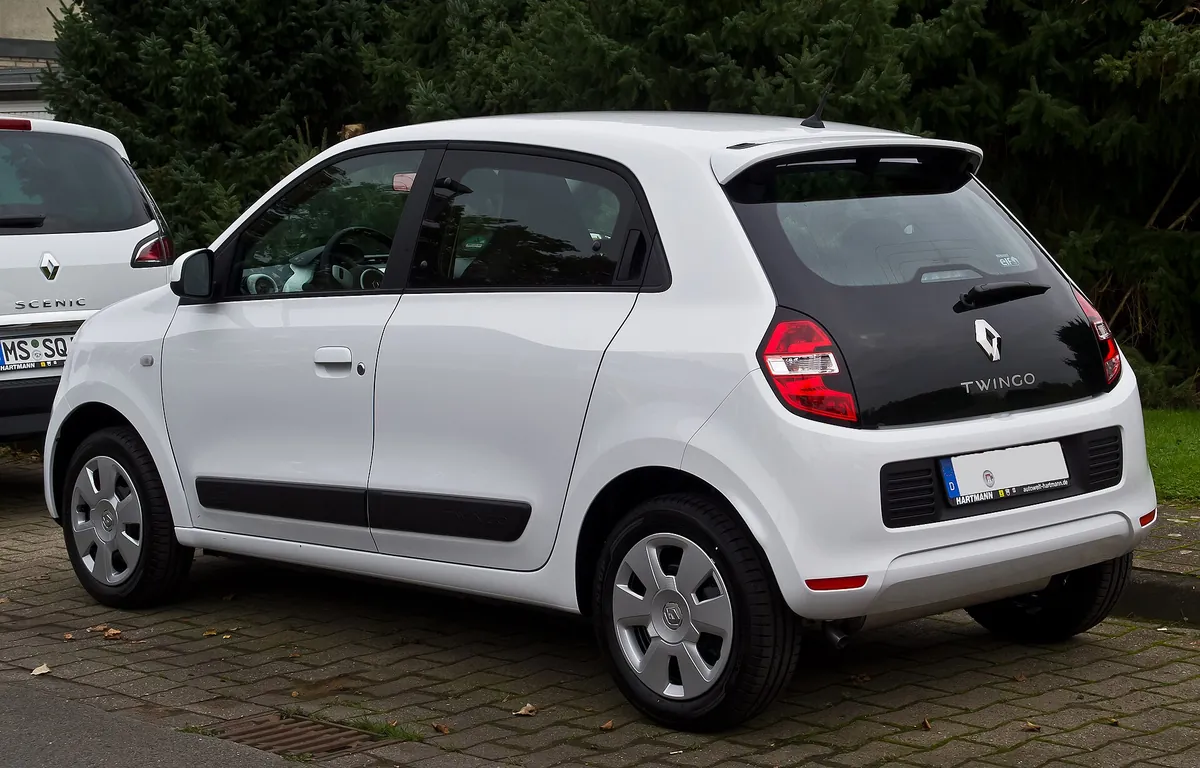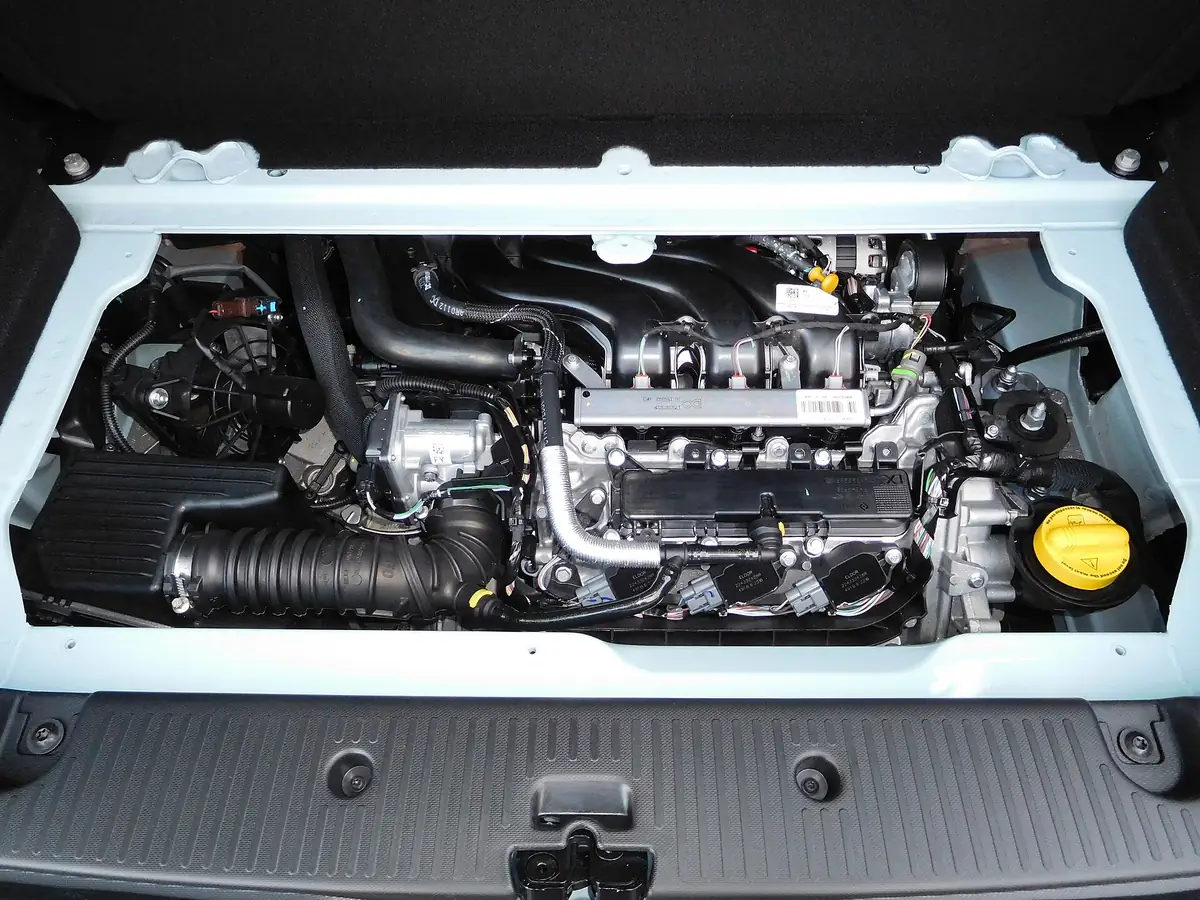
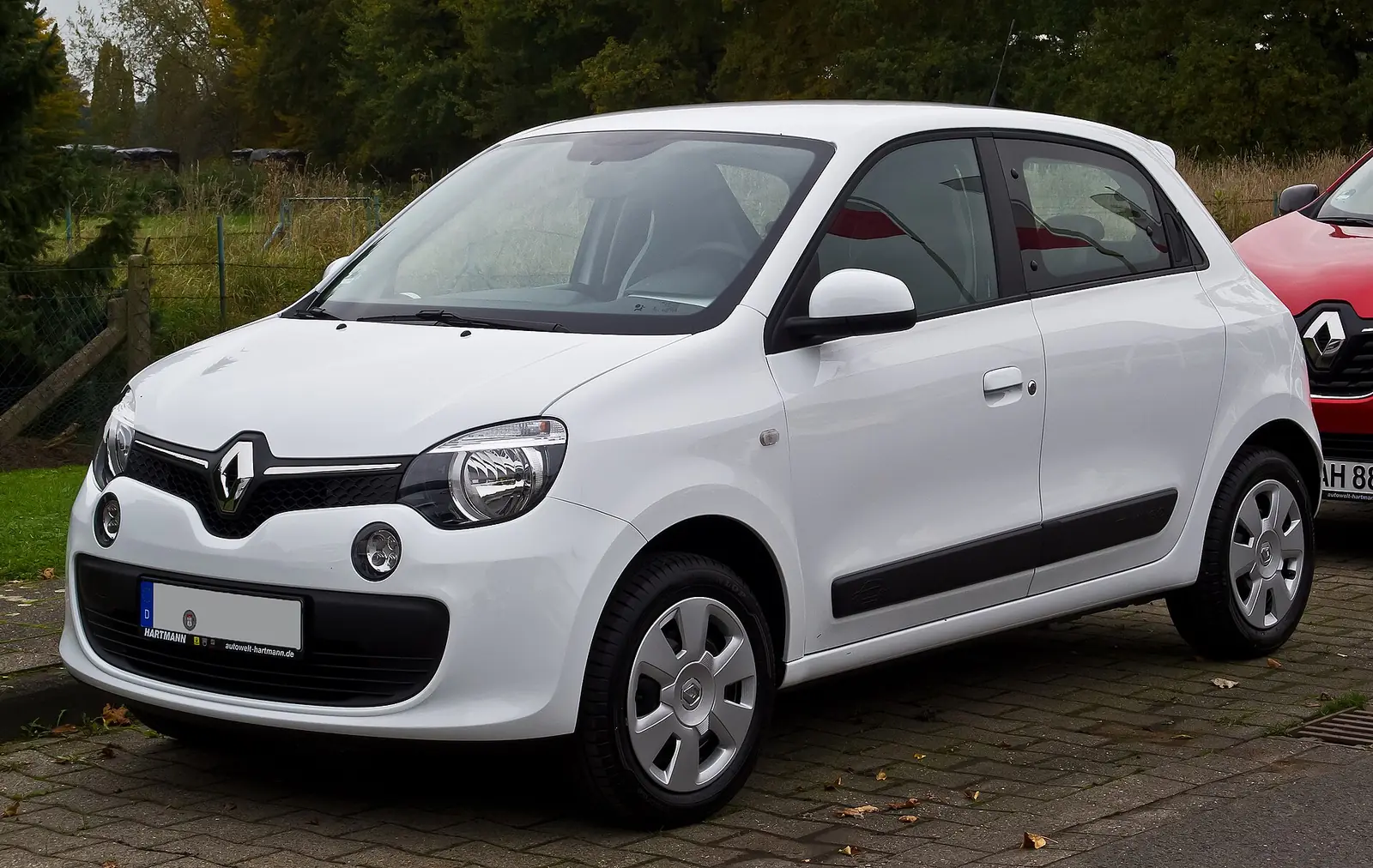
The third Twingo, revealed at the 2014 Geneva Motor Show, abandoned its predecessors’ front-engine layout for a rear-mounted engine driving the rear wheels. This was a change made possible by “Project Edison”, a shared platform developed jointly with Daimler for this car and the third-generation Smart Fortwo and Forfour.[1] Moving the engine let Renault give the car a five-door body, a tighter 8.6 m turning circle from its 45° steering angle, and more cabin space, at the cost of boot capacity. The GT model, added in 2016, was the range-topping petrol turbo.
In 2020 the range gained the Twingo Electric (badged Z.E., or E-Tech Électrique in France), sharing its rear-mounted motor and much of its drivetrain with the Smart EQ Forfour. It is recorded here as a fourth trim on this generation rather than as its own entry, matching how the source treats it, a stopgap electric city car built on the outgoing platform rather than a new generation, sold alongside the two petrol engines until the whole range ended production in 2024.