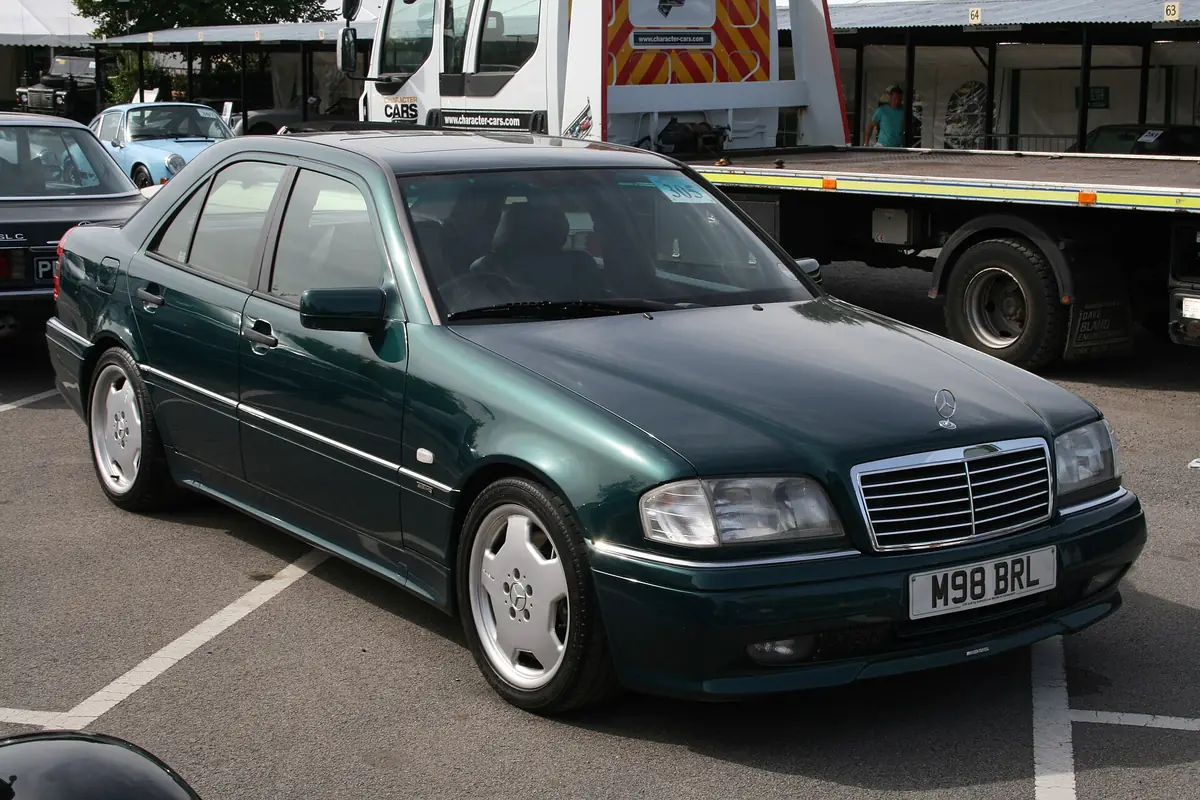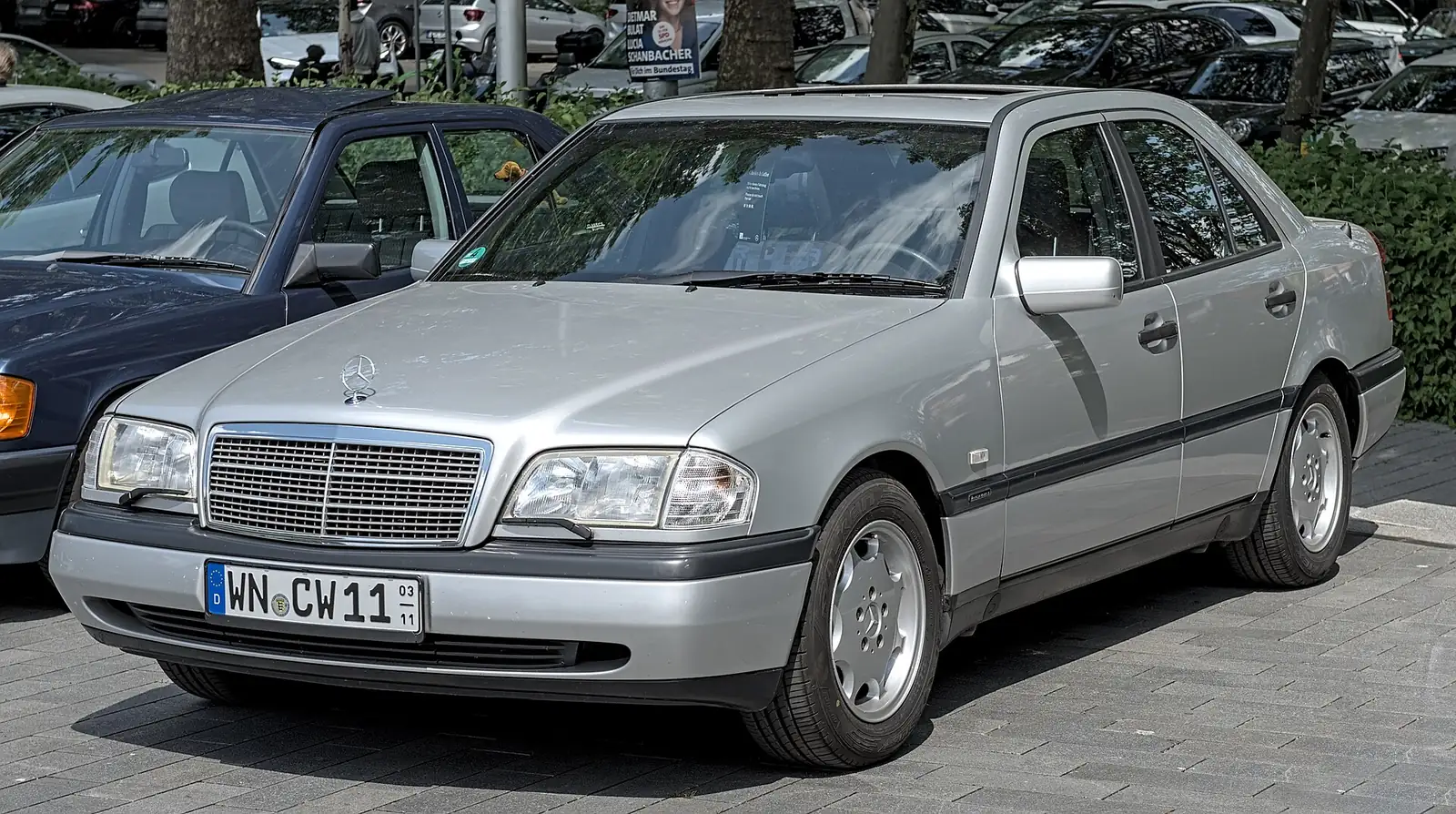
The car that gave the C-Class its name. Before 1993 this segment was the 190E; the W202 replaced it with a smaller, upright face borrowed from the contemporary E-Class, sold only as a saloon and, from 1995, an estate (S202).[1]
The range ran from a 90 kW four-cylinder C 180 to a diesel C 220 that outsold the petrol cars in several markets on reliability and running cost alone. In 1993 AMG (by then a Daimler-Benz subsidiary rather than an independent tuner) built its first C-Class, the C 36 AMG, explicitly to counter BMW’s six-cylinder E36 M3. Its 3.6-litre straight-six made 206 kW, a figure Mercedes never bettered on a naturally aspirated six in this body: the later C 43 and C 55 AMG cars that followed switched to V8s.
Kerb weights and weight distribution here come from Canadian-market NHTSA records rather than a German factory brochure, matched by badge and engine displacement to the C220, C280 and C36 AMG cars specifically; the C280 record does not publish a weight distribution figure, so that field is simply absent rather than guessed.