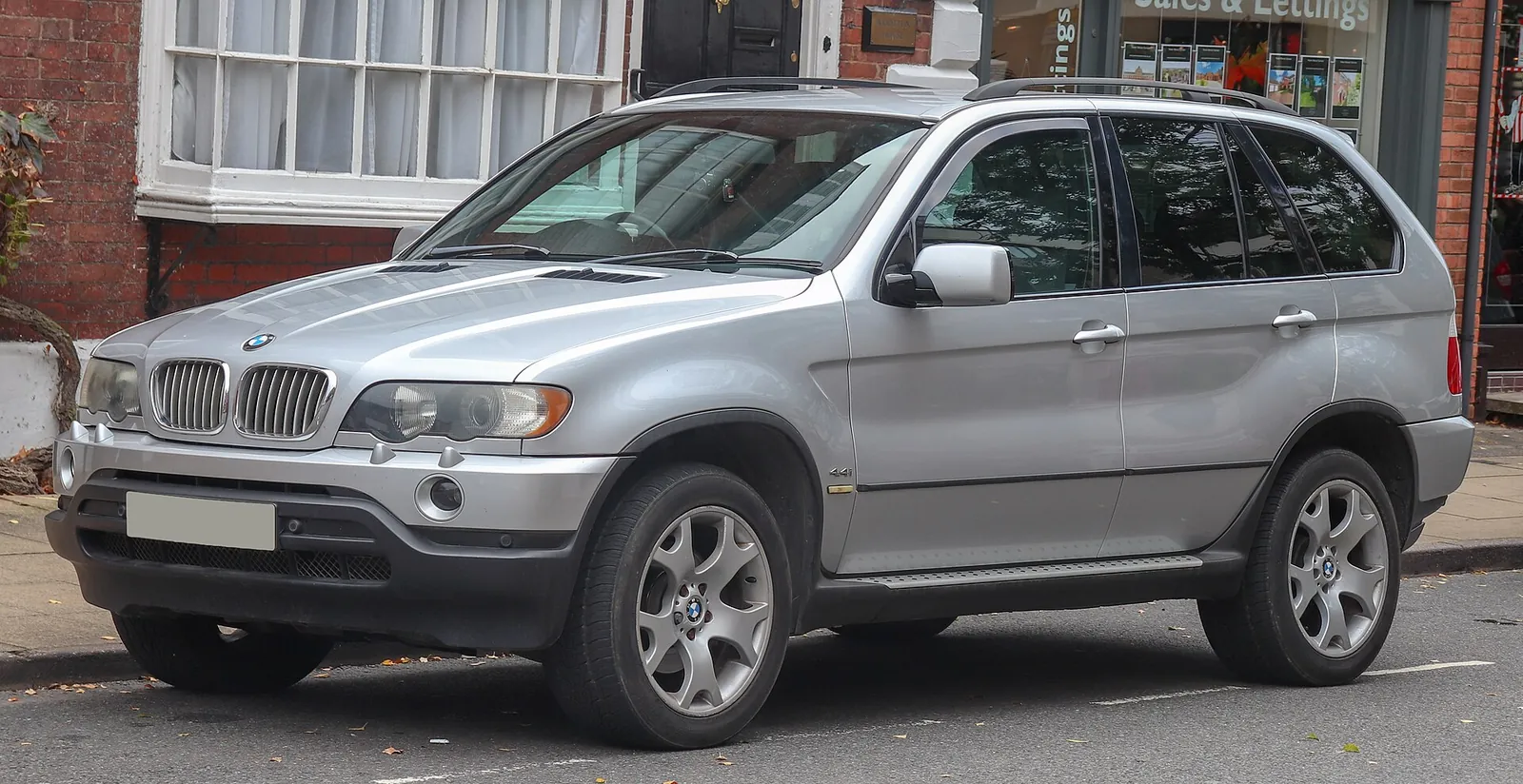
Developed just after BMW’s acquisition of Land Rover, the E53 shares its hill-descent control and off-road engine management with the contemporary Range Rover L322, and its engines and electronics with the E39 5 Series.[1] BMW deliberately sent 62% of engine torque to the rear axle even in all-wheel-drive form, choosing to feel like one of its own sedans rather than a conventional 4x4. That is a decision every X5 since has kept.
The source’s own engine table states output only as “hp” without saying whether that means metric PS or mechanical horsepower, common practice in a German-market article but still an ambiguity this site does not resolve silently; both trims below convert on the metric-PS reading with the alternative noted alongside.