
Vieux Carré
Rye, cognac, sweet vermouth and Bénédictine, stirred over ice.

CC BY-SA 4.0 · Cropped, white-balanced, graded and re-encoded to WebP by eXir.
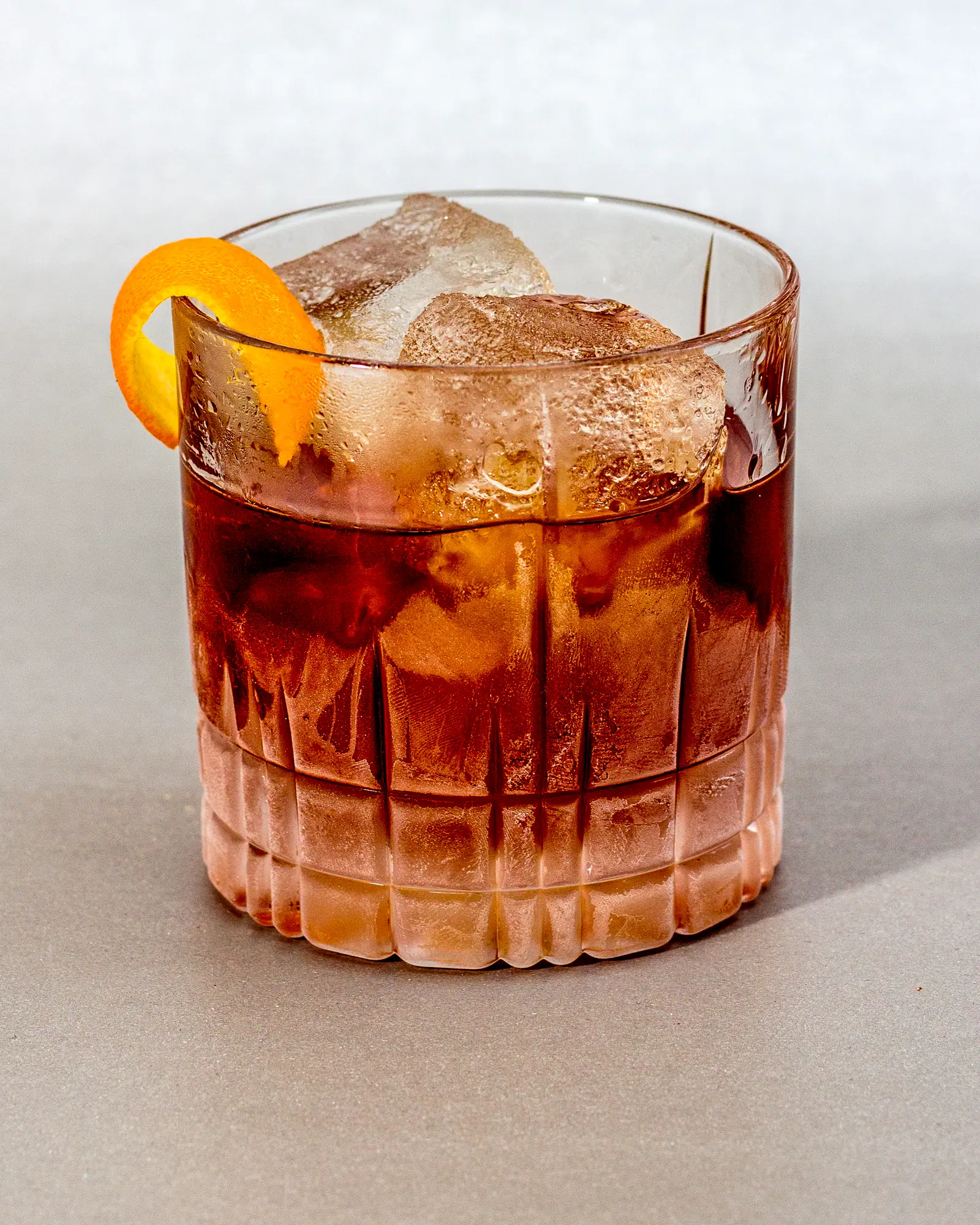
A Vieux Carre served over ice in a rocks glass, deep reddish-amber, with an orange twist against the rim
Serving
Drink spec, per drink
Every figure above is per drink and does not move with the count, which is what makes the two service modes comparable. Sugar per litre, strength and standard drinks stay in the units their own authorities publish, because they are figures for comparing rather than for pouring. Dilution is modelled rather than measured, as a fraction of the poured volume before any ice; dotted figures descend from that estimate.
Vermouth is wine-based, and wine may be clarified with isinglass, made from fish, or with gelatine. Neither is a declarable allergen and neither has to appear on a label, so whether a particular bottle is vegan is a question about that producer rather than about vermouth.
The producer lists honey among the botanicals steeped in some published accounts of the recipe, but the maker's own current nutrition disclosure lists no animal-derived ingredient. Recorded as none rather than varies because the one figure available is the producer's own.
The producer's own product page states the bitters are 100% vegan and gluten-free.
Diet and allergen labels are computed from the ingredients listed on this page and nothing else. They cannot account for cross-contamination or for the particular product you buy, and they are not medical or safety guidance.
Ingredients
 23 ml rye whiskey
 23 ml cognac
 23 ml sweet vermouth
 7.5 ml BénédictineProprietary
 1 dash Peychaud's Bitters (0.9 ml)Proprietary
 1 dash Angostura Aromatic Bitters (0.9 ml)Proprietary
 1 lemon (58 g)
- 23 ml rye whiskey
- 23 ml cognac
- 23 ml sweet vermouth
- 7.5 ml BénédictineProprietary
- 1 dash Peychaud's Bitters (0.9 ml)Proprietary
- 1 dash Angostura Aromatic Bitters (0.9 ml)Proprietary
- 1 lemon (58 g)
- ~33 ml water
Glass
Vessel
110 ml of liquid plus 130 ml of cubed ice occupies about 240 ml, inside the 300 ml the glass holds. The build fails if a recipe ever exceeds its stated vessel.
A batch needs a vessel that closes and fits a fridge shelf.
Method
4 steps · 1m 35sChill a rocks glass.
Combine the 23 ml rye whiskey, the 23 ml cognac, the 23 ml sweet vermouth, the 7.5 ml Bénédictine, the 1 dash Peychaud's Bitters (0.9 ml) and the 1 dash Angostura Aromatic Bitters (0.9 ml) in a mixing glass filled with cubed ice.
Four spirituous ingredients and two bitters go into the mixing glass together rather than in any particular order, because nothing here is acidic or dairy and there is no emulsion to protect. Stirring is about temperature and dilution alone.
Stir for 25s, until the outside of the glass is frosted, and strain into the chilled glass over fresh ice.
Cut a 4 cm swathe of lemon peel, hold it skin-outwards over the surface and squeeze so the oil lands on the drink. Rub it around the rim and drop it in.
Common pitfallFour strong, distinctly flavoured ingredients in close to equal measure leave no single one to lean on if any bottle is off. A tired or over-oxidised vermouth disappears into the other three rather than standing out as the culprit, which makes it the ingredient most worth checking first when the drink tastes flat.
Keeping and make-ahead
Batched ahead, this keeps sealed and cold. The water line the engine adds is the dilution figure from the spec panel, not a rule of thumb.
About
A 1938 French Quarter hotel drink built from two older New Orleans templates at once, named for the neighbourhood rather than for the person usually credited with it.
The name is French for "old square" and refers to the French Quarter, the neighbourhood the Hotel Monteleone sits in rather than to any person 1. The hotel's own account credits its head bartender, Walter Bergeron, with creating the drink at its Carousel Bar in 1938 2. That credit is repeated widely and has never been supported by anything contemporary, which is worth stating plainly rather than passing over: the date and the hotel are well attested, and the attribution to Bergeron rests more thinly than either 1.
The recipe is built from two older drinks rather than from a fresh idea. Rye whiskey and a pair of New Orleans bitters, Peychaud's and Angostura, place it in the same lineage as the Sazerac, while cognac and sweet vermouth in close to equal measure recall a Manhattan built with brandy instead of a single whiskey. Bénédictine, a French herbal liqueur, is the one ingredient that belongs to neither ancestor.
However it was arrived at, the combination sits later than both of the drinks it draws from. The Sazerac's absinthe-and-rye build was established in New Orleans decades earlier, and the Manhattan's whiskey-and-vermouth shape was already standard nationally by the 1880s. The Vieux Carré is a hotel bar's 1930s answer to what happens when both are poured into the same glass rather than a new discovery, and the four spirituous ingredients in close to equal parts are what keep it from reading as simply a heavier Manhattan or a softer Sazerac.
- 1Vieux Carré (cocktail)en.wikipedia.org
- 2Vieux Carre Cocktail at Hotel Monteleonehistorichotels.org