
Thai Iced Tea
Black tea spiced with star anise, sweetened with condensed milk and finished with a float of evaporated milk over ice.
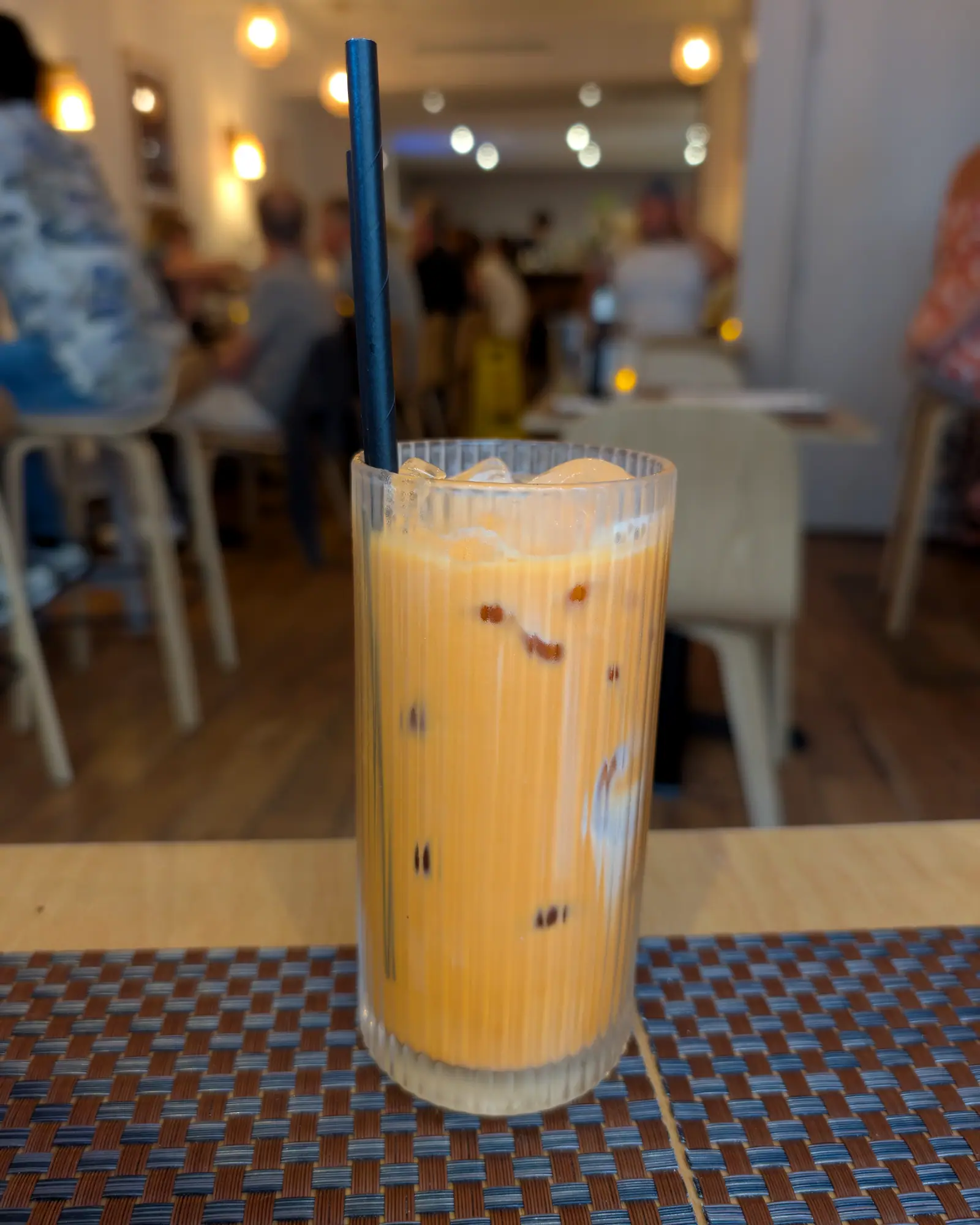
CC0 · Cropped, white-balanced, graded and re-encoded to WebP by eXir.
Orange Thai iced tea in a tall glass over ice, with a straw
Serving
Drink spec, per drink
Every figure above is per drink and does not move with the count, which is what makes the two service modes comparable. Sugar per litre, strength and standard drinks stay in the units their own authorities publish, because they are figures for comparing rather than for pouring.
Diet and allergen labels are computed from the ingredients listed on this page and nothing else. They cannot account for cross-contamination or for the particular product you buy, and they are not medical or safety guidance.
Extraction
No extraction yield is shown. It needs a measured dissolved-solids figure from the finished cup, nothing on a bag of coffee supplies one, and estimating it from the method would be inventing the single number the calculation exists to establish.
Ingredients


Glass
Vessel
135 ml of liquid plus 230 ml of cubed ice occupies about 365 ml, inside the 400 ml the glass holds. The build fails if a recipe ever exceeds its stated vessel.
A batch needs a vessel that closes and fits a fridge shelf.
Method
5 steps · 5mPour the 120 ml water at 100 °C over the 6 g black tea and the 1 g star anise and steep for 5m.
Strain out the leaf and spice.
Stir in the 20 ml condensed milk while the tea is still hot enough to dissolve it fully.
Let cool, then pour over cubed ice in a tall glass.
Pour the 15 ml evaporated milk slowly over the back of a spoon so it sits on top as a pale layer.
The evaporated milk is poured last, over the back of a spoon, so it sits as a pale layer on top rather than mixing straight in; stirring it through loses the two-tone look the drink is known for before the first sip.
Common pitfallThe tea's bright orange colour on a menu photograph almost always comes from added colouring rather than the tea and spice alone, which brew to a tan or caramel shade; colouring has no effect on flavour and is left out of this recipe as a cosmetic rather than a compositional choice.
Keeping and make-ahead
Batched ahead, this keeps sealed and cold. The water line the engine adds is the dilution figure from the spec panel, not a rule of thumb.
About
Black tea spiced with star anise and sweetened with condensed milk, its orange colour on a menu almost always added rather than brewed.
Tea reached Thailand through Chinese merchants who settled around its trading ports, and it took hold domestically during the reigns of King Rama IV and King Rama V in the mid-to-late nineteenth century 1. The traditional brew was built on that base by adding local aromatics (accounts differ on the exact list, but star anise, tamarind and orange blossom water recur across most of them) 1 2.
The drink's now-familiar creamy form is a later, mid-twentieth-century development, associated with the period of Westernising reform under Field Marshal Plaek Phibunsongkhram, when sweetened condensed and evaporated milk became standard additions to the spiced tea 1. Vendor and restaurant culture pushed the drink further in that direction, and pre-blended, pre-mixed Thai tea powder made it fast and consistent enough to become a fixture of street stalls and restaurants alike 2.
The bright orange colour most people associate with the drink is not a product of the tea or the spice at all. Naturally brewed strong black tea with milk comes out tan or caramel-coloured, and the orange seen today comes from added colouring, for reasons that are themselves disputed: one account holds that vendors coloured rebrewed, fading tea leaves to disguise the weaker second steep, while another holds that colouring was introduced simply to tell Thai iced tea apart from Thai iced coffee, a similarly milky drink of nearly the same shade 1. Either way, the dye changes the drink's appearance and nothing about its flavour 2.
- 1Why is Thai Tea Orange? | Cha Yenlionbrand.com.au
- 2Thai Iced Tea (Cha Yen)teas.co.uk