
Suanmeitang
Smoked plums, hawthorn and tangerine peel boiled down, sweetened and finished with osmanthus, served ice cold.

CC0 · Cropped, white-balanced, graded and re-encoded to WebP by eXir.
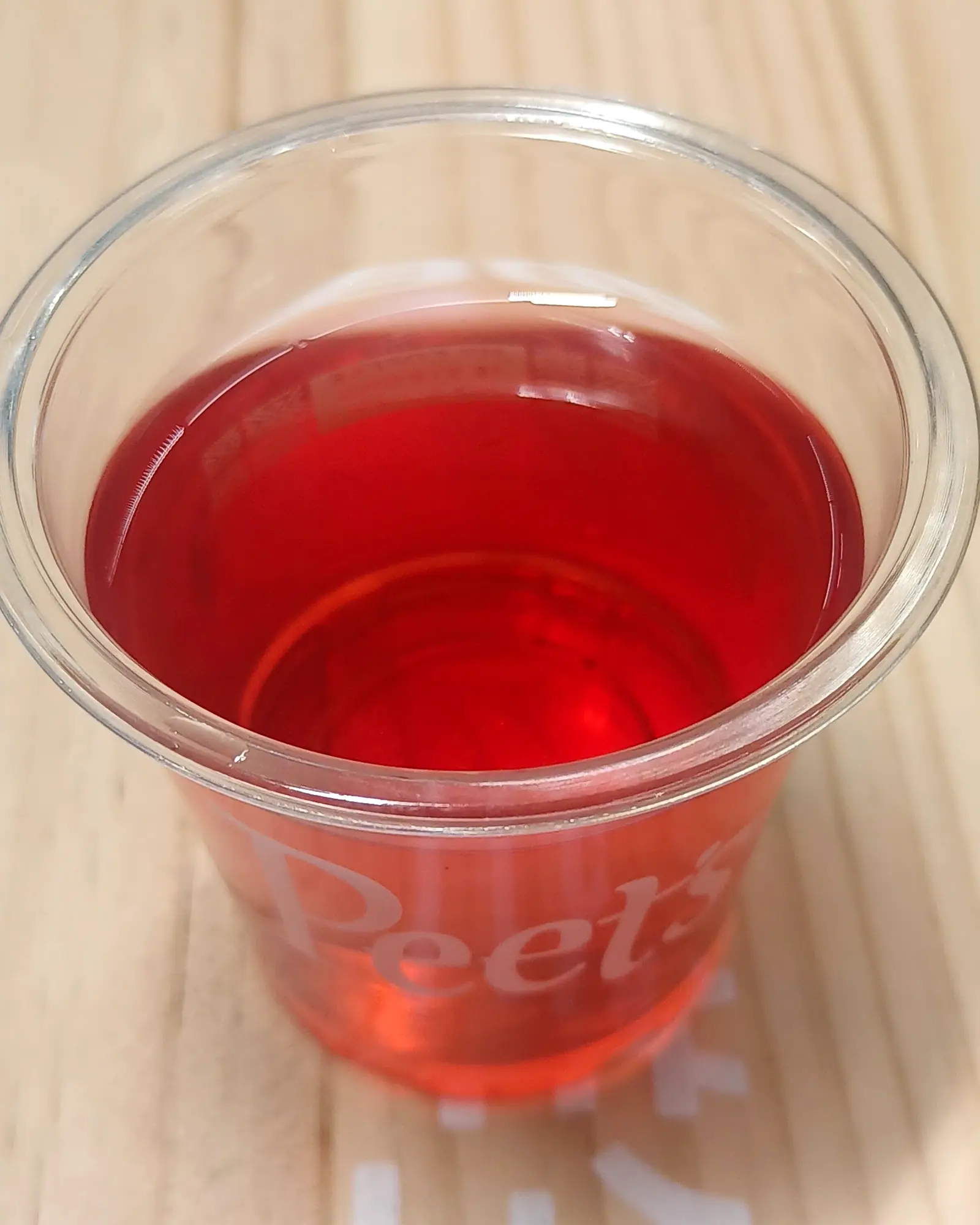
Suanmeitang, a deep red sour plum drink, filled to the brim of a clear plastic cup printed with the Peet's logo
Serving
Drink spec, per drink
Every figure above is per drink and does not move with the count, which is what makes the two service modes comparable. Sugar per litre, strength and standard drinks stay in the units their own authorities publish, because they are figures for comparing rather than for pouring.
Diet and allergen labels are computed from the ingredients listed on this page and nothing else. They cannot account for cross-contamination or for the particular product you buy, and they are not medical or safety guidance.
Ingredients
 40 g smoked plums
 20 g dried hawthorn
 8 g dried tangerine peel
 2 000 ml water
 150 g granulated sugar
 3 g dried osmanthus
- 40 g smoked plums
- 20 g dried hawthorn
- 8 g dried tangerine peel
- 2 000 ml water
- 150 g granulated sugar
- 3 g dried osmanthus
Glass
Vessel
349 ml of liquid, served without ice, inside the 400 ml the glass holds. The build fails if a recipe ever exceeds its stated vessel.
A batch needs a vessel that closes and fits a fridge shelf.
Method
4 steps · 2h 52mSimmer the 40 g smoked plums, the 20 g dried hawthorn and the 8 g dried tangerine peel in the 2 000 ml water for 45m, until the liquid has turned deep red-brown.
A long, gentle simmer rather than a hard boil pulls the sourness out of the plums slowly, which is what keeps the finished drink balanced rather than sharply acidic.
Strain out the solids and stir the 150 g granulated sugar into the hot liquid until fully dissolved.
Take the pot off the heat, stir in the 3 g dried osmanthus, and let it steep for 5m before straining it out too.
Refrigerate until fully cold before serving.
Common pitfallBoiling the osmanthus along with the plums and hawthorn cooks off most of its scent; it goes in only once the liquid is off the heat, steeped briefly and strained out before it turns bitter.
Keeping and make-ahead
Batched ahead, this keeps sealed and cold. The water line the engine adds is the dilution figure from the spec panel, not a rule of thumb.
About
A cold, sour-sweet Chinese plum drink with roots reaching back to the Song dynasty, refined into close to its modern form for the eighteenth-century Qing court before spreading to street vendors.
Drinks of this general kind are traced back at least as far as the Song dynasty, with a variant called "white suanmeitang" recorded during the following Yuan dynasty 1. The version closer to what is drunk today is a Qing dynasty development, said to have been prepared at the request of the Qianlong Emperor in the early eighteenth century, when it was a drink confined to the imperial court rather than something sold on the street 1. It moved beyond the palace only later, credited in one account to a Hebei merchant whose Xinyuanzhai brand carried it into wider commercial sale, and it stayed a specialty item made in shops rather than a mass product until companies began producing it industrially in the 1980s 1.
The drink is built from smoked plums simmered with hawthorn and dried citrus peel, sometimes with liquorice root, and finished with sweet osmanthus flowers, typically sweetened with rock sugar 2. It is drunk cold and is one of the most common summer drinks across China today, sold from carts and shopfronts as a way to cut through summer heat, and it carries a long-standing folk reputation for settling the stomach and easing the ache that follows hard exercise, though these are traditional beliefs about the drink rather than established medical claims 2.
- 1Suanmeitangen.wikipedia.org
- 2China Buzz: Enjoy refreshing Chinese summer beverages to beat the heat!en.people.cn