
Root Beer
Sassafras, sarsaparilla and wintergreen syrup, topped with soda water.
CC BY-SA 4.0 · Cropped, white-balanced, graded and re-encoded to WebP by eXir.
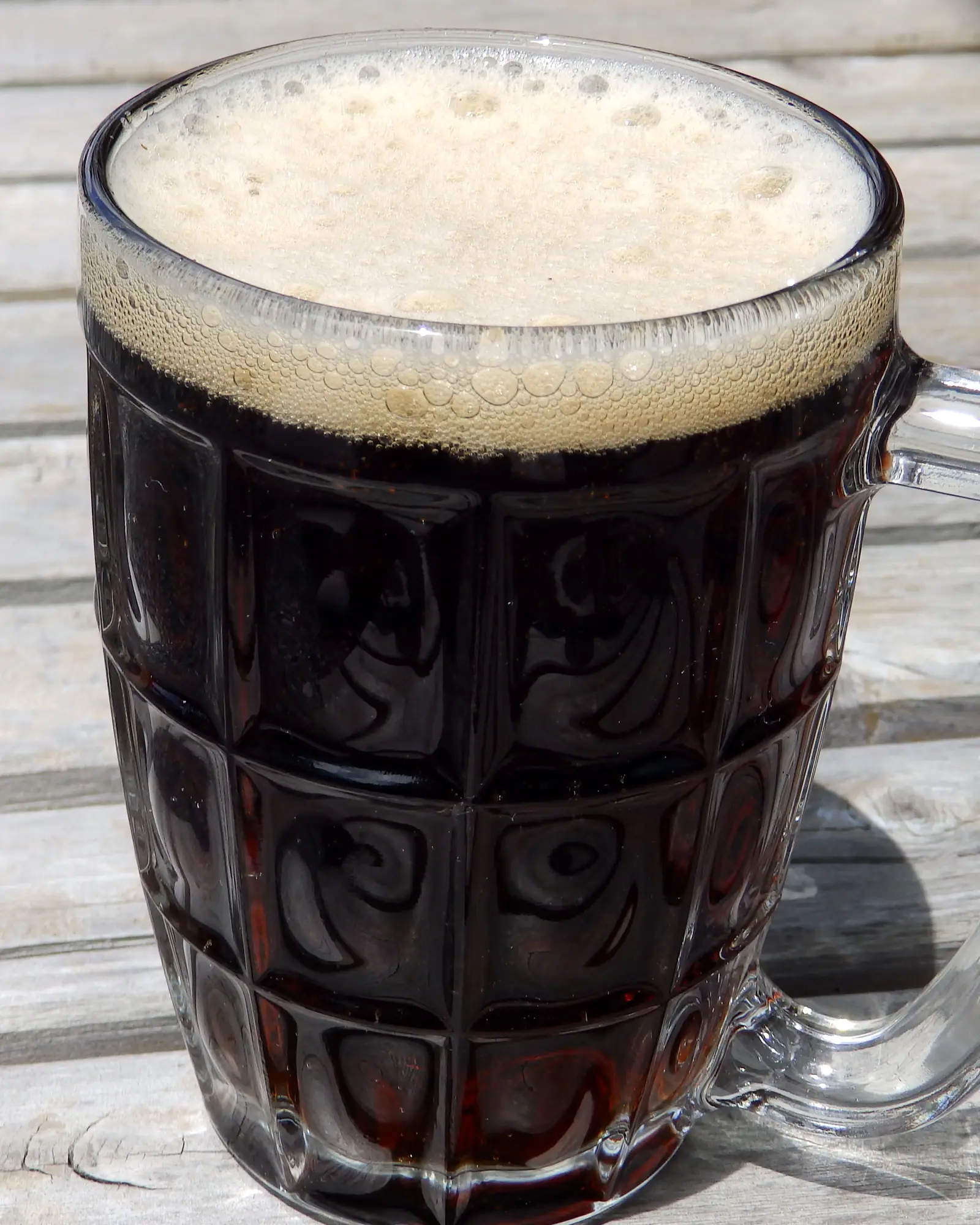
A mug of dark root beer with a thick foamy head
Serving
Drink spec, per drink
Every figure above is per drink and does not move with the count, which is what makes the two service modes comparable. Sugar per litre, strength and standard drinks stay in the units their own authorities publish, because they are figures for comparing rather than for pouring.
Diet and allergen labels are computed from the ingredients listed on this page and nothing else. They cannot account for cross-contamination or for the particular product you buy, and they are not medical or safety guidance.


Glass
Vessel
150 ml of liquid plus 230 ml of cubed ice occupies about 380 ml, inside the 400 ml the glass holds. The build fails if a recipe ever exceeds its stated vessel.
A batch needs a vessel that closes and fits a fridge shelf.
Method
2 steps · 30sPour the 25 ml root beer syrup into a glass filled with ice.
Top with the 125 ml soda water and stir once, gently, to keep the fizz.
This is a force-carbonated, syrup-based root beer rather than a fermented one (the fizz comes from the soda water rather than from yeast), which is how almost all root beer sold today, and the version here, is actually made.
Common pitfallThe sassafras this recipe calls for has to be a safrole-free bark or extract. Whole sassafras bark and oil contain safrole, a compound US regulators prohibited as a food additive after animal studies linked it to liver damage; raw bark sold for kitchen use and every commercial root beer are required to be safrole-free as a result.
Keeping and make-ahead
Batched ahead, this keeps sealed and cold. The water line the engine adds is the dilution figure from the spec panel, not a rule of thumb.
About
An American soda-fountain drink built on sassafras, reformulated after regulators identified its defining flavour compound, safrole, as a carcinogen and prohibited it from food and drink.
Root beer descends from colonial-era American small beers brewed from sassafras and other roots, with written recipes documented from the 1830s and sale from confectionery stores recorded by the following decade 1. The drink was originally taken hot, for its supposed medicinal value, before it was combined with carbonated soda water in the 1850s 1. The pharmacist Charles Elmer Hires developed the sassafras-based formula that made it a commercial product, launching it publicly at Philadelphia's 1876 Centennial Exposition; despite being a teetotaler who reportedly preferred the name "root tea," Hires adopted "root beer" instead, on the reasoning that it would sell better to the Pennsylvania coal miners he was marketing it to 1.
The recipe changed for a regulatory rather than a commercial reason. Safrole, the aromatic compound that gives raw sassafras bark its characteristic flavour, was identified through animal studies as a cause of liver damage and cancer, and food and drug regulators in the United States prohibited it as a food additive as a result 2. Every commercial root beer sold since has had to be made without whole sassafras bark or oil, using either a specially processed safrole-free sassafras extract or a synthetic flavouring built to approximate it, generally supported by other root and spice flavours such as wintergreen, vanilla and sarsaparilla 1. The syrup-and-soda-water method used today, including on this page, is a direct continuation of that reformulation rather than of the drink's original fermented recipe.
- 1Root beeren.wikipedia.org
- 2Why Is Sassafras Banned?medicinenet.com