
Peppermint Tisane
Dried peppermint leaf steeped in hot water, with no tea leaf in it at all.
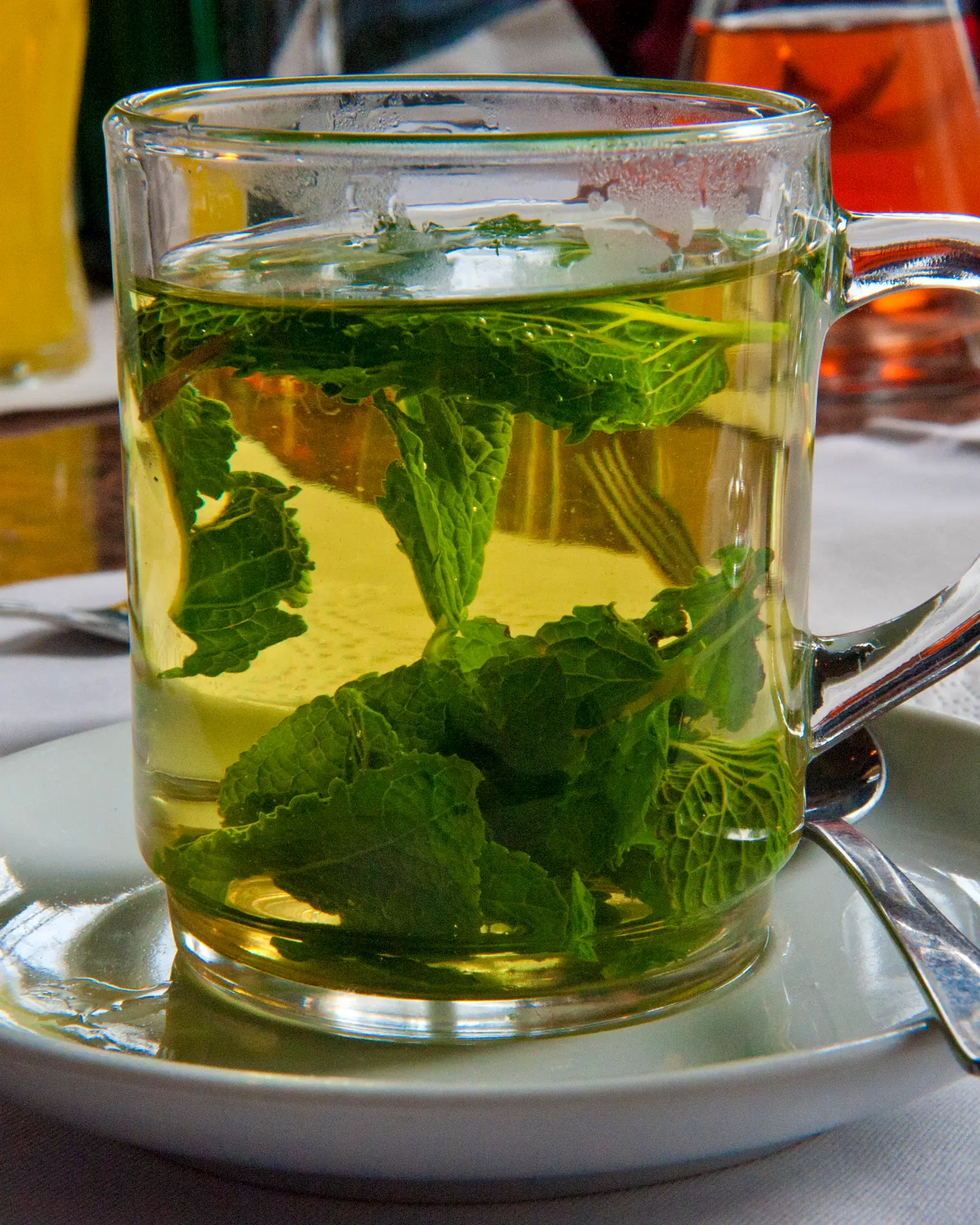

CC BY 3.0 · Cropped, white-balanced, graded and re-encoded to WebP by eXir.
A glass cup of peppermint tea with mint leaves floating in it, pale green-gold
Serving
Drink spec, per drink
Every figure above is per drink and does not move with the count, which is what makes the two service modes comparable. Sugar per litre, strength and standard drinks stay in the units their own authorities publish, because they are figures for comparing rather than for pouring.
Diet and allergen labels are computed from the ingredients listed on this page and nothing else. They cannot account for cross-contamination or for the particular product you buy, and they are not medical or safety guidance.
Extraction
No extraction yield is shown. It needs a measured dissolved-solids figure from the finished cup, nothing on a bag of coffee supplies one, and estimating it from the method would be inventing the single number the calculation exists to establish.
Ingredients
 190 ml water
 3 g dried peppermint
- 190 ml water
- 3 g dried peppermint
Glass
Vessel
160 ml of liquid, served without ice, inside the 200 ml the glass holds. The build fails if a recipe ever exceeds its stated vessel.
A batch needs a vessel that closes and fits a fridge shelf.
Method
2 steps · 5mPour the 190 ml water at 100 °C over the 3 g dried peppermint, cover, and steep for 5m.
A lidded pot or a cover over the cup keeps the volatile menthol oils from steaming off with the rising heat; steeped open, the same leaf gives a noticeably thinner cup.
Strain into a cup, leaving the spent leaf behind.
Common pitfallDried peppermint left in past its steep keeps releasing tannin long after the aromatic oils have already given up their peak, which is what turns an otherwise mild tisane grassy and flat rather than minty.
Keeping and make-ahead
Batched ahead, this keeps sealed and cold. The water line the engine adds is the dilution figure from the spec panel, not a rule of thumb.
About
Dried peppermint leaf steeped alone in hot water, a caffeine-free infusion built on a plant first cultivated deliberately only in the seventeenth century.
Peppermint is not an old species in the way many infusion plants are. It is a natural hybrid of watermint and spearmint, and rather than being gathered wild across centuries, it was first cultivated deliberately in England only in the late seventeenth century 1. What predates that cultivation is the mint family more broadly: dried mint leaves have been found in Egyptian pyramids from around 1000 BC, and both ancient Greek and Roman writers valued mint for the stomach rather than for taste alone 1 2.
Once identified as its own hybrid, peppermint moved quickly into formal medicine. It was listed in the London Pharmacopoeia in 1721, and through the eighteenth century it became a standard remedy across Western Europe for nausea, indigestion and related complaints, the same uses claimed for mint generically in earlier centuries but now attached to this specific plant 1. Commercial cultivation expanded over the same period, and it is from that point that peppermint appears reliably as an ingredient in its own right (in teas and in distilled oil alike) rather than as one mint among several used interchangeably 2.
As an infusion, peppermint tisane contains no Camellia sinensis and so carries none of true tea's caffeine; the drink is built entirely on the leaf's own volatile oils, principally menthol, released by hot water rather than extracted the way tannins are from a tea leaf.
- 1Peppermintencyclopedia.com
- 2What is Peppermint Tea? History, Benefits, and Morefullleafteacompany.com