
Paloma
Tequila and grapefruit soda, built over ice with a salted glass.
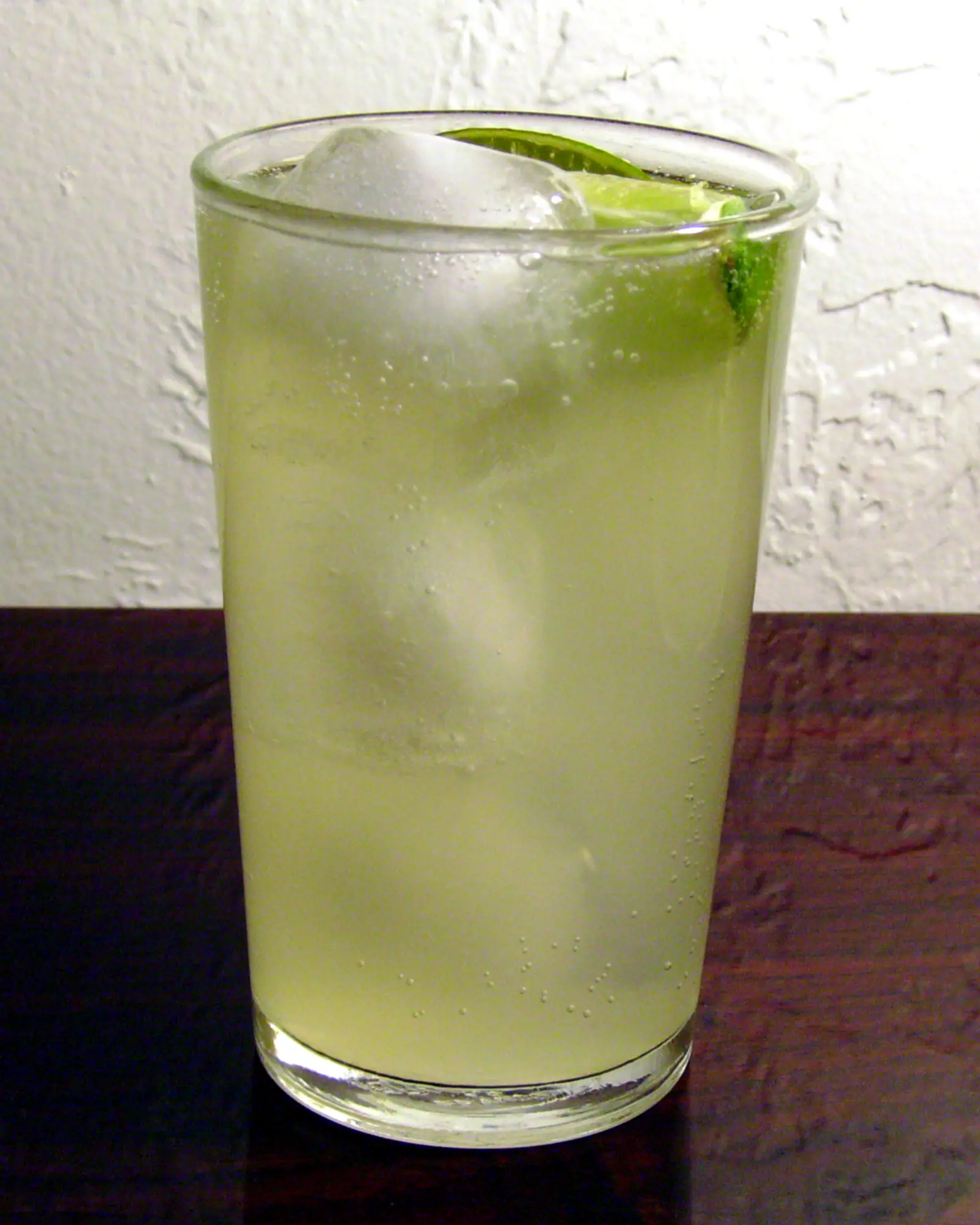

Public domain · Cropped, white-balanced, graded and re-encoded to WebP by eXir.
A Paloma in a tall glass over ice, pale yellow-green, garnished with a lime wedge on the rim
Serving
Drink spec, per drink
Every figure above is per drink and does not move with the count, which is what makes the two service modes comparable. Sugar per litre, strength and standard drinks stay in the units their own authorities publish, because they are figures for comparing rather than for pouring. Dilution is modelled rather than measured, as a fraction of the poured volume before any ice; dotted figures descend from that estimate.
Diet and allergen labels are computed from the ingredients listed on this page and nothing else. They cannot account for cross-contamination or for the particular product you buy, and they are not medical or safety guidance.
Ingredients
 50 ml blanco tequila
 15 ml fresh lime juice
 75 ml grapefruit soda
 2 g salt
 ½ lime (11 g)
- 50 ml blanco tequila
- 15 ml fresh lime juice
- 75 ml grapefruit soda
- 2 g salt
- ½ lime (11 g)
- ~35 ml water
Glass
Vessel
140 ml of liquid plus 200 ml of cubed ice occupies about 340 ml, inside the 350 ml the glass holds. The build fails if a recipe ever exceeds its stated vessel.
A batch needs a vessel that closes and fits a fridge shelf.
Method
4 steps · 1m 25sRun a lime wedge around half the rim of a highball glass and dip that half in salt.
Fill the glass with cubed ice.
Pour in the 50 ml blanco tequila and the 15 ml fresh lime juice.
Top with the 75 ml grapefruit soda and set a lime wedge on the rim.
The soda goes in last and the drink is not stirred afterwards, the same reasoning as any built highball: stirring throws off the carbonation the whole drink depends on.
Common pitfallSwapping in plain grapefruit juice and soda water changes more than the sweetness. Commercial grapefruit soda is built around a citrus concentrate rather than fresh juice, and its flavour is closer to candied grapefruit peel than to the fruit itself.
Keeping and make-ahead
Batched ahead, this keeps sealed and cold. The water line the engine adds is the dilution figure from the spec panel, not a rule of thumb.
About
Tequila and grapefruit soda over ice, more widely drunk in Mexico than the Margarita despite a far less certain origin story.
No bar or bartender is reliably credited with the Paloma, and the drink could not have existed before Squirt grapefruit soda went into production in Arizona in 1938 1. Squirt was not sold in Mexico until 1955, though tequila was already being mixed with carbonated sodas there under the name changuirongo before that, so which side of the border the specific tequila-and-grapefruit combination first appeared on is not settled 1.
Don Javier Delgado Corona, the longtime owner of La Capilla in the town of Tequila, Jalisco, is sometimes named as the drink's creator, but the claim rests mostly on his authorship of a different grapefruit-soda cocktail, the Batanga, and he never claimed the Paloma himself 1 2. In the United States, the drink's spread is tied to Texas rather than to Mexico directly: a pamphlet by bartender Evan Harrison, titled after the citrus-growing Rio Grande Valley, helped popularise it alongside the region's own Ruby Red grapefruit, itself the first patented citrus variety in the country 2.
The name (Spanish for "dove") has no documented source. It is treated by some as a nod to the drink's pale colour and by others as a reference to an older Mexican folk song of the same title, but neither claim is verified. The version most often served in Mexico today still leans on bottled grapefruit soda, usually Jarritos, rather than fresh juice and a separate sparkling top; the fresh-juice version more common outside Mexico is a later, bar-driven variation on the same simple build 2.
- 1The Contentious Origin Of The Paloma Cocktailtastingtable.com
- 2The History Of The Classic Palomachilledmagazine.com