
Fresh Orange Juice
Oranges, squeezed and strained, nothing added.
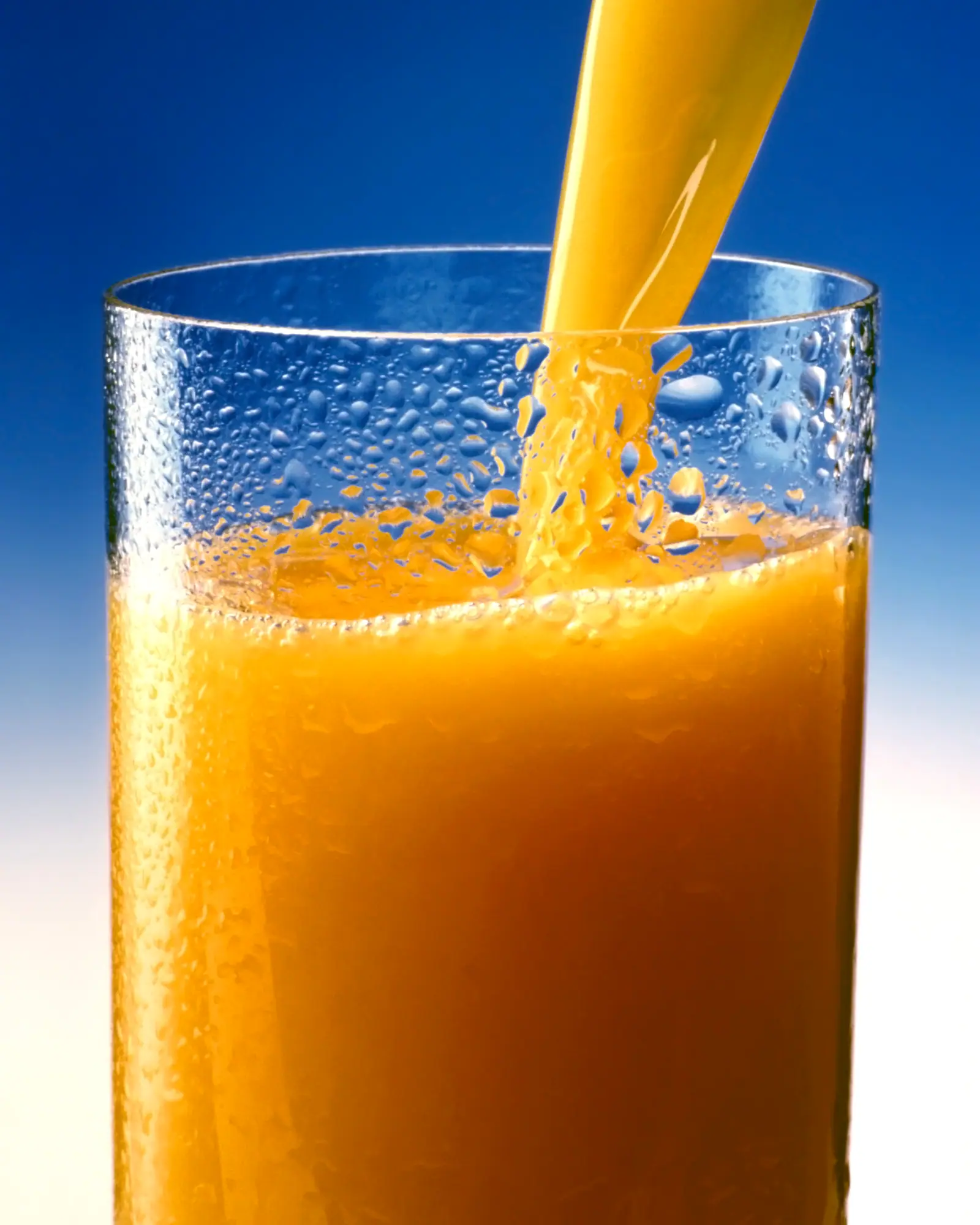

Public domain · Cropped, white-balanced, graded and re-encoded to WebP by eXir.
Orange juice being poured into a tall glass
Serving
Drink spec, per drink
Every figure above is per drink and does not move with the count, which is what makes the two service modes comparable. Sugar per litre, strength and standard drinks stay in the units their own authorities publish, because they are figures for comparing rather than for pouring.
Diet and allergen labels are computed from the ingredients listed on this page and nothing else. They cannot account for cross-contamination or for the particular product you buy, and they are not medical or safety guidance.
Ingredients
 250 ml fresh orange juice
- 250 ml fresh orange juice
Glass
Vessel
250 ml of liquid, served without ice, inside the 350 ml the glass holds. The build fails if a recipe ever exceeds its stated vessel.
A batch needs a vessel that closes and fits a fridge shelf.
Method
3 steps · 1m 25sHalve and squeeze the oranges for the 250 ml fresh orange juice.
Strain out the seeds, leaving as much or as little pulp as preferred.
A coarse strain that leaves some pulp behind is the usual choice for fresh orange juice, unlike a lemonade or a cocktail's citrus, because the pulp itself is part of what people expect from a glass of it.
Pour into a glass.
Common pitfallSqueezed and left standing, the juice separates and its aroma flattens within the hour; it is at its best poured straight from the squeezer rather than made ahead.
Keeping and make-ahead
Batched ahead, this keeps sealed and cold. The water line the engine adds is the dilution figure from the spec panel, not a rule of thumb.
About
A drink turned into a daily American habit by a single advertising campaign built to solve a California orange surplus, decades before frozen concentrate made it a year-round product.
Oranges were eaten whole and treated as an occasional, largely seasonal luxury in the United States through the early 20th century, rather than juiced and drunk daily 1. That changed with a single advertising campaign: facing a surplus of California oranges, the growers' cooperative later known as Sunkist hired the advertiser Albert Lasker, whose agency ran the slogan "Drink an Orange" alongside claims for the fruit's health benefits 1. The campaign also distributed cheap hand juicers to households, which made squeezing oranges at home practical for the first time on a mass scale 1. Orange juice went from a rarely consumed product to a standard part of the American breakfast within a few decades of that campaign 1.
The juice's year-round availability came later and for a different reason. During the Second World War, the United States government funded research into a better-tasting vitamin C source for soldiers' rations than the powdered lemon crystals then in use, working with Florida's citrus scientists 2. The resulting frozen concentrate was not finished until after the war ended, but by 1949 Florida's processing plants were producing over ten million gallons of it a year, sold as a cheap, convenient product that only needed water added back 2.
Later reformulations moved back toward fresh juice rather than away from it: a "reconstituted, ready-to-serve" style using fresher processing methods appeared in the 1980s, followed by "not from concentrate" juice in the 1990s, closer in method to the version pressed fresh at the glass that this page follows 2.
- 1Albert Lasker — The Man Who Added Oranges to America's Breakfastjuicenews.com
- 2Orange juiceen.wikipedia.org