
Nimbu Pani
Lime juice, sugar, water and a pinch of black salt and roasted cumin.
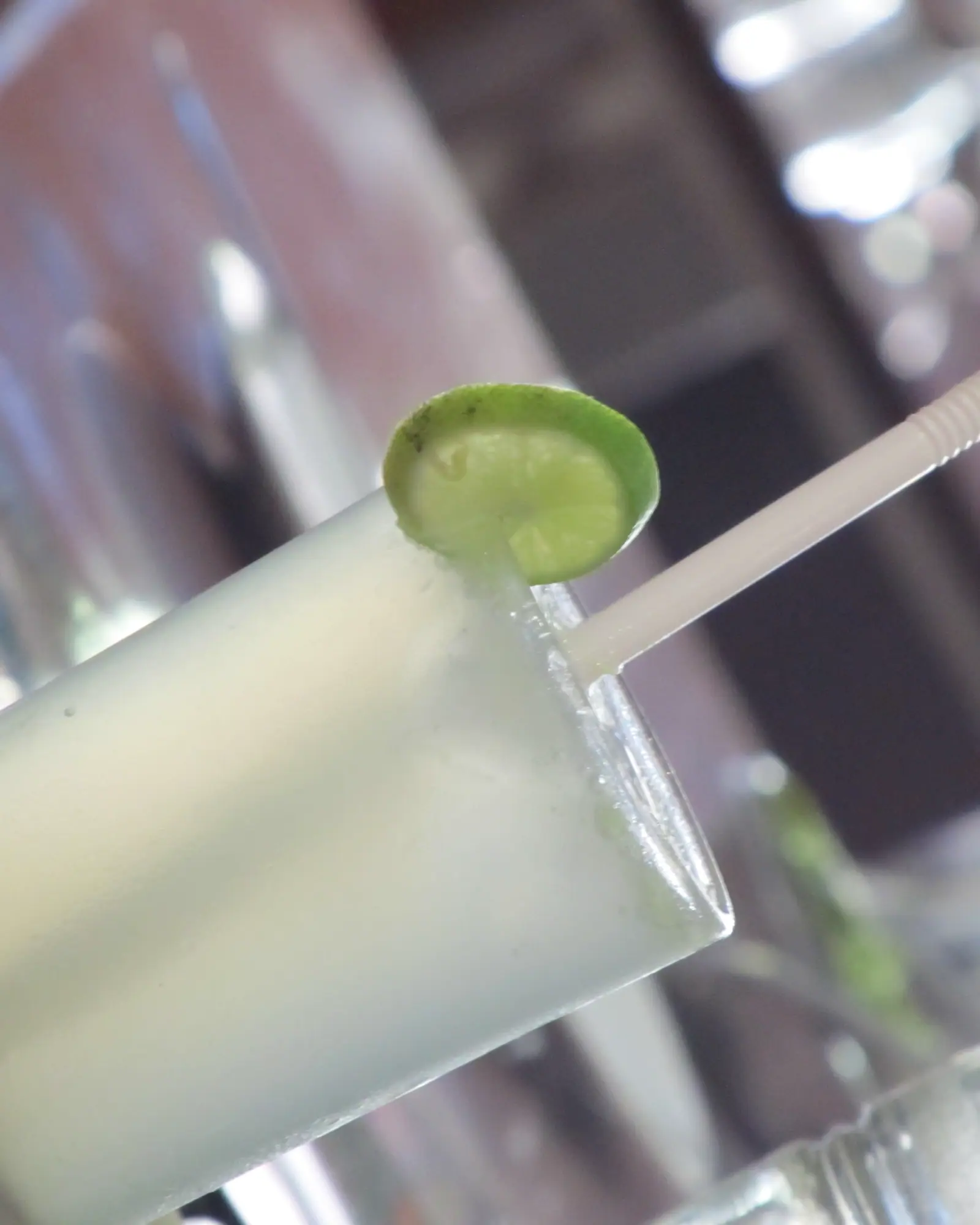

CC BY-SA 4.0 · Cropped, white-balanced, graded and re-encoded to WebP by eXir.
A tall glass of pale, cloudy nimbu pani with a lime slice on the rim and a straw
Serving
Drink spec, per drink
Every figure above is per drink and does not move with the count, which is what makes the two service modes comparable. Sugar per litre, strength and standard drinks stay in the units their own authorities publish, because they are figures for comparing rather than for pouring.
Diet and allergen labels are computed from the ingredients listed on this page and nothing else. They cannot account for cross-contamination or for the particular product you buy, and they are not medical or safety guidance.
Ingredients
 25 ml fresh lime juice
 20 ml simple syrup
 105 ml water
 1 g black saltInterchangeable by weight and by its seasoning effect on sourness, but plain salt carries none of black salt's sulphurous aroma, so the drink reads as straightforwardly salted rather than carrying the savoury note the original is built around.flavour: moderate change · strength: no change · sweetness: no change
 0.5 g toasted ground cumin
- 25 ml fresh lime juice
- 20 ml simple syrup
- 105 ml water
- 1 g black salt
- 0.5 g toasted ground cumin
Glass
Vessel
150 ml of liquid plus 230 ml of cubed ice occupies about 380 ml, inside the 400 ml the glass holds. The build fails if a recipe ever exceeds its stated vessel.
A batch needs a vessel that closes and fits a fridge shelf.
Method
2 steps · 1m 10sSqueeze the limes for the 25 ml fresh lime juice, straining out the pips.
Stir the juice with the 20 ml simple syrup, the 105 ml water, the 1 g black salt and the 0.5 g toasted ground cumin in a glass filled with ice.
Black salt is stirred in with the sugar rather than rimmed on the glass, so its sulphurous edge seasons the whole drink evenly instead of hitting only the first sip.
Common pitfallTable salt is not a substitute for the black salt here: swap it in and the drink loses the faintly savoury, egg-like note that is the point of the addition, and reads only as salted limeade.
Keeping and make-ahead
Batched ahead, this keeps sealed and cold. The water line the engine adds is the dilution figure from the spec panel, not a rule of thumb.
About
A citrus sharbat rooted in a much older Persian tradition of syrup drinks, carried into India during the Mughal period and still distinguished from its spiced cousin shikanji by a name that literally just means lemon water.
Sharbat, the wider category nimbu pani belongs to, takes its name from the Persian word for a drink of sugar and water, itself from the Arabic shariba, to drink 1. The tradition is old: an 11th-century Persian medical text, the Canon of Medicine by Ibn Sina, records fruit syrups served this way, and a 12th-century reference work names several distinct Iranian sharbat styles 1. The word reached English by the early 17th century, with Francis Bacon using it in 1626 1. Sharbat is recorded reaching India during the Mughal period, popularised under the emperor Babur, who had Himalayan ice imported to cool it 1.
Nimbu pani (literally "lemon water") is the plain citrus branch of that tradition: fresh lemon or lime juice, sugar and water, without the added spice mix that distinguishes its close relative, shikanji 1. The distinction between the two names is often lost today, but it traces to a specific older preparation, sharbat-e-shikanjavi, made by dissolving lemon juice and sugar together and setting the mixture in the sun for several days rather than mixing it fresh. This is a method the Tribune traces to a description of nalpaak in the Mahabharata, attributed to the legendary royal cook Nal 2. Shikanji strictly names that slow-made, spiced version; nimbu pani is the everyday drink mixed to order.
Black salt and roasted cumin, both common additions to the North Indian glass, place nimbu pani within a broader regional habit of salting and spicing fruit drinks for the heat rather than sweetening them alone 2.
- 1Sharbat (drink)en.wikipedia.org
- 2Why shikanji is not nimbu-panitribuneindia.com