
Last Word
Gin, green Chartreuse, maraschino liqueur and lime, in four equal parts.
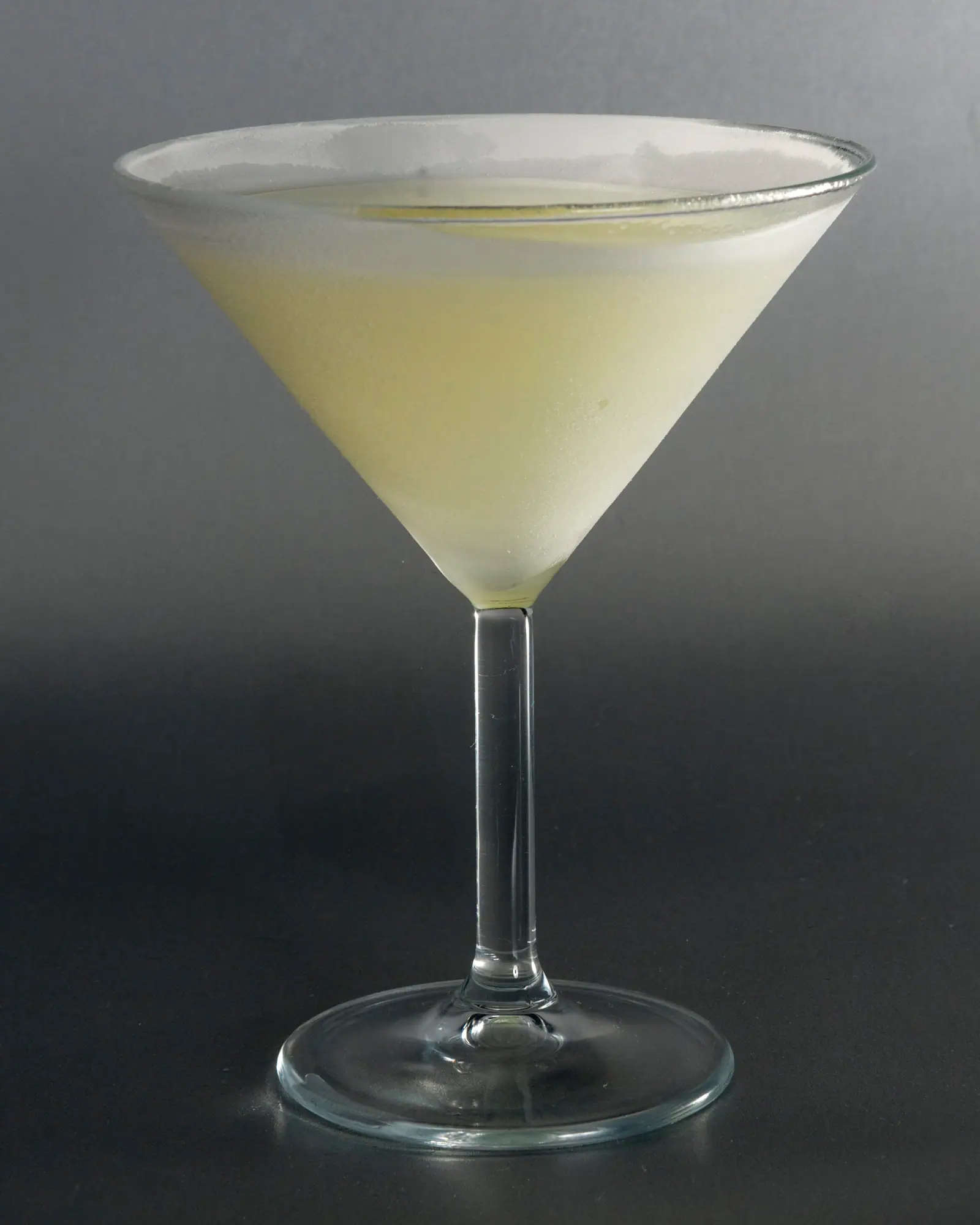

GFDL 1.2 · Cropped, white-balanced, graded and re-encoded to WebP by eXir.
A pale yellow-green Last Word cocktail served up in a martini glass
Serving
Drink spec, per drink
Every figure above is per drink and does not move with the count, which is what makes the two service modes comparable. Sugar per litre, strength and standard drinks stay in the units their own authorities publish, because they are figures for comparing rather than for pouring. Dilution is modelled rather than measured, as a fraction of the poured volume before any ice; dotted figures descend from that estimate.
The recipe is cherry distillate, sugar, alcohol and water; the leading producer states its products contain no animal-derived ingredients.
Diet and allergen labels are computed from the ingredients listed on this page and nothing else. They cannot account for cross-contamination or for the particular product you buy, and they are not medical or safety guidance.
Ingredients
 23 ml fresh lime juice
 23 ml London dry gin
 23 ml green ChartreuseProprietary
 23 ml maraschino liqueurInterchangeable by volume, but orange curaçao is sweeter and reads citrus-forward rather than stone-fruit, so the drink loses the faint cherry-pit note the Last Word is built around and gains an orange one instead.flavour: significant change · strength: no change · sweetness: minor change
- 23 ml fresh lime juice
- 23 ml London dry gin
- 23 ml green ChartreuseProprietary
- 23 ml maraschino liqueur
- ~45 ml water
Glass
Vessel
135 ml of liquid, served without ice, inside the 180 ml the glass holds. The build fails if a recipe ever exceeds its stated vessel.
A batch needs a vessel that closes and fits a fridge shelf.
Method
4 steps · 1m 37sSqueeze the 23 ml fresh lime juice and strain out the pips and pulp.
Combine the 23 ml London dry gin, the 23 ml green Chartreuse, the 23 ml maraschino liqueur and the 23 ml fresh lime juice in a shaker and fill it with cubed ice.
All four measures are the same size, which is the whole recipe. Nothing here is a modifier of anything else; gin, herbal liqueur, stone-fruit liqueur and lime all carry equal weight, and the drink is built to taste like all four rather than like gin with the others added to it.
Shake hard for 12s. Four equal measures chill and dilute exactly as fast as any other shaken sour; nothing about equal parts asks for anything different here.
Double strain into a chilled coupe, catching the ice shards the shake has broken off.
Common pitfallYellow Chartreuse is a different, milder, sweeter bottle from the same monastery, and it will not carry the drink the way the green one does. The two are shelved together and easy to reach for by mistake.
Keeping and make-ahead
Batched ahead, this keeps sealed and cold. The water line the engine adds is the dilution figure from the spec panel, not a rule of thumb.
About
A Prohibition-era Detroit cocktail that survived only as a line in a 1951 book of celebrity drink stories, until a Seattle bartender rediscovered it in 2003 and it became one of the defining revivals of the cocktail renaissance.
The drink appears on a souvenir menu from the Detroit Athletic Club dated 1916, priced at thirty-five cents, which made it the club's most expensive cocktail at the time 1. Who invented it there is not recorded, and the club's own archives name no author 2.
Its only other documented mention for decades is a page in Ted Saucier's 1951 book of bartenders' stories, Bottoms Up!, which credits the vaudeville performer Frank Fogarty with carrying the recipe from Detroit to New York 2 1. Saucier's account and the club's own 1916 menu do not quite agree on the timeline, and neither source establishes that Fogarty created the drink rather than simply spreading it 1.
The recipe then went unmade for roughly half a century. In 2003, Seattle bartender Murray Stenson found Saucier's book and put the Last Word on the menu at the Zig Zag Café 2 1. It became a regional favourite, drew television coverage as a new Seattle drink, and spread from there to bars across the country, becoming one of the most widely cited rediscoveries of the 2000s cocktail revival and the direct model for later equal-parts drinks built the same way 1.
- 1Last Word Cocktail — Origin and Recipevintageamericancocktails.com
- 2Last Word (cocktail)en.wikipedia.org