
Ginger Ale
Fresh ginger syrup and lime, topped with soda water.
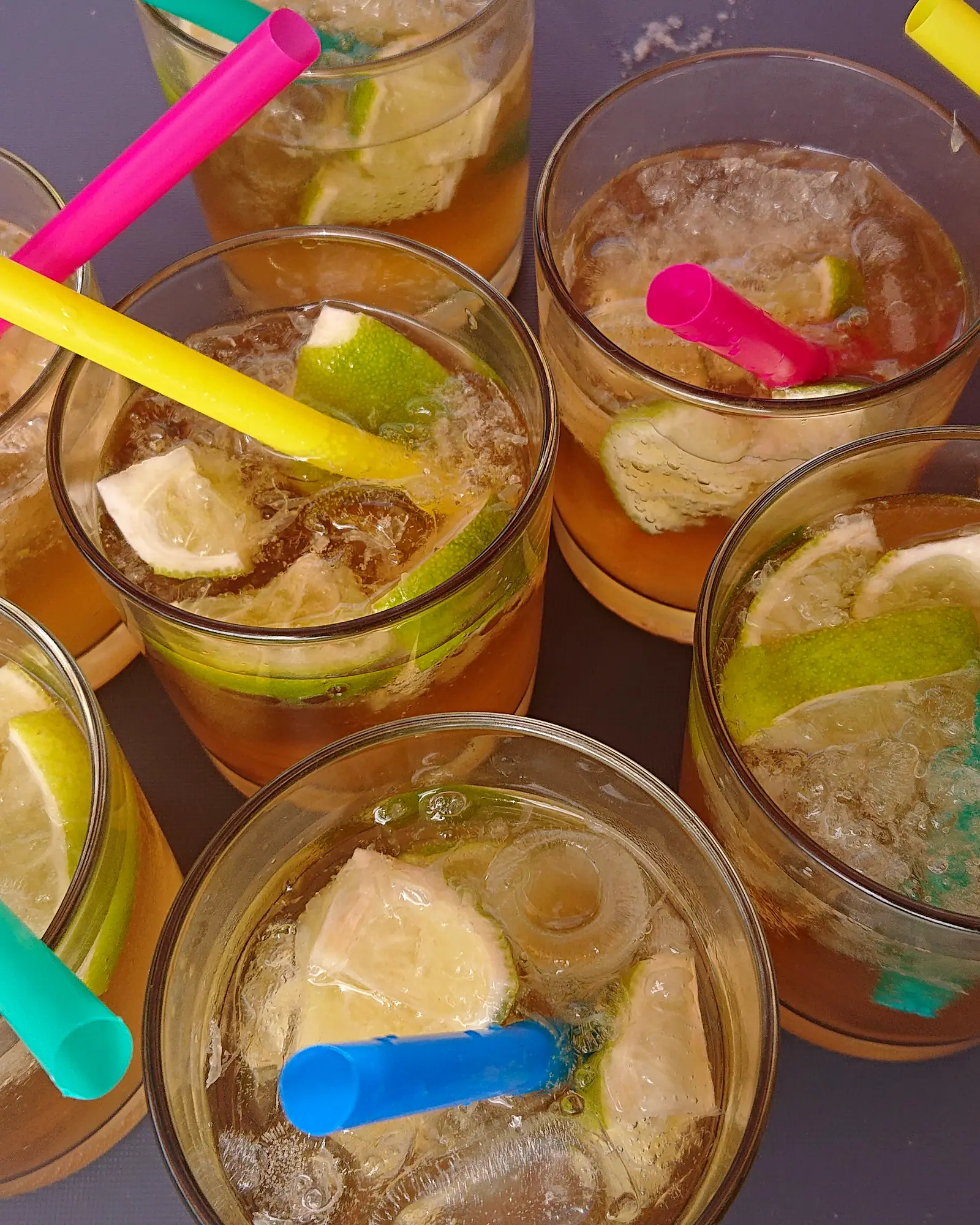
CC BY-SA 4.0 · Cropped, white-balanced, graded and re-encoded to WebP by eXir.
Amber ginger ale over ice in glasses garnished with lime wedges and colourful straws
Serving
Drink spec, per drink
Every figure above is per drink and does not move with the count, which is what makes the two service modes comparable. Sugar per litre, strength and standard drinks stay in the units their own authorities publish, because they are figures for comparing rather than for pouring.
Diet and allergen labels are computed from the ingredients listed on this page and nothing else. They cannot account for cross-contamination or for the particular product you buy, and they are not medical or safety guidance.
Ingredients


Glass
Vessel
148 ml of liquid plus 230 ml of cubed ice occupies about 378 ml, inside the 400 ml the glass holds. The build fails if a recipe ever exceeds its stated vessel.
A batch needs a vessel that closes and fits a fridge shelf.
Method
2 steps · 35sStir the 25 ml ginger syrup and the 8 ml fresh lime juice together in a glass filled with ice.
Top with the 115 ml soda water and stir once, gently, to keep the fizz.
The soda is poured last and down the side of the glass rather than straight onto the syrup, so the drink keeps as much of its fizz as it can rather than foaming flat before it is drunk.
Common pitfallThis force-carbonated, syrup-based style is milder and less spicy than a fermented ginger beer; built to the same proportions as one, it tastes thin rather than sharp.
Keeping and make-ahead
Batched ahead, this keeps sealed and cold. The water line the engine adds is the dilution figure from the spec panel, not a rule of thumb.
About
A drink that split into two rival styles within a single Belfast trade: a dark, fermented "golden" ale and a paler, milder "dry" style that later became the modern standard through a Canadian pharmacist's reformulation.
Ginger ale descends from a much older English tradition of home-brewed "small beers" flavoured with ginger and other warming spices, a low-alcohol style with roots going back centuries before it became a commercial soft drink 1. The first commercial ginger ale is credited to Thomas Joseph Cantrell, an Irish apothecary and surgeon working in Belfast in the 1850s 2. Cantrell's version, later called the "golden" style, was dark, sweet and strongly spiced, made by fermentation rather than by carbonating a syrup 2.
A second, paler style overtook it within a few decades. The Canadian chemist and pharmacist John J. McLaughlin, who had been bottling soda water since 1890, introduced a lighter "Pale Dry" ginger ale in 1904, patented in 1907 under the Canada Dry name 2. Rather than fermenting a ginger brew, McLaughlin's method flavoured carbonated water directly, which produced a milder, less assertively spiced drink than Cantrell's original 1. This dry style became the drink's dominant form during American Prohibition, when its mild ginger flavour was widely used to mask the taste of poor-quality bootleg spirits 2.
The two styles persist as distinct products where ginger ale is still sold today, though the pale, dry style built on carbonating a flavoured syrup (the version this page follows) is now by far the more common of the two 1.
- 1How A Victorian-Era Drink Led To The Invention Of Ginger Alechowhound.com
- 2Ginger aleen.wikipedia.org