
Gimlet
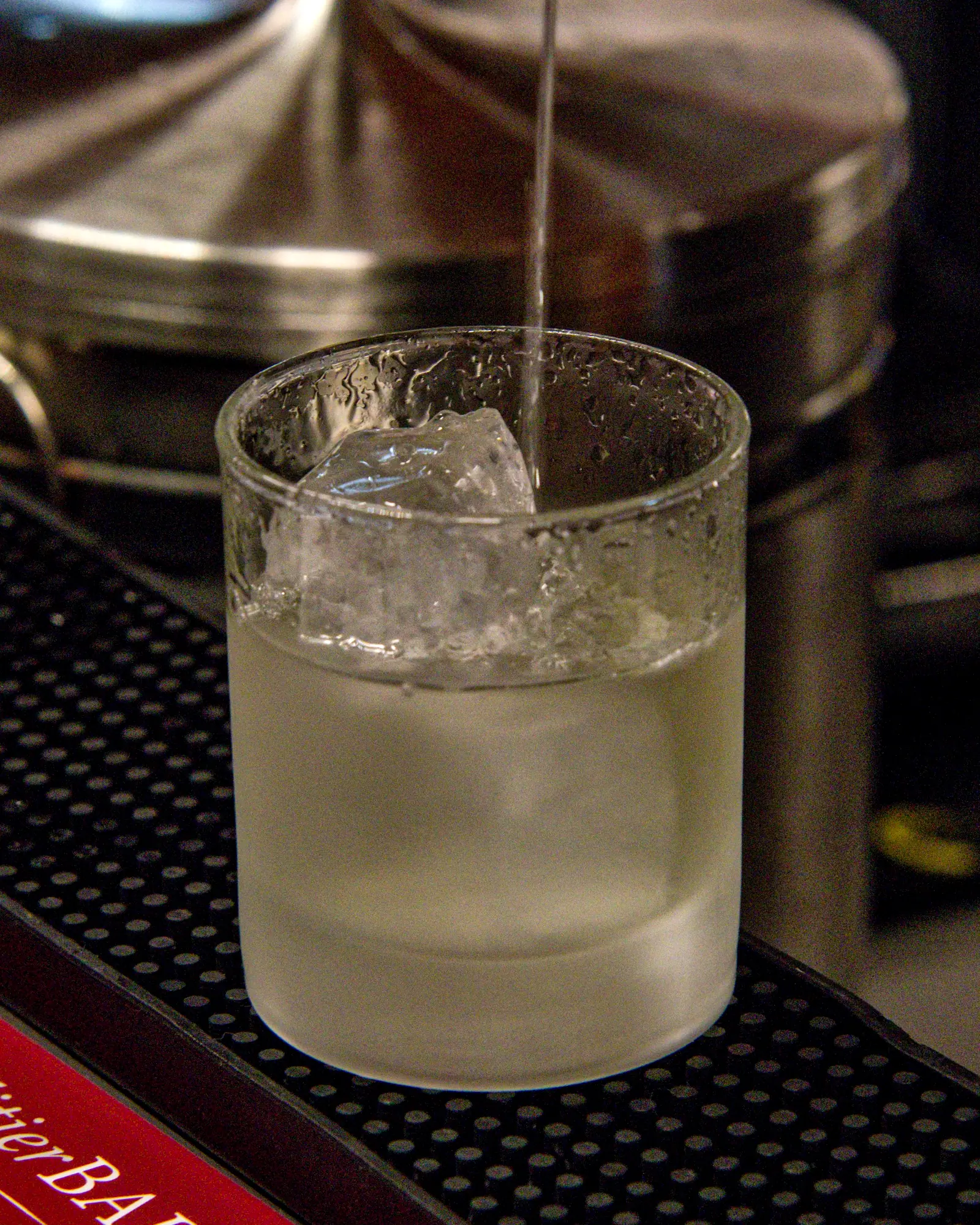
Gin and lime cordial, built over ice.
Gin, fresh lime juice and sugar syrup, shaken and strained up.

CC BY-SA 3.0 · Cropped, white-balanced, graded and re-encoded to WebP by eXir.
A pale, clear Gimlet with ice poured into a rocks glass at a bar
Serving
Drink spec, per drink
Every figure above is per drink and does not move with the count, which is what makes the two service modes comparable. Sugar per litre, strength and standard drinks stay in the units their own authorities publish, because they are figures for comparing rather than for pouring. Dilution is modelled rather than measured, as a fraction of the poured volume before any ice; dotted figures descend from that estimate.
Diet and allergen labels are computed from the ingredients listed on this page and nothing else. They cannot account for cross-contamination or for the particular product you buy, and they are not medical or safety guidance.
Ingredients
 60 ml London dry gin
 15 ml lime cordialProprietary
- 60 ml London dry gin
- 15 ml lime cordialProprietary
- ~19 ml water
Glass
Vessel
75 ml of liquid plus 130 ml of cubed ice occupies about 205 ml, inside the 300 ml the glass holds. The build fails if a recipe ever exceeds its stated vessel.
A batch needs a vessel that closes and fits a fridge shelf.
Drink spec, per drink
Every figure above is per drink and does not move with the count, which is what makes the two service modes comparable. Sugar per litre, strength and standard drinks stay in the units their own authorities publish, because they are figures for comparing rather than for pouring. Dilution is modelled rather than measured, as a fraction of the poured volume before any ice; dotted figures descend from that estimate.
Diet and allergen labels are computed from the ingredients listed on this page and nothing else. They cannot account for cross-contamination or for the particular product you buy, and they are not medical or safety guidance.
Ingredients
 23 ml fresh lime juice
- 60 ml London dry gin
 23 ml simple syrup
- 23 ml fresh lime juice
- 60 ml London dry gin
- 23 ml simple syrup
- ~53 ml water
Glass
Vessel
158 ml of liquid, served without ice, inside the 180 ml the glass holds. The build fails if a recipe ever exceeds its stated vessel.
A batch needs a vessel that closes and fits a fridge shelf.
Method
2 steps · 35sFill a rocks glass with cubed ice and pour in the 60 ml London dry gin and the 15 ml lime cordial.
No fresh juice and no shake: the cordial is already sweetened and diluted from its own concentrate, so a short stir over ice is enough to chill and marry the two ingredients without adding the extra water a shake would.
Stir briefly for 15s to combine and chill, then serve.
Common pitfallFresh lime juice is not a substitute here; it has none of the cooked, concentrated sweetness the cordial supplies, and the drink comes out thin and sharp rather than balanced. That version is a different drink, kept as its own tab on this page.
Keeping and make-ahead
Batched ahead, this keeps sealed and cold. The water line the engine adds is the dilution figure from the spec panel, not a rule of thumb.
Method
4 steps · 1m 37sSqueeze the 23 ml fresh lime juice and strain out the pips and pulp.
Combine the 60 ml London dry gin, the 23 ml fresh lime juice and the 23 ml simple syrup in a shaker and fill it with cubed ice.
Shake hard for 12s. Short and violent; the aim is to chill and aerate, not to melt the ice.
A plain sour in every proportion: fresh lime in place of the cordial's cooked sweetness means the sugar has to be added back separately, in the same two-part shape as a Daiquiri.
Double strain into a chilled coupe, catching the ice shards the shake has broken off.
Common pitfallThis is not the cordial drink with a substitution made to it. Fresh lime and syrup measure differently from a bottled cordial, and pouring one to the other's amounts leaves the drink either thin or cloying.
Keeping and make-ahead
Batched ahead, this keeps sealed and cold. The water line the engine adds is the dilution figure from the spec panel, not a rule of thumb.
About
Gin and Rose's Lime Cordial, popularly traced to the Royal Navy and a naval surgeon named Gimlette, though the earliest hard evidence for the drink postdates the legend by decades.
Lauchlan Rose patented a way of preserving lime juice without alcohol in 1867, the same year an amended Merchant Shipping Act required British ships to carry lime juice against scurvy 1. Rose's own advertising was pushing the cordial as a mixer with spirits by the 1870s 1, and gin, favoured by Royal Navy officers over rum, is the pairing that stuck.
The drink's name is popularly credited to Sir Thomas Desmond Gimlette, a Royal Navy surgeon said to have urged officers to take their lime ration mixed with their gin. The claim is widely repeated, including on the Royal Navy's own site 1, but it does not hold up well: neither Gimlette's 1920 obituary in The Times nor his Who's Who entry mentions inventing a drink, and an 1892 account of gin and lime juice together calls the combination a "strange compound" rather than an established one, which sits badly with a cocktail already carrying an officer's name by then 2.
The earliest written recipe under the name appears in Harry MacElhone's guide to mixing cocktails, though sources disagree on the exact edition and give either a two-to-one gin-to-cordial ratio or equal parts 1 2. A 1920 letter from US Admiral Albert Gleaves describing "a new drink called a gimlet" encountered in China points toward that same decade rather than the nineteenth-century Navy the legend usually invokes 2.
The drink owes much of its later fame to fiction rather than the sea: Raymond Chandler's detective Philip Marlowe insists in The Long Goodbye (1953) that a real Gimlet is "half gin and half Rose's Lime Juice and nothing else" 1, a line still quoted by bartenders arguing against the fresh-lime version served alongside it today.
- 1The Gimlet Cocktaildrunkardsalmanac.com
- 2Gimlet – Part 3: History and recipebar-vademecum.eu