
Espresso
A short, concentrated shot pulled under pressure through a fine, tamped puck.

Public domain · Cropped, white-balanced, graded and re-encoded to WebP by eXir.
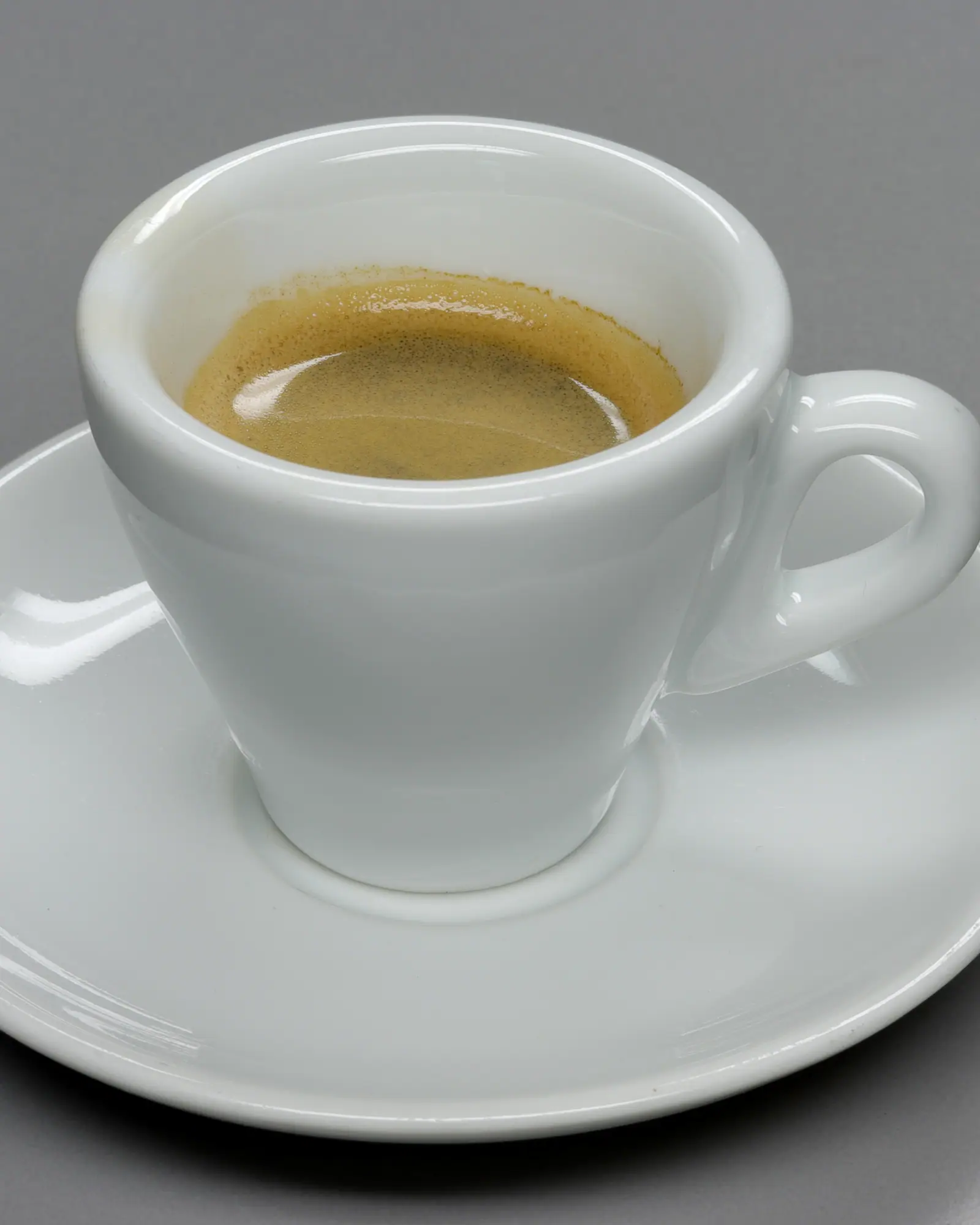
A white espresso cup with crema-topped espresso, on a matching saucer
Serving
Drink spec, per drink
Every figure above is per drink and does not move with the count, which is what makes the two service modes comparable. Sugar per litre, strength and standard drinks stay in the units their own authorities publish, because they are figures for comparing rather than for pouring.
Diet and allergen labels are computed from the ingredients listed on this page and nothing else. They cannot account for cross-contamination or for the particular product you buy, and they are not medical or safety guidance.
Extraction
No extraction yield is shown. It needs a measured dissolved-solids figure from the finished cup, nothing on a bag of coffee supplies one, and estimating it from the method would be inventing the single number the calculation exists to establish.
Ingredients
 18 g coffee
 50 ml water
- 18 g coffee
- 50 ml water
Glass
Vessel
36 ml of liquid, served without ice, inside the 80 ml the glass holds. The build fails if a recipe ever exceeds its stated vessel.
A batch needs a vessel that closes and fits a fridge shelf.
Method
3 steps · 1m 33sGrind the 18 g coffee fine, close to the texture of table salt.
Distribute the grounds evenly in the portafilter basket and tamp level for 20s.
An even, level tamp is what makes the water meet every part of the puck at once; a crack or a high side gives the water a shorter path around the grounds instead of through them, and the shot channels and runs thin.
Lock in and pump the 50 ml water through the puck at 93 °C for 28s, watching for a thin, hazelnut-coloured crema to build on top.
Common pitfallA shot pulled well past its stated time is not simply stronger. Past a point the water has already taken what it can from the grounds and starts pulling harsher, papery compounds instead, which is why a slow shot tastes bitter rather than just concentrated.
Keeping and make-ahead
Pulled to order. Crema collapses and the shot turns bitter within a minute or two of extraction, so nothing here is made ahead.
About
A shot of coffee forced through a fine, tamped puck under pressure rather than dripped or steeped, developed in Italy across three generations of machine.
The word describes a method before it describes a drink: coffee made specifically, on demand, rather than brewed in a pot for whoever is there. The first patent for a machine built to do this was Angelo Moriondo's, granted in Turin on 16 May 1884 for equipment controlling steam and water separately as they passed through the grounds 1. Moriondo built only a handful of machines and kept them in his own two establishments, so the patent did not reach the market it eventually created 1.
The machine that did was Luigi Bezzera's, patented in Milan in 1901 and bought in 1903 by Desiderio Pavoni, who founded La Pavoni and put it into daily production 2. Bezzera's design introduced the portafilter still in use today, and the combined machine was shown at the Milan World Fair in 1906 2. None of this equipment produced what is now considered the drink's defining feature. Early machines ran on steam pressure alone, at around one and a half to two bar, closer to a fast drip than a true extraction 2.
That changed after the Second World War, when Achille Gaggia replaced steam pressure with a spring-loaded piston lever, raising the pressure through the puck to eight or nine bar and, by accident, producing the layer of tan foam he called caffè crema 2. Gaggia's lever machine also fixed the serving size at roughly the short, concentrated shot served today 2. The pump-driven machines that followed, the Faema E61 among them, replaced the barista's arm with a motor but kept the same nine-bar target, which is still the figure the equipment is built around 1.
Everything else served under the name (a latte, a cappuccino, an Americano) starts from this shot and adds to it. It is the reference extraction the rest of the coffee list is measured against: the same beans, pulled the same way, before milk, water or anything else changes what reaches the cup.
- 1Espresso machineen.wikipedia.org
- 2A History of the Espresso Machineperfectdailygrind.com