
Espresso Martini
Vodka, coffee liqueur and a fresh shot, shaken hard enough to raise a real crema.

CC BY-SA 4.0 · Cropped, white-balanced, graded and re-encoded to WebP by eXir.
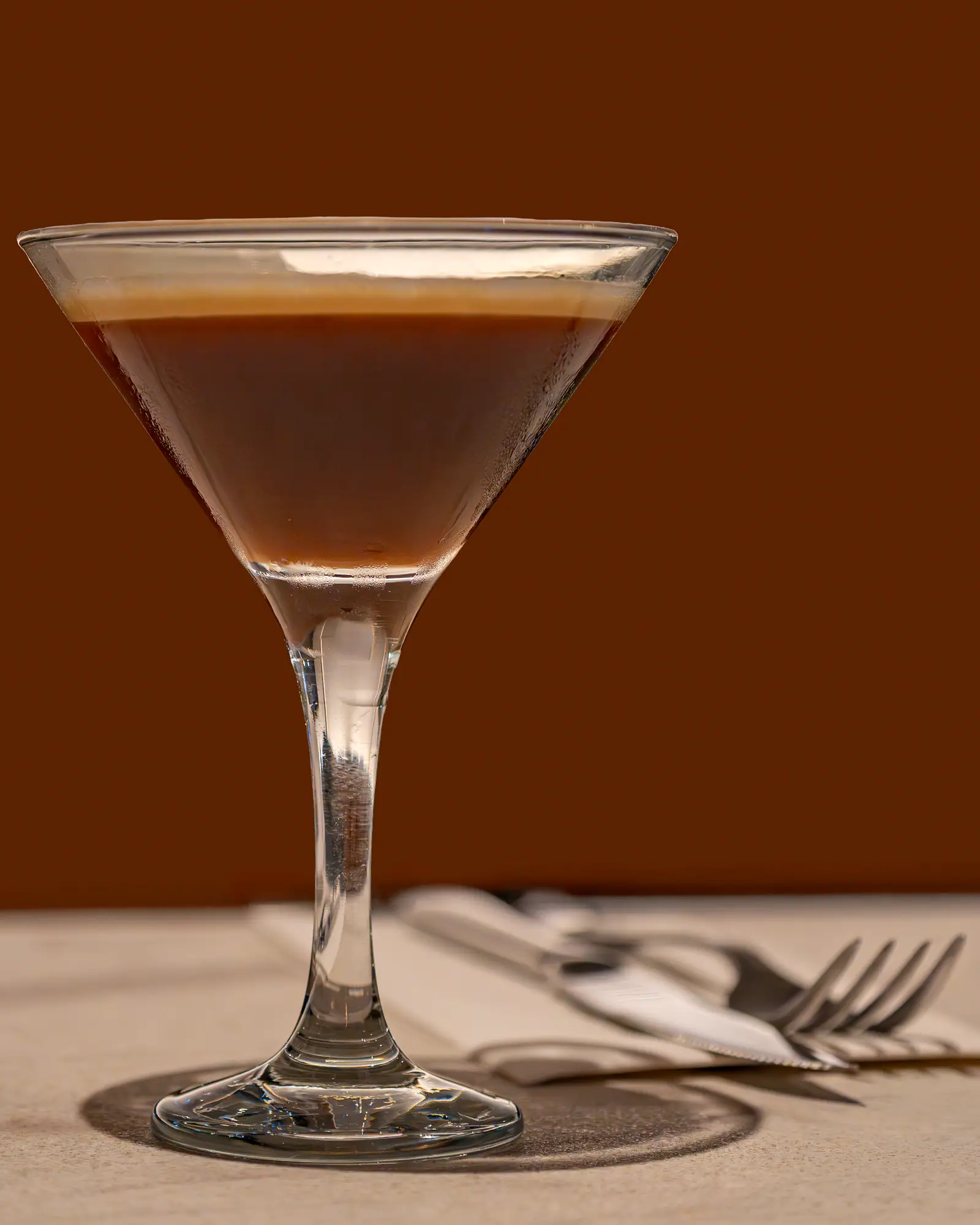
An Espresso Martini in a martini glass, dark coffee liqueur under a tan crema-coloured foam
Serving
Drink spec, per drink
Every figure above is per drink and does not move with the count, which is what makes the two service modes comparable. Sugar per litre, strength and standard drinks stay in the units their own authorities publish, because they are figures for comparing rather than for pouring. Dilution is modelled rather than measured, as a fraction of the poured volume before any ice; dotted figures descend from that estimate.
Diet and allergen labels are computed from the ingredients listed on this page and nothing else. They cannot account for cross-contamination or for the particular product you buy, and they are not medical or safety guidance.
Extraction
No extraction yield is shown. It needs a measured dissolved-solids figure from the finished cup, nothing on a bag of coffee supplies one, and estimating it from the method would be inventing the single number the calculation exists to establish.
Ingredients
 19 g coffee
 50 ml water
 50 ml vodka
 25 ml coffee liqueur
 10 ml simple syrup
- 19 g coffee
- 50 ml water
- 50 ml vodka
- 25 ml coffee liqueur
- 10 ml simple syrup
- ~58 ml water
Glass
Vessel
173 ml of liquid, served without ice, inside the 180 ml the glass holds. The build fails if a recipe ever exceeds its stated vessel.
A batch needs a vessel that closes and fits a fridge shelf.
Method
5 steps · 2mGrind the 18 g coffee fine for the espresso machine.
Pump the 50 ml water through the grounds at 93 °C for 28s and let the shot cool for a minute.
Combine the 50 ml vodka, 25 ml coffee liqueur, hot shot and 10 ml simple syrup in a shaker with ice.
Shake hard for 12s, until the tin frosts and the foam builds thick against the strainer.
The shake is worked harder and longer than a spirit-only shake, because it has to do two jobs at once: chill the drink and beat the espresso's residual oils into the fine, tan foam the drink is served under.
Double strain into a chilled glass and set the 1 g coffee on the crema.
Common pitfallA shot pulled ahead of time and left to cool loses the crema it needs to shake into foam; the coffee has to go into the tin hot, straight off the machine, or the drink comes up thin and flat on top.
Keeping and make-ahead
Batched ahead, this keeps sealed and cold. The water line the engine adds is the dilution figure from the spec panel, not a rule of thumb.
About
Vodka and a fresh espresso shot shaken to a foam, made by Dick Bradsell in London and renamed a decade later for the glass it happens to share.
The drink is credited to the London bartender Dick Bradsell, working at the Soho Brasserie in the early 1980s, with 1983 the year most often given 1. Bradsell's own account was that the coffee machine sat next to his station and coffee was on his mind; the more often repeated version of the story has a customer, remembered only as a young model, asking for a drink that would "wake me up, then fuck me up," a line Bradsell recounted for the rest of his career without ever naming her 2.
The original drink was simpler and differently named. Bradsell called it a Vodka Espresso, built from vodka and a fresh shot with a little sugar syrup, served over ice with three coffee beans on top and containing no coffee liqueur at all 2. The now-standard measure of coffee liqueur alongside the vodka and espresso was added later, and the drink did not take on its current name, nor its usual shaken-and-strained-up service, until Bradsell was working at Match EC1 in the late 1990s, during the general fashion for calling anything served in that glass a "martini" 2.
That name is a genuine mismatch: there is no gin or vermouth in it, and Bradsell is on record finding the name faintly absurd even as it stuck 1. What has stayed constant since the Soho Brasserie is the technique the name obscures: a shot pulled hot and shaken immediately, hard enough to beat its own crema into the drink's foam, which is the reason it is built to order around the espresso rather than a syrup or a cold-brewed substitute.
- 1Espresso martinien.wikipedia.org
- 2How the Espresso Martini Became a Modern Classicpunchdrink.com