
Cuba Libre
White rum and cola over ice, sharpened with fresh lime.
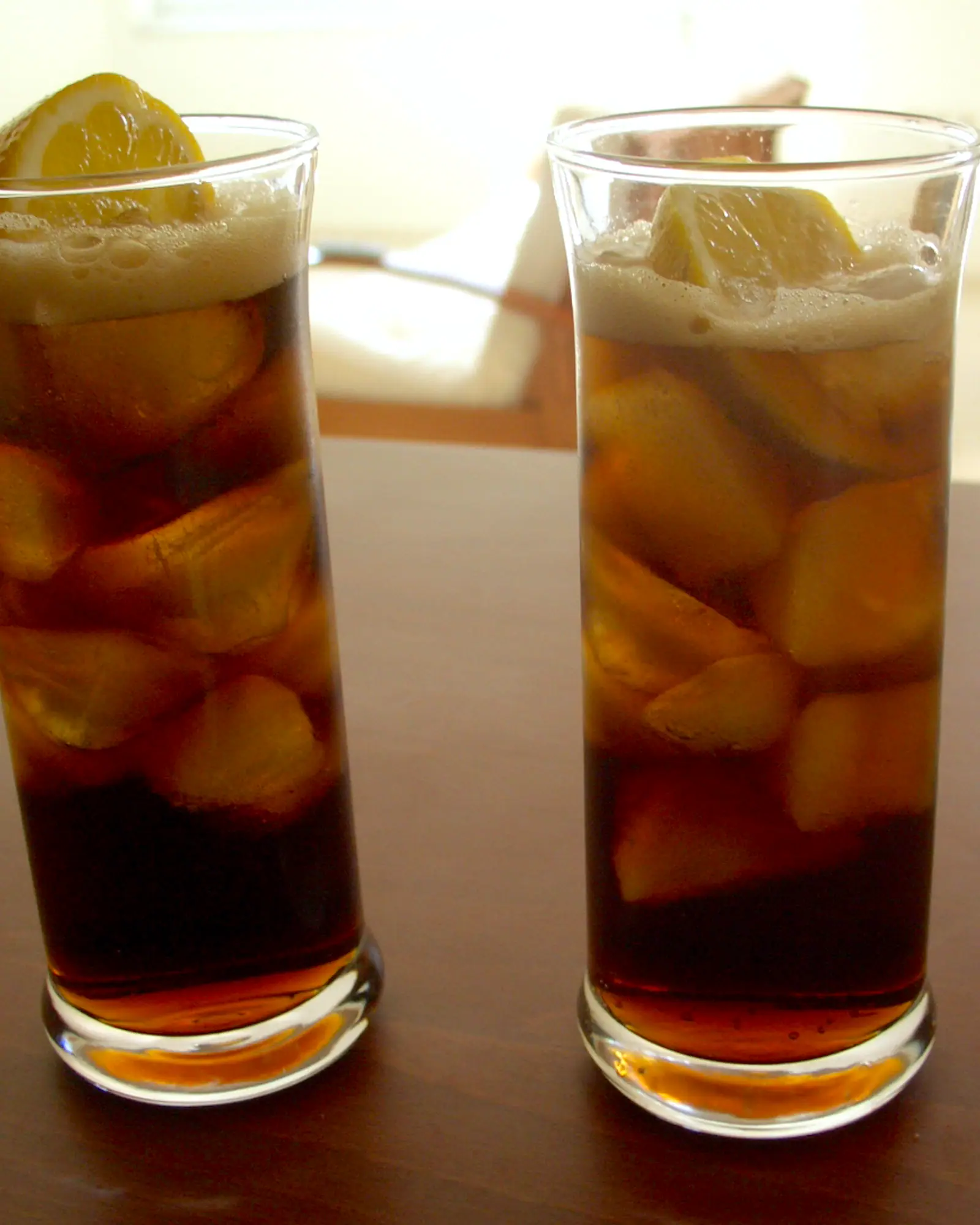

CC BY-SA 2.0 · Cropped, white-balanced, graded and re-encoded to WebP by eXir.
Two tall glasses of Cuba Libre, dark rum and cola over ice, garnished with a citrus wedge
Serving
Drink spec, per drink
Every figure above is per drink and does not move with the count, which is what makes the two service modes comparable. Sugar per litre, strength and standard drinks stay in the units their own authorities publish, because they are figures for comparing rather than for pouring. Dilution is modelled rather than measured, as a fraction of the poured volume before any ice; dotted figures descend from that estimate.
Diet and allergen labels are computed from the ingredients listed on this page and nothing else. They cannot account for cross-contamination or for the particular product you buy, and they are not medical or safety guidance.
Ingredients
 10 ml fresh lime juice
 45 ml white rum
 115 ml cola
 ½ lime (11 g)
- 10 ml fresh lime juice
- 45 ml white rum
- 115 ml cola
- ½ lime (11 g)
- ~43 ml water
Glass
Vessel
170 ml of liquid plus 230 ml of cubed ice occupies about 400 ml, inside the 400 ml the glass holds. The build fails if a recipe ever exceeds its stated vessel.
A batch needs a vessel that closes and fits a fridge shelf.
Method
4 steps · 1m 20sFill a Collins glass with ice.
Squeeze a lime wedge over the ice for the 10 ml fresh lime juice and drop the spent wedge in.
Pour in the 45 ml white rum.
Top with the 115 ml cola and lift once with a bar spoon rather than stirring, so the bubbles survive the trip to the table.
The lime goes in before the cola so its oil and juice meet the rum directly rather than getting buried under the last, most delicate part of the pour.
Common pitfallCola poured hard off the bottle knocks its own carbonation flat before it settles, which is the one highball where a heavy hand actually shows up as a duller drink rather than just a wetter one.
Keeping and make-ahead
Batched ahead, this keeps sealed and cold. The water line the engine adds is the dilution figure from the spec panel, not a rule of thumb.
About
A patriotic toast to Cuban independence, attached to a rum-and-cola highball whose actual first mixing nobody can pin down with confidence.
The name translates to "free Cuba" and echoes the rallying cry of the Cuban independence movement against Spain 1. American troops occupied Cuba after the Spanish-American War of 1898, and bottled Coca-Cola reached the island shortly afterwards, which is the window every version of the drink's origin story is set in 1.
Beyond that, the record is thin. The most repeated story has American soldiers in Havana mixing Cuban rum with the newly arrived Coca-Cola and toasting "¡Por Cuba libre!" 2, but no contemporary account of the toast, the soldiers involved or the bar it supposedly happened in has been produced, and the story is set right at the edge of when Coca-Cola could plausibly have been on the island at all 1. It is best treated as an origin legend rather than a documented event.
What is not in dispute is the drink itself: white rum, cola and lime, built over ice, is one of the simplest members of the highball family and one of the reasons cola sells as much of it as it does. The distinction from a plain rum and Coke is the lime (squeezed in and often dropped in as well), which a Cuba Libre specifies and a Rum and Coke does not.
- 1Cuba libreen.wikipedia.org
- 2Cuba Libre: The Iconic Rum and Cola Cocktailtheswissstandard.com