
Cold Brew Coffee
Coarse coffee steeped in cold water for hours rather than brewed hot.
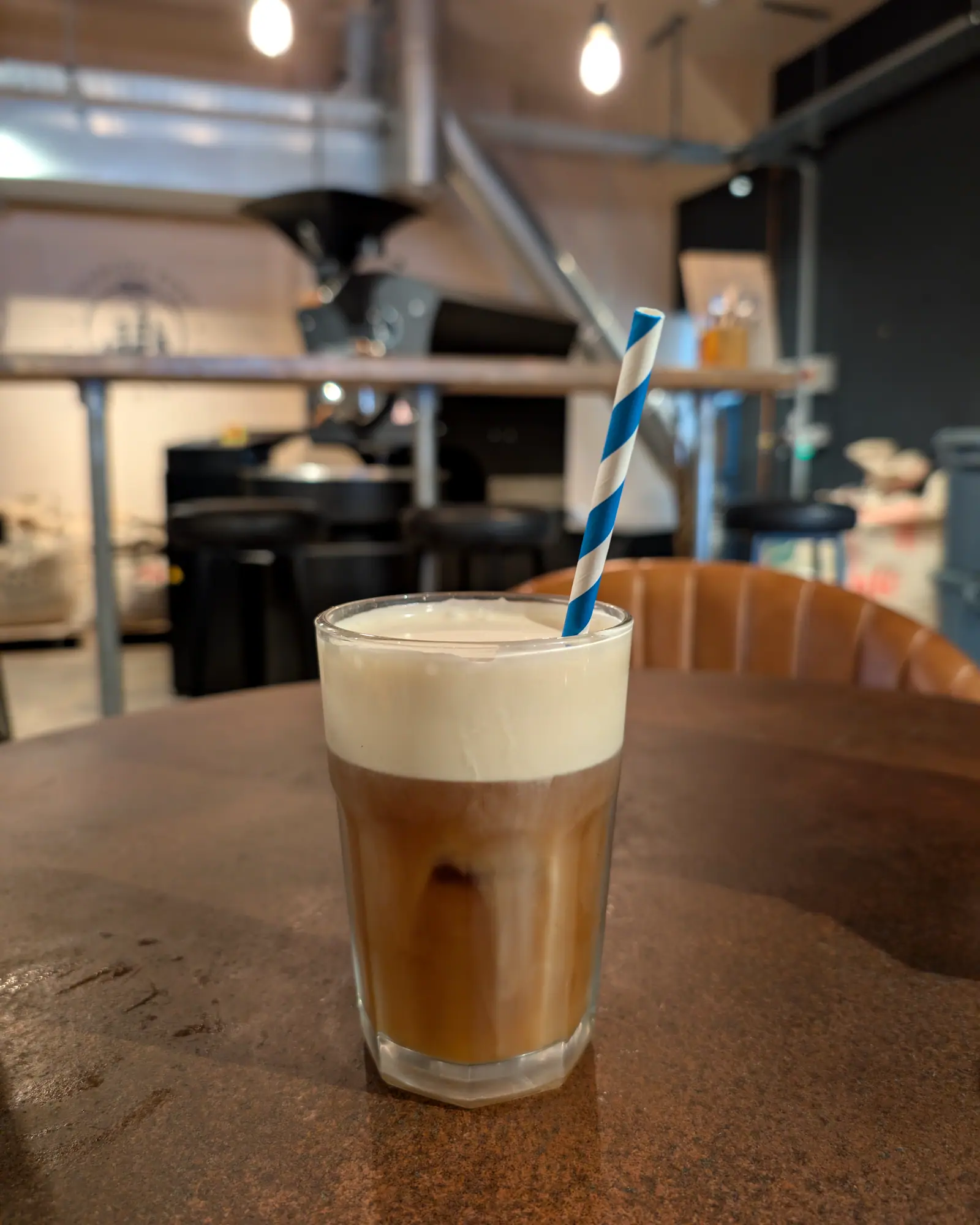

CC0 · Cropped, white-balanced, graded and re-encoded to WebP by eXir.
Cold brew coffee in a glass, dark coffee under a pale cream float, with a striped straw
Serving
Drink spec, per drink
Every figure above is per drink and does not move with the count, which is what makes the two service modes comparable. Sugar per litre, strength and standard drinks stay in the units their own authorities publish, because they are figures for comparing rather than for pouring.
Diet and allergen labels are computed from the ingredients listed on this page and nothing else. They cannot account for cross-contamination or for the particular product you buy, and they are not medical or safety guidance.
Extraction
No extraction yield is shown. It needs a measured dissolved-solids figure from the finished cup, nothing on a bag of coffee supplies one, and estimating it from the method would be inventing the single number the calculation exists to establish.
Ingredients
 25 g coffee
 320 ml water
- 25 g coffee
- 320 ml water
Glass
Vessel
260 ml of liquid plus 230 ml of cubed ice occupies about 490 ml, inside the 500 ml the glass holds. The build fails if a recipe ever exceeds its stated vessel.
A batch needs a vessel that closes and fits a fridge shelf.
Method
4 steps · 16h 2mGrind the 25 g coffee coarse, coarser than a drip grind.
Combine the grounds with the 320 ml water in the jar and stir to wet them evenly.
Seal the jar and leave it at room temperature or in the refrigerator for 16h.
Cold water never carries the volatile acids hot water pulls out of coffee quickly, so getting the same strength this way takes hours rather than minutes; the long steep is standing in for heat, not adding anything heat could not.
Strain out the grounds through a paper filter or fine cloth and pour over ice.
Common pitfallSteeping well past the stated time keeps pulling from the same grounds and turns the cup flat and woody rather than stronger; cold extraction slows down but does not stop at the point the coffee tastes best.
Keeping and make-ahead
The steep itself is a batch by nature, but the site treats each jar as one serving brewed to that ratio; a household jug scales by ratio, not by count.
About
Coarse coffee steeped for hours in cold water rather than brewed with heat, a method with roots in seventeenth-century Japan and a 1960s American patent.
Steeping coffee in cold water rather than hot is old enough to predate espresso, filter brewing and most of the equipment coffee is now made with. One account traces the practice to Dutch traders in the seventeenth century, who are said to have brewed a cold concentrate for the practical reason that it needed no open flame and travelled well by ship, and to have carried the method to Japan, where it settled alongside an existing culture of cold- steeped tea 1. That lineage is offered as a likely account rather than a documented one, and no source here confirms it with a primary record.
The method's modern, commercial form is much more precisely dated. Todd Simpson, trained as a chemist, is credited with developing what became the Toddy cold-brew system after encountering the technique on his travels; accounts differ on exactly where, but agree he built the first version in his own garage and originally sold it as a low-acid concentrate for people whose stomachs reacted badly to hot-brewed coffee 2. That framing (cold brew as a digestive accommodation rather than a flavour choice) was the product's original pitch, and it took decades more before the specialty coffee industry adopted the same chemistry for its own reasons.
What cold water changes is extraction rather than strength: without heat to pull them out quickly, the acids and some of the more volatile aromatics that give hot coffee its brightness come out slowly and incompletely even over many hours, which is the entire reason the method needs hours rather than minutes and produces a rounder, less acidic cup than the same beans brewed hot and then chilled 1.
- 1Cold Brew Wasn't Invented Yesterday, So Here's Some Historical Perspectivedailycoffeenews.com
- 2Brewing Coffee — The History of the Cold Brew Methodsagebrushcoffee.com