
Coconut Water
The clear liquid inside a young coconut, drunk straight from the shell.

CC BY-SA 3.0 · Cropped, white-balanced, graded and re-encoded to WebP by eXir.
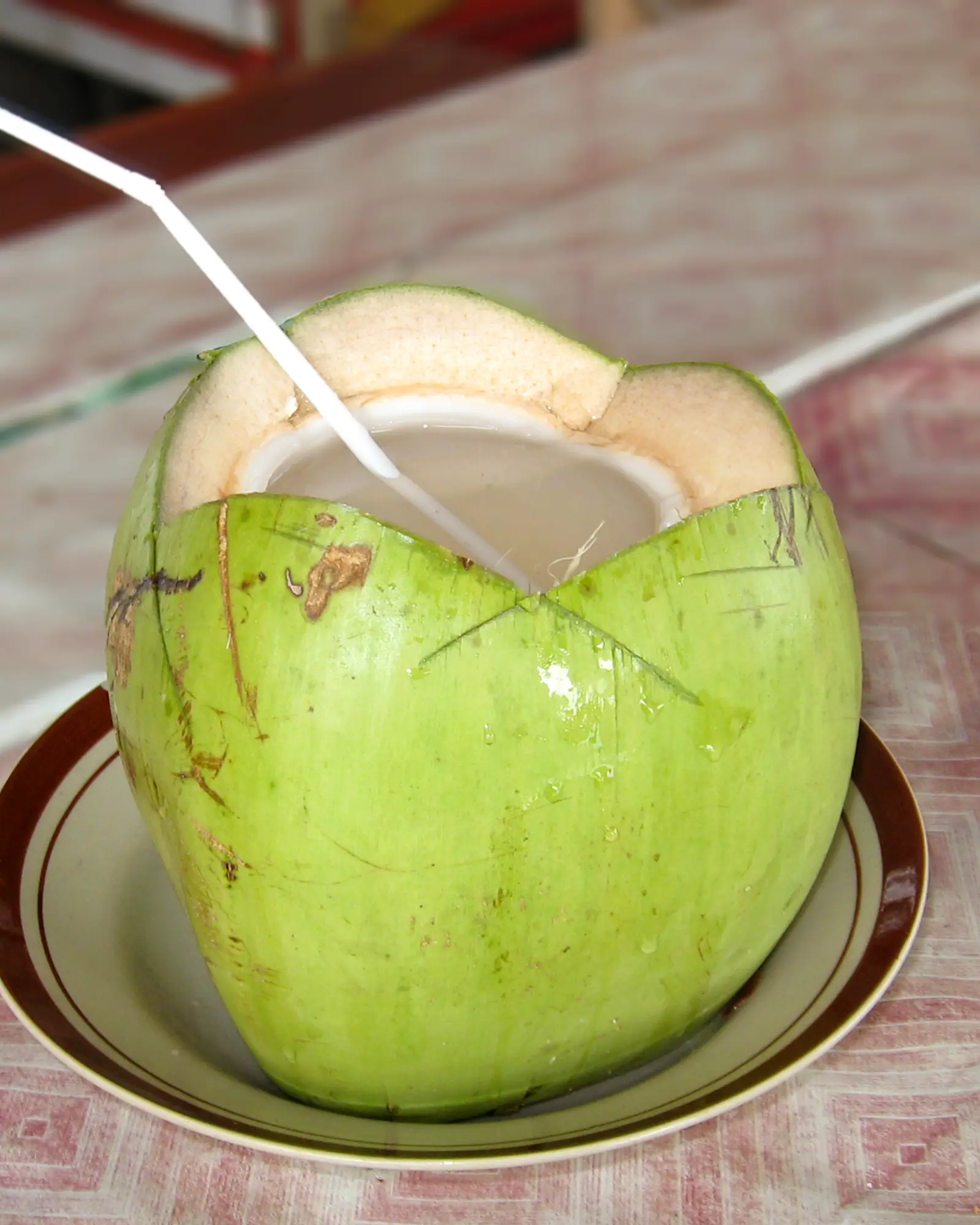
A young green coconut opened at the top with a straw, ready to drink
Serving
Drink spec, per drink
Every figure above is per drink and does not move with the count, which is what makes the two service modes comparable. Sugar per litre, strength and standard drinks stay in the units their own authorities publish, because they are figures for comparing rather than for pouring.
Diet and allergen labels are computed from the ingredients listed on this page and nothing else. They cannot account for cross-contamination or for the particular product you buy, and they are not medical or safety guidance.
Ingredients
 300 ml coconut water
- 300 ml coconut water
Glass
Vessel
300 ml of liquid, served without ice, inside the 350 ml the glass holds. The build fails if a recipe ever exceeds its stated vessel.
A batch needs a vessel that closes and fits a fridge shelf.
Method
2 steps · 1m 15sCut or punch an opening into the top of a chilled young coconut with a cleaver or a coconut opener.
A young, green coconut is chosen over a mature brown one because its water is still abundant and mild: as the fruit ripens, more of that water converts into solid flesh and what remains turns thinner and more acidic.
Pour the 300 ml coconut water into a glass, or serve directly from the shell with a straw.
Keeping and make-ahead
Opened and poured to order; once a young coconut is cracked its water starts to ferment within a day even refrigerated.
About
The clear liquid inside a young coconut, drunk straight from the shell across the tropics for as long as the palm has grown near people.
Coconut water needs no separate invention story: it is what is already inside a young Cocos nucifera fruit, and wherever the palm grows near people (coastal India, Southeast Asia, the Pacific islands, the Brazilian coast, the Caribbean and much of tropical Africa) it has long been drunk straight from the shell rather than prepared as a dish 1. Street vendors across those regions are noted for the skill of opening a coconut in a few strokes of a machete or by boring a single hole through the husk, serving the water on the spot rather than decanting it 1.
Its traditional standing was medicinal as much as refreshing. Coconut water has long been offered in the tropics to people suffering from diarrhoea, and the clearest documented use of it as an emergency medical fluid comes from the Second World War, when dehydrated British and Japanese patients are recorded as having been given it intravenously in place of saline solution that had run short 1. That account is notable enough to be repeated in food writing, though it describes a wartime improvisation rather than a standard clinical practice.
Regional use since has diversified around the same fruit without displacing coconut water's own simple role: coconut milk, the pressed liquid from grated mature flesh, became central to curries and desserts across South and Southeast Asia, while the water itself stayed a beach and street drink from Brazil to the Pacific, served fresh and unprocessed rather than cooked into anything 2. The two liquids share a fruit but not a preparation, which is also why they are not interchangeable in a recipe that specifically calls for one or the other.
- 1Coconut Water Guidediffordsguide.com
- 2Coconut Around the World — A Cultural Journey of the Tree of Lifecopracoconuts.com