
Chamomile Tisane
Dried flowers steeped plain, drunk without milk or sugar.

CC BY-SA 2.0 · Cropped, white-balanced, graded and re-encoded to WebP by eXir.
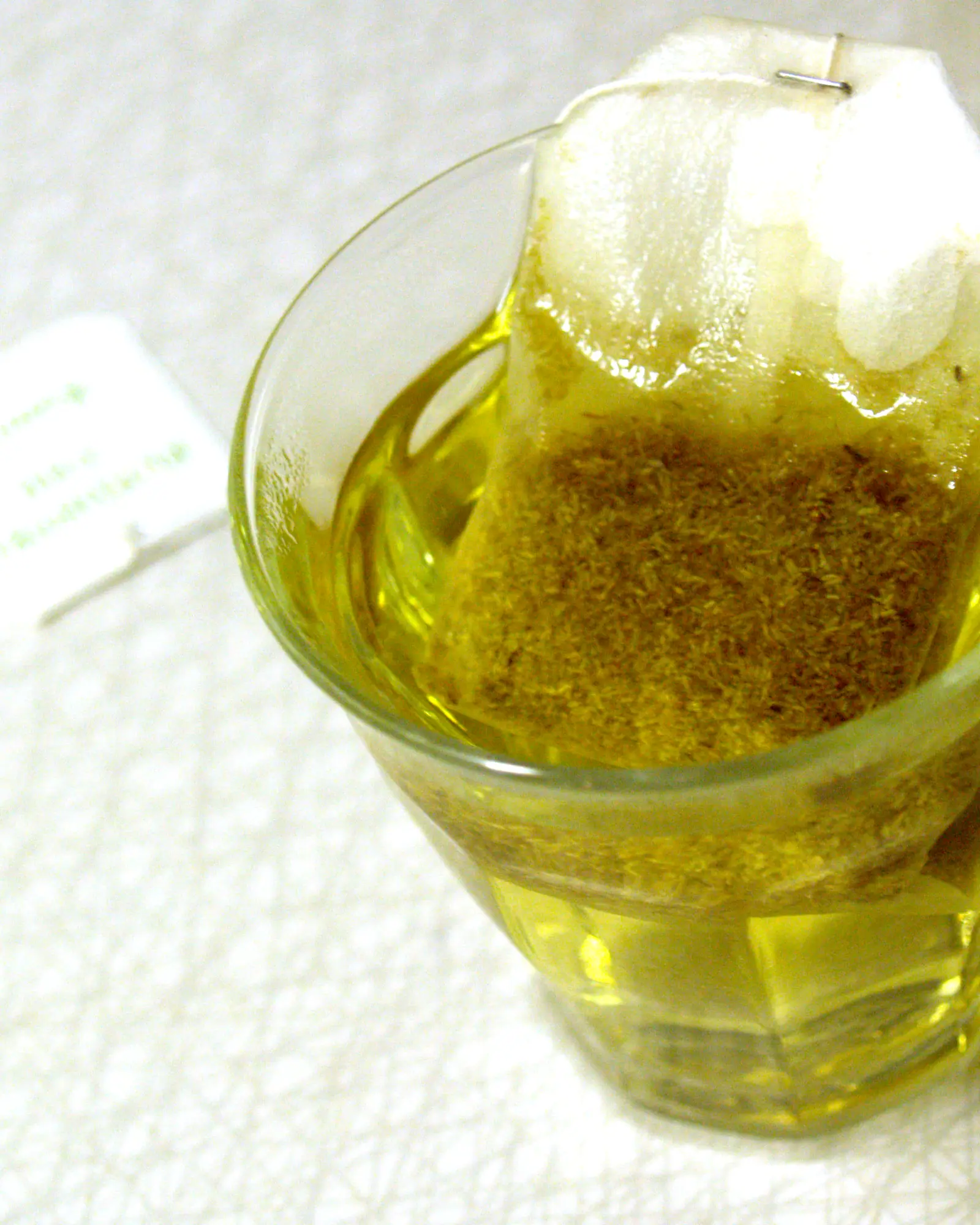
A glass cup of pale golden chamomile tea
Serving
Drink spec, per drink
Every figure above is per drink and does not move with the count, which is what makes the two service modes comparable. Sugar per litre, strength and standard drinks stay in the units their own authorities publish, because they are figures for comparing rather than for pouring.
Diet and allergen labels are computed from the ingredients listed on this page and nothing else. They cannot account for cross-contamination or for the particular product you buy, and they are not medical or safety guidance.
Extraction
No extraction yield is shown. It needs a measured dissolved-solids figure from the finished cup, nothing on a bag of coffee supplies one, and estimating it from the method would be inventing the single number the calculation exists to establish.
Ingredients
 200 ml water
 2 g dried chamomile flowers
- 200 ml water
- 2 g dried chamomile flowers
Glass
Vessel
190 ml of liquid, served without ice, inside the 200 ml the glass holds. The build fails if a recipe ever exceeds its stated vessel.
A batch needs a vessel that closes and fits a fridge shelf.
Method
2 steps · 5mPour the 200 ml water at 100 °C over the 2 g dried chamomile flowers and leave to steep for 5m.
Chamomile is a flower rather than a leaf, but it is not delicate the way a green tea is: it still wants a full boil to release its apple-like aroma, and it takes it without turning harsh the way a black leaf would.
Strain out the flowers and serve.
Common pitfallA flower left on longer than the stated steep stops smelling of apple and starts tasting of straw, and no amount of honey fixes it afterwards.
Keeping and make-ahead
Steeped one cup at a time. Chamomile left on its flowers past the stated time turns from honeyed to hay-like.
About
Dried chamomile flowers steeped plain in hot water, one of the oldest herbal infusions still drunk in close to its original form.
The name comes from Greek rather than any language closer to where the plant is drunk today: khamaimēlon, literally "earth apple," a description of its low growth and its apple-like scent, entered English by way of French and Latin and has been in use since the thirteenth century 1. The flower it describes was in use as a remedy long before the word existed; reviews of its traditional applications place it in ancient Egypt, Greece and Rome without dating the practice more precisely than that 2.
Its documented history outside Europe is more exact. In Uyghur medicine, a tenth-century text known as the Zhu Medical Canon records the plant under the name Bamu Nai and prescribes it for chronic headache, constipation, poor sweating and joint swelling 2. This is a use for the flower's anti-inflammatory and calming properties that has changed remarkably little in the intervening centuries, even as the specific ailments treated with it have narrowed toward digestion and sleep in most of the world it is drunk in now.
What has stayed constant across all of these traditions is the form: the whole dried flower head steeped loose in hot water, taken without milk and usually without sweetening, valued for an aroma rather than a strength the way a black tea is. Nothing about the modern teabag version (the same flower, ground finer and enclosed in paper) changes that basic shape. It remains one of the few infusions in wide use today that a Roman herbalist would recognise by nose alone.
- 1Chamomileen.wikipedia.org
- 2Chamomile: A Review of Its Traditional Uses, Chemical Constituents, Pharmacological Activities and Quality Control Studiespmc.ncbi.nlm.nih.gov