
Caipirinha
Lime and sugar muddled whole, built over crushed ice with cachaça.

Public domain · Cropped, white-balanced, graded and re-encoded to WebP by eXir.
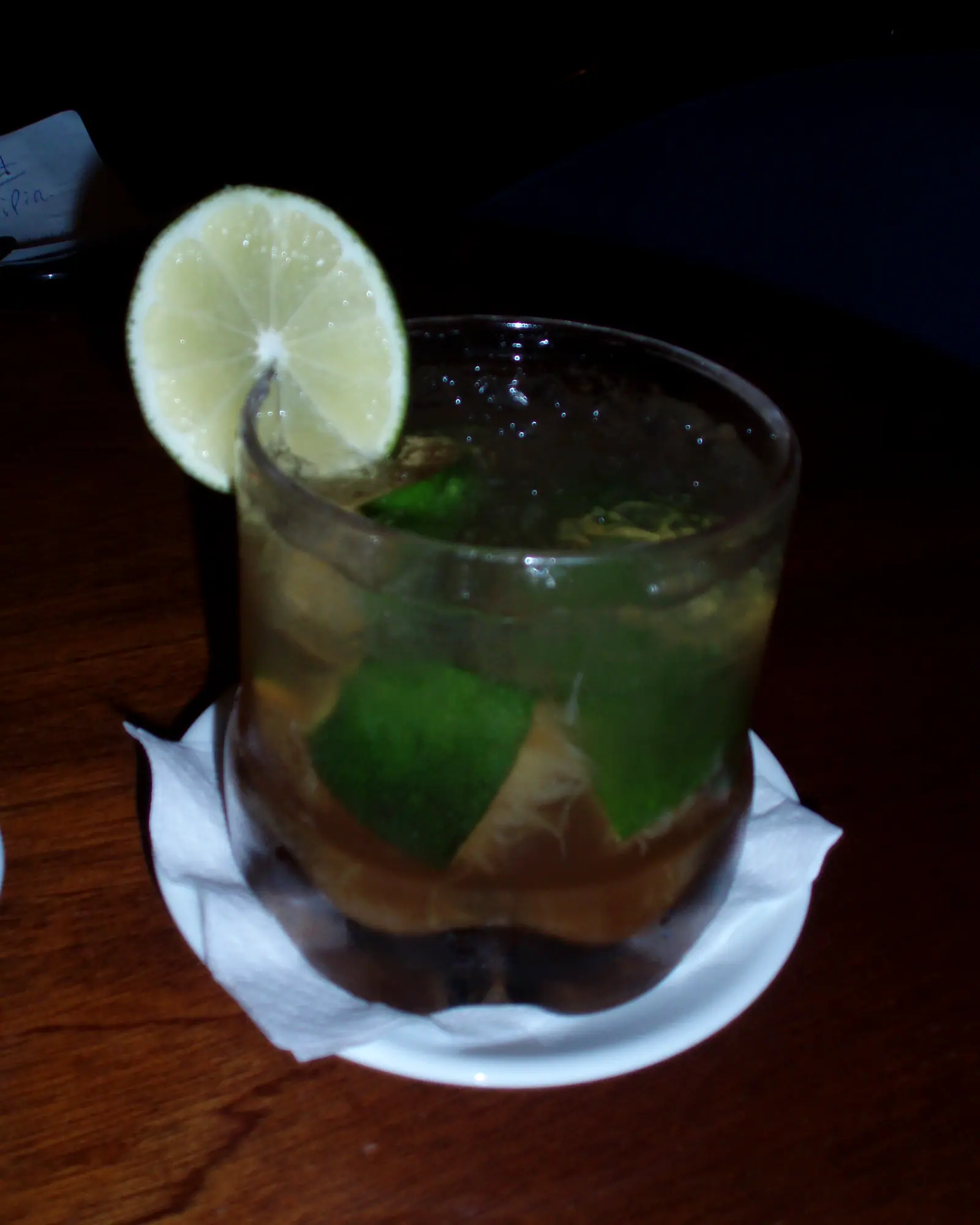
A caipirinha in a rocks glass, muddled lime wedges and ice, garnished with a lime wheel
Serving
Drink spec, per drink
Every figure above is per drink and does not move with the count, which is what makes the two service modes comparable. Sugar per litre, strength and standard drinks stay in the units their own authorities publish, because they are figures for comparing rather than for pouring. Dilution is modelled rather than measured, as a fraction of the poured volume before any ice; dotted figures descend from that estimate.
Diet and allergen labels are computed from the ingredients listed on this page and nothing else. They cannot account for cross-contamination or for the particular product you buy, and they are not medical or safety guidance.
Ingredients
 1 lime (67 g)
 12 g granulated sugar
 60 ml cachaçaThe nearest equivalent by strength, but distilled from molasses rather than fresh cane juice, so the grassy, vegetal note cachaça brings is lost even though the volume and alcohol land in the same place.flavour: major change · strength: no change · sweetness: no change
- 1 lime (67 g)
- 12 g granulated sugar
- 60 ml cachaça
- ~17 ml water
Glass
Vessel
68 ml of liquid plus 139 ml of crushed ice occupies about 207 ml, inside the 300 ml the glass holds. The build fails if a recipe ever exceeds its stated vessel.
A batch needs a vessel that closes and fits a fridge shelf.
Method
3 steps · 1m 20sCut the 1 lime (67 g) into six to eight wedges.
Muddle the lime wedges with the 12 g granulated sugar in the base of the glass for 30s, pressing to release the juice and the oils from the peel without pulverising the pith.
The lime is muddled whole, peel and pith included, rather than juiced, because the oils in the peel are as much a part of the drink as the juice; a lime squeezed for its juice alone leaves them behind.
Add the 60 ml cachaça, fill the glass with crushed ice and stir briefly to combine.
Common pitfallMuddling hard enough to crush the pith rather than just bruise it pulls out bitterness along with the oils, which is the usual reason a caipirinha tastes harsh rather than bright.
Keeping and make-ahead
Batched ahead, this keeps sealed and cold. The water line the engine adds is the dilution figure from the spec panel, not a rule of thumb.
About
Lime and sugar muddled whole with cachaça, Brazil's national drink and a name that just means "little countryside person."
The name is a diminutive of caipira, the word for someone from Brazil's rural interior, roughly the Brazilian equivalent of "hillbilly" used affectionately rather than as an insult 1. What that name is actually attached to (a specific date and inventor for the drink) is where the accounts disagree.
One version, drawing on the reporting of cocktail historian David Wondrich, places the caipirinha's emergence in the mid-nineteenth-century countryside near São Paulo's coastal rainforest, made by rural workers from cachaça, lime and sugar as a cheap, fortifying daily ration rather than a cocktail in the modern sense 2. On this account it is "all but impossible to pin down to a single originator," and the earliest solid documentation under the name Batida Paulista does not appear until travel writing in the 1940s, with the drink not reaching international attention until the late 1970s and early 1980s 2.
A separate, more specific account places the invention in 1918, in the interior town of Piracicaba, credited to landowning farmers who are said to have developed it from an older Portuguese cold remedy of lemon, garlic and honey, gradually replacing the medicinal ingredients with sugar and ice 1. The two stories do not describe the same event, and neither is treated here as settled; what both agree on is that the drink is regional in origin, tied to cachaça specifically rather than rum, and far older as an everyday preparation than as an internationally served cocktail.
The caipirinha received Brazilian Cultural Heritage status in 2003 and is recognised as an official cocktail by the International Bartenders Association 1, formal status that arrived long after whichever of its origin stories is true.
- 1Caipirinhaen.wikipedia.org
- 2The Caipirinha Has Been Here All Alongpunchdrink.com