
Ca Phe Sua Da
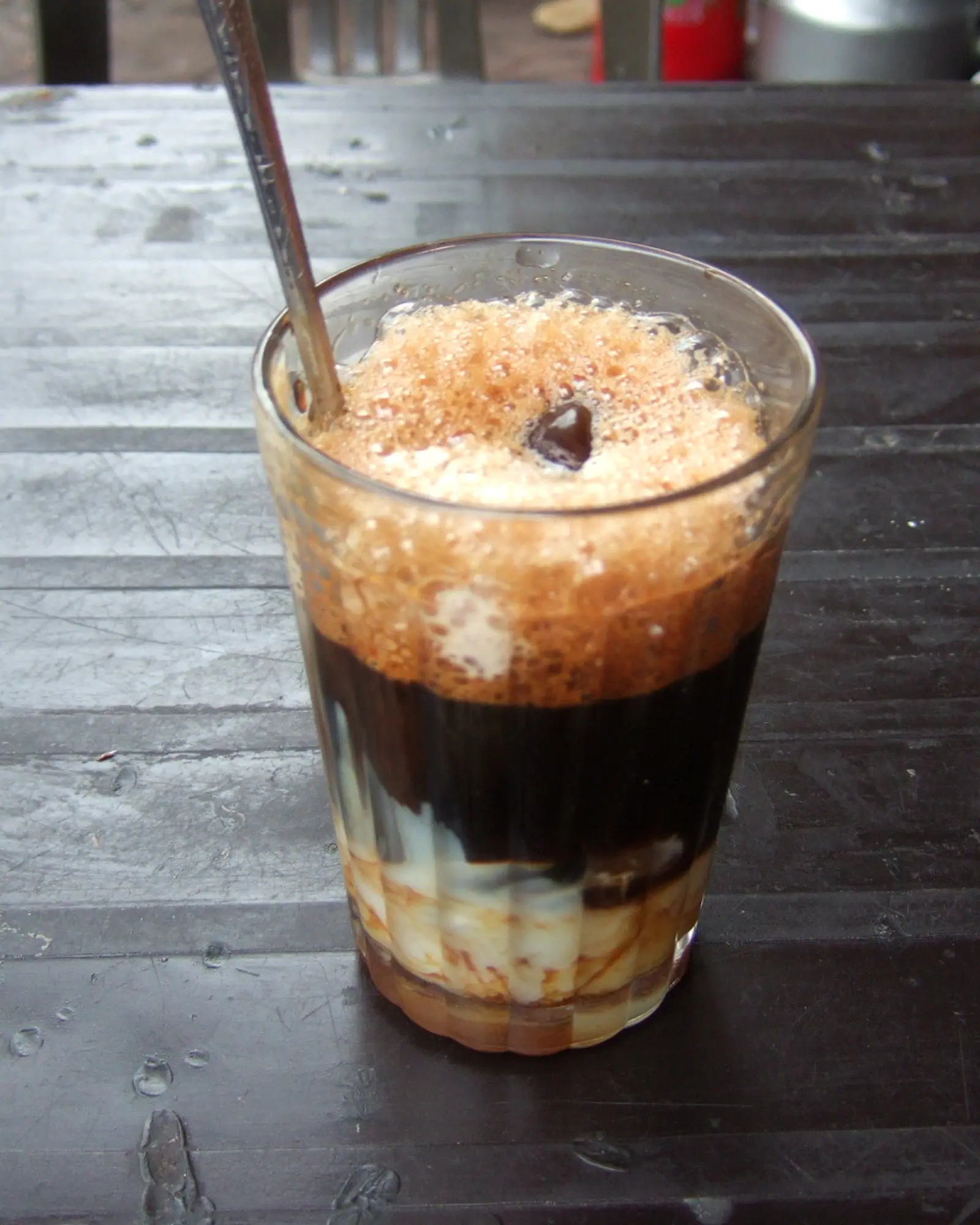
A phin filter dripped slowly over condensed milk, then poured over ice.

CC BY 2.5 · Cropped, white-balanced, graded and re-encoded to WebP by eXir.
Vietnamese iced coffee in a glass, dark coffee layered over condensed milk and ice
Serving
Drink spec, per drink
Every figure above is per drink and does not move with the count, which is what makes the two service modes comparable. Sugar per litre, strength and standard drinks stay in the units their own authorities publish, because they are figures for comparing rather than for pouring.
Diet and allergen labels are computed from the ingredients listed on this page and nothing else. They cannot account for cross-contamination or for the particular product you buy, and they are not medical or safety guidance.
Extraction
This brew works out at 166.7 g of coffee per litre of water, against the 49.5 to 60.5 g/L the standard allows, so it is stronger than it. The comparison is made in grams per litre and not on the ratio, because a ratio is the reciprocal of a strength and a symmetric band on one is an asymmetric band on the other. Source: Golden Cup Standard, Specialty Coffee Association.
No extraction yield is shown. It needs a measured dissolved-solids figure from the finished cup, nothing on a bag of coffee supplies one, and estimating it from the method would be inventing the single number the calculation exists to establish.
Ingredients
 40 ml condensed milk
 15 g coffee
 90 ml water
- 40 ml condensed milk
- 15 g coffee
- 90 ml water
Glass
Vessel
110 ml of liquid plus 200 ml of cubed ice occupies about 310 ml, inside the 350 ml the glass holds. The build fails if a recipe ever exceeds its stated vessel.
A batch needs a vessel that closes and fits a fridge shelf.
Method
4 steps · 5mSpoon the 40 ml condensed milk into the bottom of the serving glass and set the phin filter on top.
The condensed milk sits in the glass before a drop of coffee is brewed, so the phin drips straight into it and the two mix as they meet rather than needing to be stirred together from separate vessels afterward.
Grind the 15 g coffee to a medium-coarse texture and settle it into the phin's basket, then tighten the press plate just enough to sit flat.
Pour the 90 ml water at 95 °C into the phin in two additions and let it drip through onto the condensed milk for 4m.
Lift off the phin, stir the coffee and condensed milk together, then pour over a full glass of ice.
Common pitfallScrewing the phin's press plate down hard packs the grounds too tight and the water channels around them instead of through, so the drip slows to almost nothing while the cup underneath stays thin.
Keeping and make-ahead
The phin drips to order over the glass it is served in. Brewing ahead and chilling the coffee separately skips the layering the drink is built on.
About
Dark-roast coffee dripped from a phin filter over sweetened condensed milk and poured over ice, a habit born from a dairy shortage under French rule.
Coffee reached Vietnam with French colonial rule, and both the plant and the drink kept that origin visible for the century that followed. A French Catholic priest is credited with bringing the first arabica tree to the north of the country in 1857 1 2. Robusta, better suited to the climate and soil of the central highlands, followed in the early twentieth century and has dominated Vietnamese production ever since 2.
Condensed milk entered the drink for a reason that had nothing to do with taste at first. Fresh dairy cattle were not established in the region, and French residents wanting milk faced the same problem colonial households faced elsewhere in the tropics: fresh milk spoiled long before it could be shipped in useful quantity 2. Sweetened condensed milk, processed to keep without refrigeration, solved the logistics, and it turned out to suit the coffee it was paired with, cutting the bitterness and smoke of a dark Vietnamese robusta roast in a way fresh milk would not have 1 2. What began as a substitute for something unavailable became the standard, and the drink is still built that way even where fresh milk is now easy to find.
The phin itself, the small metal filter set directly over the cup or glass, is unrelated to that history and simply the brewing method the coffee arrived with, unchanged by later disruptions to the industry. Vietnamese coffee production itself was interrupted for the following decades and was rebuilt as a state priority only after 1986 1, and it is on the back of that rebuilding that Vietnam became one of the world's largest coffee exporters, still serving the coffee it grows over condensed milk and ice exactly as the nineteenth century left it.
- 1An Unfiltered History of Vietnamese Coffeebaristamagazine.com
- 2The History of Vietnamese Coffee and How to Brew Your Ownheritage-line.com