
Agua de Jamaica
Dried hibiscus steeped and sweetened, served cold over ice.

CC BY 2.0 · Cropped, white-balanced, graded and re-encoded to WebP by eXir.
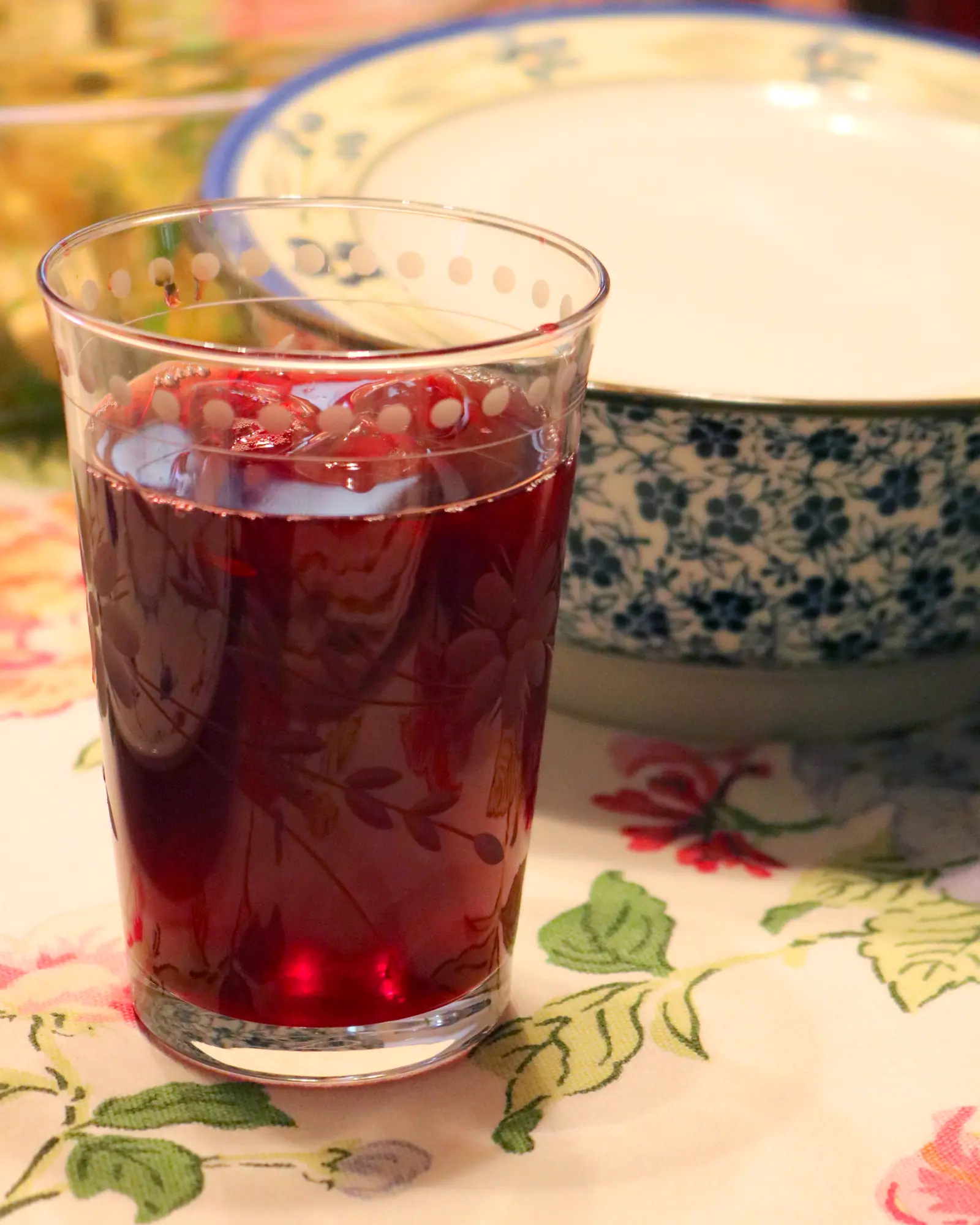
A tall glass of deep red hibiscus tea over ice, condensation on the glass
Serving
Drink spec, per drink
Every figure above is per drink and does not move with the count, which is what makes the two service modes comparable. Sugar per litre, strength and standard drinks stay in the units their own authorities publish, because they are figures for comparing rather than for pouring.
Diet and allergen labels are computed from the ingredients listed on this page and nothing else. They cannot account for cross-contamination or for the particular product you buy, and they are not medical or safety guidance.
Extraction
No extraction yield is shown. It needs a measured dissolved-solids figure from the finished cup, nothing on a bag of coffee supplies one, and estimating it from the method would be inventing the single number the calculation exists to establish.
Ingredients
 140 ml water
 4 g dried hibiscus calyces
 15 g granulated sugar
- 140 ml water
- 4 g dried hibiscus calyces
- 15 g granulated sugar
Glass
Vessel
139 ml of liquid plus 230 ml of cubed ice occupies about 369 ml, inside the 400 ml the glass holds. The build fails if a recipe ever exceeds its stated vessel.
A batch needs a vessel that closes and fits a fridge shelf.
Method
3 steps · 10mPour the 140 ml water at 100 °C over the 4 g dried hibiscus calyces and the 15 g granulated sugar and leave to steep for 10m. The liquid darkens to a deep red almost at once.
Hibiscus is a robust calyx rather than a delicate leaf, so it wants water at a full boil to give up its colour. The 15 g granulated sugar goes in while the water is still hot, which dissolves it completely before the liquid ever meets ice.
Strain out the calyces and discard them.
Pour over cubed ice in the glass and serve at once, while it is still cold from the ice rather than from having been chilled beforehand.
Common pitfallStraining late lets the calyces keep steeping in their own liquid, and the tartness tips from bright into medicinal. Pull them the moment the steep is done.
Keeping and make-ahead
Made a jug at a time in practice, but authored here as one steep to order. Hibiscus left standing on its calyces after the stated time keeps drawing out tannin and turns the drink harsher rather than stronger.
About
Dried hibiscus calyces steeped and sweetened into one of Mexico's standard aguas frescas, made from a flower that is not native to the country at all.
The plant behind agua de jamaica, Hibiscus sabdariffa, was domesticated in West Africa, in the region of the Western Sudan 1, and reached Mexico only after that; the flower sold in every market there today arrived from elsewhere. How it crossed the Atlantic is not settled. One account has it carried by enslaved Africans and first cultivated in Brazil 1; another traces it across the Pacific instead, aboard the Manila galleons that ran from the Philippines to Acapulco from 1565 onward, a route that would have brought the plant to Mexico directly rather than by way of South America 2. Both routes agree on the same starting point in tropical Africa and simply disagree about which ocean the flower crossed to get to New Spain.
Once established, the calyx became a fixture of the Mexican agua fresca tradition: a large dried harvest, sold loose or bagged, steeped hot and strained into a tart red concentrate that is sweetened and diluted to taste. The same plant produces a family of near-identical drinks under different names wherever it took root (bissap in Senegal, sorrel in the Caribbean, karkadeh in Egypt and the Middle East 3) and Mexico's version is one branch of that spread rather than an independent invention. What distinguishes it from its West African relative is less the flower than the glass it ends up in: a lighter hand with the sugar, and a place next to horchata and tamarindo on the same drinks-stand list of aguas frescas, rather than the heavier sweetening and added spice more typical of its West African counterpart.
- 1Hibiscus teaen.wikipedia.org
- 2The flower with a thousand uses, Jamaica — Recipes and Originlolomercadito.com
- 3Bissap196flavors.com