South African · Side
Pap
White maize meal stirred and beaten over the heat into a stiff, smooth porridge, served as the starch alongside a stewed or grilled main.
Also known asMieliepap · South AfricaStywepap · South Africa
Not the same asUgali (Kenya's stiff maize porridge from the same maize meal and the same worked-until-smooth technique, but a separate regional dish with its own identity rather than a version of this one.)
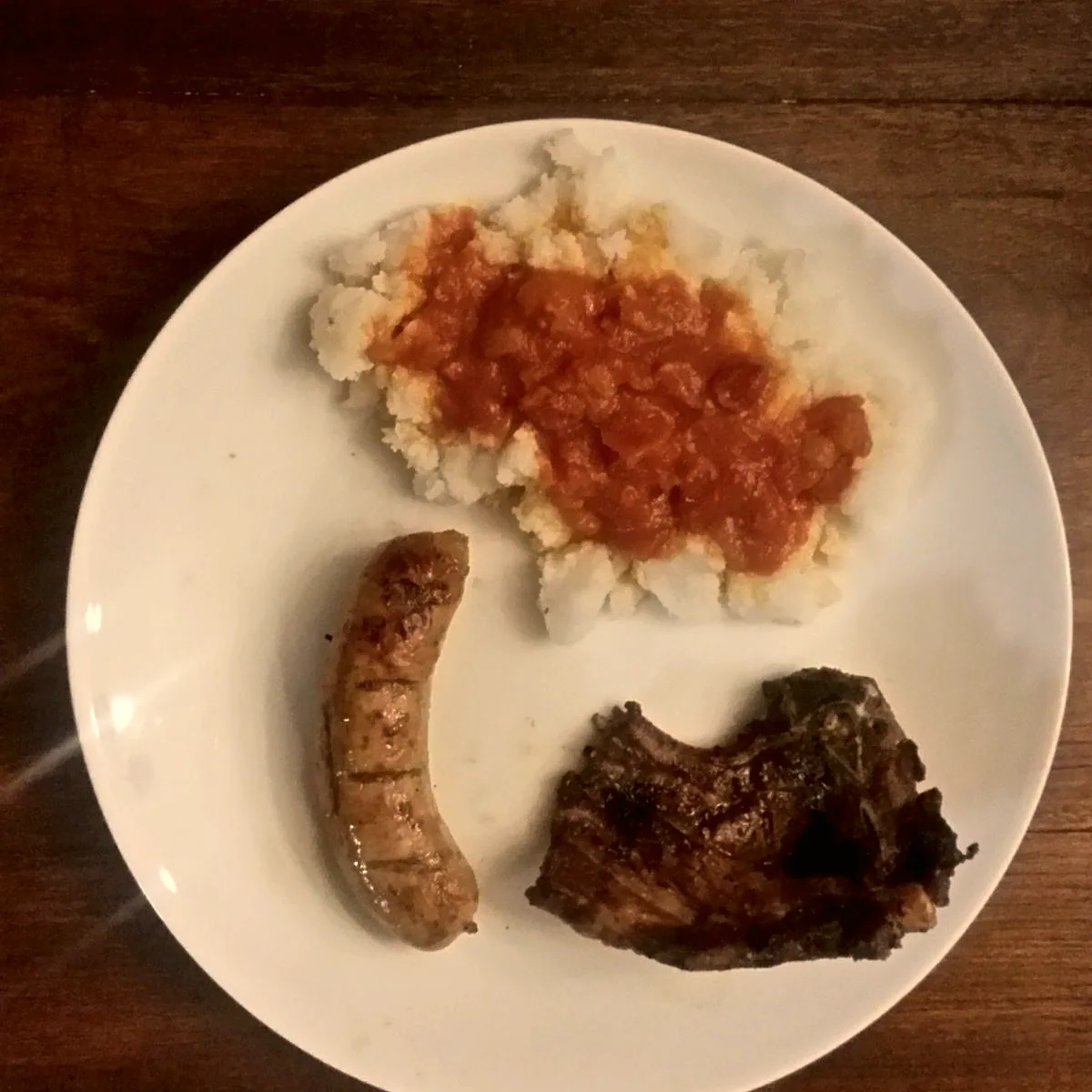

CC BY-SA 4.0. Cropped and colour-adjusted for this site.
Method
Bring the 900 ml water and 6 g fine sea salt to a rolling boil in a heavy pot. This takes about 5m.
Reduce the heat slightly and add the 500 g white maize meal in a thin, steady stream, stirring constantly with a wooden spoon to stop lumps forming. This takes 3m.
Common pitfallTipping the maize meal in all at once seizes it into hard lumps that never fully break down. It goes in gradually, in a thin stream, with constant stirring.
Cover and simmer over a low heat for 15m, stirring every so often to stop the bottom catching, until the porridge has thickened and pulled together.
Uncover and beat the porridge vigorously against the side of the pot for 8m, over the heat the whole time, until it is smooth, stiff and pulls cleanly away from the sides in one mass. Turn out and serve hot.
Pap only turns smooth under sustained beating against the side of the pot. A shorter stir leaves it grainy no matter how long it has simmered.
Pap is made from a grain that has no deep history in Southern Africa at all. Maize reached the continent from the Americas by way of Portuguese trade, and before it arrived, sorghum, millet and other indigenous grains were the staple cereals across most of sub-Saharan Africa [1]. Maize spread because it suited existing farming practice (it could be grown using methods already familiar from sorghum, while yielding considerably more per plant), and it kept without refrigeration, which mattered enormously before rural electrification and still shapes why maize meal sits in shops and pantries across the region today [1][2]. Sorghum and millet were not displaced quickly; the full switch to maize as the dominant staple across the region is generally placed in the second half of the twentieth century [1].
What South Africans call pap is one name among a great many for essentially the same dish. The stiff maize porridge eaten across the continent goes by ugali in Kenya, nsima in Malawi, sadza in Zimbabwe and dozens of other names depending on the language, all describing maize meal stirred into water and worked to a dense, smooth mass [1]. Pap itself is not one fixed dish but a family of consistencies recognised under their own names in South African kitchens, including the crumbly uphuthu and the dry, granular umphokoqo alongside pap proper [3]; the very stiff, dense stywepap given here is worked hard enough to stand on a plate rather than run off it, and is eaten as the starch alongside a grilled or stewed main. A registered dietitian writing for the South African outlet Health For Mzansi describes mealie meal as a staple present in most South African households regardless of region [3].
Sources
- Ugali, WikipediaCovers the Portuguese introduction of maize to Africa, its replacement of sorghum and millet as the region's staple cereal over the twentieth century, and lists "pap" among the dozens of regional names for the same stiff maize porridge.
- Mielie meal, WikipediaConfirms maize's arrival from the Americas via Portuguese trade and mielie meal's status as a staple across Southern Africa, prized for keeping without refrigeration.
- Mealie meal: Mmmm ... More than just a much-loved staple, Health For MzansiSouth African food and agriculture outlet; registered dietitian Zama Khumalo describes mealie meal as a staple in most South African households and names several consistencies eaten today, including the crumbly uphuthu alongside stiff pap.