American · Drink
Lemonade
Fresh lemon juice, sugar and water, mixed as a syrup and diluted to taste-balancing strength. One serving is one glass.
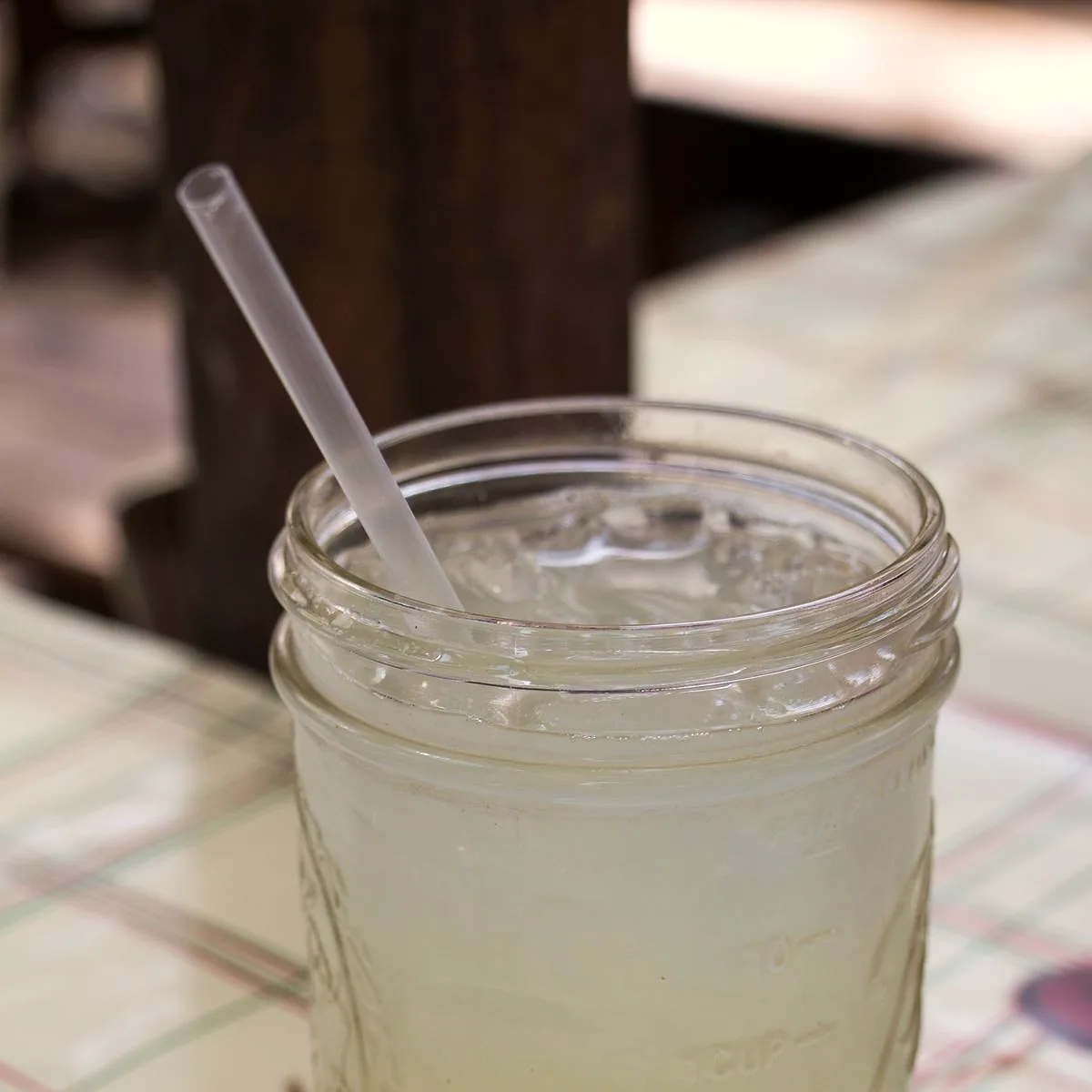

CC BY 2.0. Cropped and colour-adjusted for this site.
Method
Stir the 150 g caster sugar into the 150 ml water until fully dissolved, over 3m.
Stir the 200 ml freshly squeezed lemon juice and the 700 ml water into the syrup, over 2m.
Chill for 1h before serving over ice.
Lemonade's earliest known ancestor is not the clear drink familiar today but a sweetened citrus preparation called qatarmizat, made in Egypt once lemons reached North Africa, itself following an earlier tenth-century drink called kashkab made from barley, mint and citron leaf [1]. For centuries the drink was treated as medicine as much as refreshment: the twelfth-century Egyptian physician Ibn Jumay recommended it for sore throats, hangovers and general weakness, and the idea that it could restore health followed it into sixteenth-century Britain, where doctors sometimes prescribed it to the sick [1].
That medicinal reputation had a real basis. In 1795 the British Royal Navy ordered a daily lemonade or lemon-juice ration for sailors as a defence against scurvy, decades before vitamin C itself was identified as the reason it worked [2]. Around the same period, Parisian street vendors were selling a version of the drink from tanks worn on their backs, organised enough by the mid-1600s to form their own guild, the Compagnie de Limonadiers [1].
The drink was already established in America by the time of George Washington's presidency, and the carbonated version familiar from soda fountains did not appear until the technology to carbonate water reliably arrived in the nineteenth century [2]. The plain, still version made from lemon juice, sugar and water (the one treated here) is in fact the older of the two.
Sources
- The Sweet History of Lemonade, Atlas ObscuraOn qatarmizat and lemonade's medieval Egyptian and later European history.
- How Old Is Lemonade?, History.com (A&E Television Networks)On lemonade's use against scurvy and its spread through Europe and America.