Argentine · Condiment
Dulce de Leche
Whole milk and sugar reduced slowly for hours to a thick, caramel-brown spread, the base of alfajores and a dozen other South American sweets.
Also known asManjar · ChileDoce de leite · Brazil
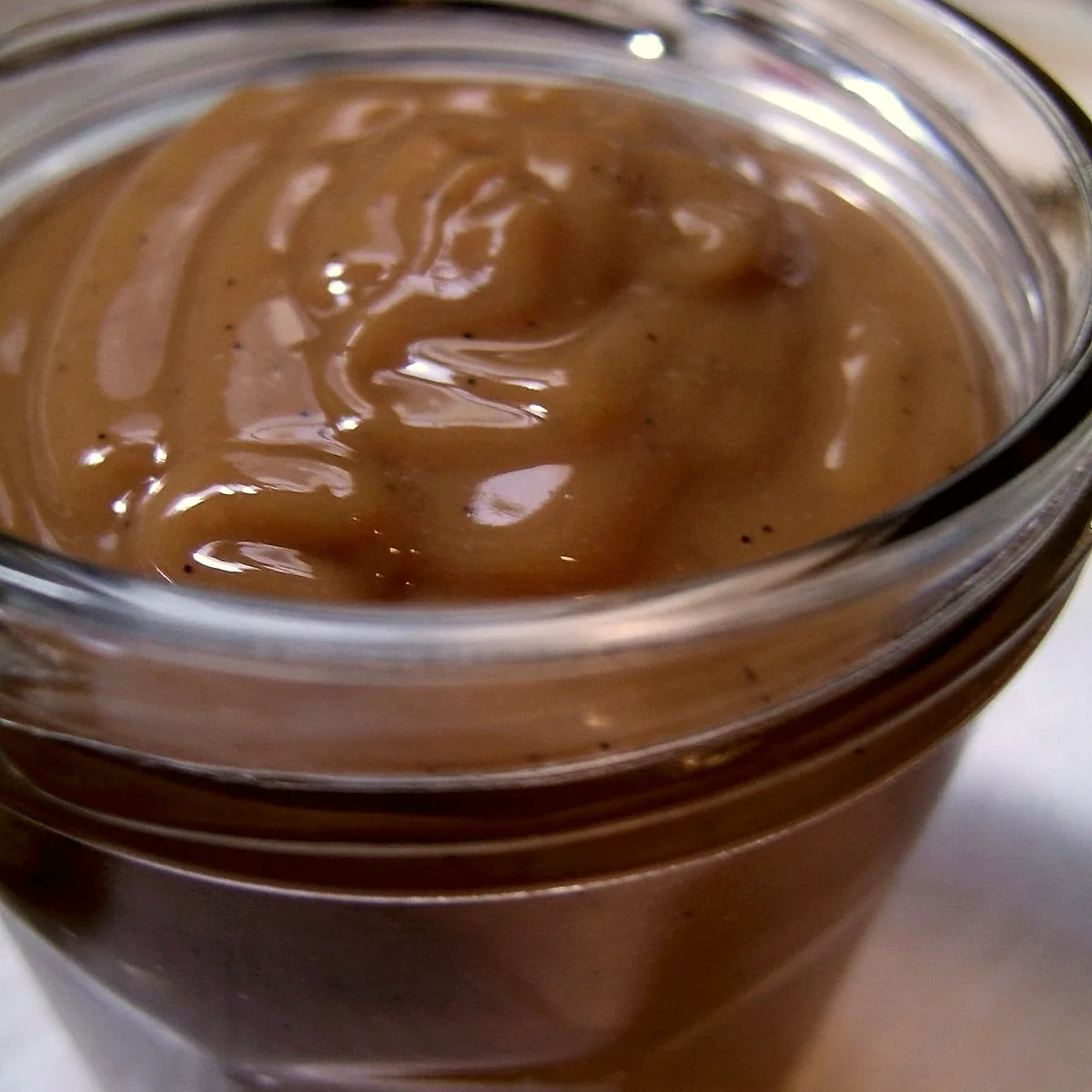

CC BY 2.0. Cropped and colour-adjusted for this site.
Method
Whisk the 1 L milk, 300 g caster sugar, 2 g bicarbonate of soda and 1 g fine sea salt together in a wide, heavy-based pot until the sugar and bicarbonate are fully dissolved.
A pinch of bicarbonate of soda raises the pH of the milk slightly, which speeds the browning reaction between the milk proteins and sugar and produces a deeper colour and rounder flavour than sugar and milk alone would develop in the same time.
Set the pot over a low heat and simmer gently for 2h, stirring every few minutes and scraping the base, until the milk has reduced by roughly half and turned a pale gold.
Continue simmering for 20m, whisking constantly now, until the mixture has turned a deep caramel-brown and coats the back of a spoon thickly. It will bubble and rise as it thickens, so keep the heat low and stay at the pan for this stretch, when it is most likely to catch.
Common pitfallLeaving the pan untended over anything but the lowest heat once it has reduced and thickened lets sugar solids catch on the base, and once it has caught the whole batch tastes of it. The last stretch wants a low, steady heat and a whisk run continuously over the base and corners.
Take the pot off the heat and stir in the 4 g vanilla extract.
Pour into a jar and let it cool fully, uncovered, for 30m before sealing; it will continue to thicken as it cools.
Dulce de leche is milk and sugar cooked down together until the milk sugars caramelise, turning the mixture a deep brown and thickening it to a spread. Versions of the same technique exist across Latin America under other names (manjar in Chile, arequipe in Colombia, doce de leite in Brazil), and that spread across so many kitchens and borders is a large part of why no single origin story has ever taken hold as settled fact [1][4].
The most repeated account places its invention in 1829, at the country estate of the Argentine politician Juan Manuel de Rosas near Cañuelas, Buenos Aires province. A maid preparing sweetened milk for mate is said to have left the pot over the fire and returned to find it transformed into a thick, brown paste, which Rosas then had made deliberately [2]. The story is told matter-of-factly in Argentina, where the dish holds an official designation as part of the country's culinary patrimony, but Uruguay has long disputed the claim on the same story, with some tellings placing the maid herself as Uruguayan [2].
Historians treat the Rosas kitchen-accident story as apocryphal rather than documented fact, and the documentary record points to something older on the Chilean side of the Andes. Account books kept by the Colegio de Mendoza record the arrival of bottled "manjar" (described there as the celebrated dulce de leche of Chilean origin) between 1693 and 1712, carried over the mountains long before Rosas's estate existed [4][1]. Tradition credits José de San Martín with carrying the confection back across the Andes into the Río de la Plata region after his army reached Chile in 1817, taking jars of it with him on the Peruvian campaign that followed [4].
That older, cross-border history is also why the dispute over which country owns dulce de leche has never really been settled. In 2003, an Argentine push to register the confection as an exclusively national product provoked a sharp diplomatic response from Uruguay's Ministry of Education and Culture, led by the librarian Raúl Vallarino; after weeks of pointed threats on both sides, the two governments agreed instead to register dulce de leche, asado and empanadas jointly as shared cultural and gastronomic heritage of the Río de la Plata region, rather than the property of either country alone [3].
What is not in dispute is the technique: simmering sweetened milk until it caramelises is a preservation method as much as a dessert, since cooking the water out and the sugar down leaves a spread that keeps far longer than fresh milk. That practical origin, rather than any one kitchen accident, is likely closer to how the dish actually spread across a region with milk, sugar and long distances between towns.
Sources
- Dulce de leche, WikipediaCollates the competing origin theories, the Rosas legend, and the documentary record of "manjar" imports into colonial Argentina from Chile.
- Día Internacional del Dulce de Leche: ¿invento argentino de pura casualidad?, Diario de CuyoArgentine regional press account of the Rosas legend, including the date and estate named in the story.
- Ni nuestro ni de ellos: Uruguay logró que se declare al Dulce de Leche como patrimonio del Río de la Plata, A24 (América TV)Argentine television news account of the 2003 dispute, naming the officials involved on both sides and the eventual joint Río de la Plata heritage compromise.
- El diverso origen del dulce de leche, Diario LecheroChilean dairy-industry trade press account of the Colegio de Mendoza's 1693–1712 expense records for imported Chilean manjar, and José de San Martín's role carrying it back across the Andes after 1817.